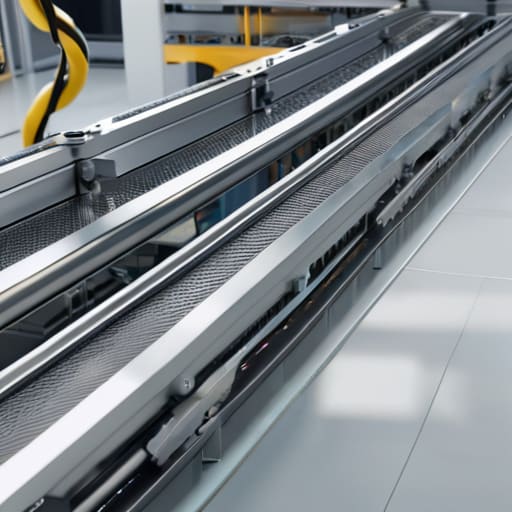
I once stood on a humid factory floor in Guangzhou, watching a production manager promise me that we could shave three weeks off our schedule just by “working harder.” He was smiling, but I was looking at the empty racks of raw material in the corner and the exhausted look in the operators’ eyes. That’s the problem: most people approach the question of how to shorten a lead time by asking for miracles or paying for expedited freight that eats your entire margin. They treat lead time like a magic number you can just wish into existence, rather than a physical sequence of events that is currently being choked by sub-tier bottlenecks and poor planning.
I’m not here to sell you on “agile manufacturing” buzzwords or expensive software suites that promise to automate your way out of a crisis. Instead, I’m going to show you how to look at your supply chain with a healthy dose of skepticism. We are going to talk about auditing your suppliers’ actual capacity, identifying the hidden friction points in your material flow, and why a shorter timeline is a lie if you haven’t accounted for the transit delays waiting at the port.
Table of Contents
Bottleneck Identification in Production Finding the Real Delays

When you ask a supplier how they plan to shave a week off your schedule, they’ll usually point to “increased labor” or “overtime.” Don’t buy it. That’s just a way to burn margin without fixing the underlying friction. Real bottleneck identification in production requires you to look past the assembly line and into the gaps between the machines. I’ve sat on factory floors where the operators were moving at a sprint, but the entire line was idling because the sub-component feeder was calibrated for a different batch size. If you aren’t looking at the interstitial spaces—the moments where a part sits in a bin waiting for the next station—you aren’t actually managing your timeline; you’re just watching it bleed.
You have to stop treating the production schedule as a static document and start treating it as a living, breathing set of constraints. Most people chase manufacturing cycle time reduction by asking for more speed, but speed is a byproduct of flow. If your supplier is struggling with inconsistent raw material quality, no amount of “process improvement methodologies” will prevent the inevitable rework that eats your buffer. You need to find where the work stops, not just where it moves slowly.
Process Improvement Methodologies That Actually Hold Up Under Audit

Most people approach process improvement methodologies like they’re checking off a grocery list, assuming that if they implement Lean or Six Sigma, the delays will simply vanish. That is a fantasy. In my experience, a methodology is only as good as the data sitting on the factory floor. If your supplier claims they are practicing just-in-time manufacturing benefits to keep costs low, but you see stacks of aging, dusty raw materials in the corner of the warehouse, the methodology is a facade. You aren’t looking for a certificate on the wall; you are looking for the alignment between their stated workflow and the physical movement of goods.
When I audit a facility, I don’t care about their theoretical manufacturing cycle time reduction targets. I want to see the actual dwell time between stages. True supply chain optimization techniques aren’t about working faster; they are about eliminating the invisible pauses where a component sits idle because a technician is waiting for a tool or a supervisor is waiting for a signature. If a supplier can’t show you exactly where the hand-offs fail, they aren’t managing a process—they are just hoping for the best.
Five Ways to Cut Lead Times Without Sacrificing Your Sanity (or Your Quality)
- Stop negotiating on price and start negotiating on visibility. A supplier who gives you a firm date but refuses to share their weekly production schedule is lying to you—or at least, they’re hiding the truth. I’d rather have a slightly higher unit price and a real-time view of their machine uptime than a “discounted” rate that disappears the moment a sub-tier supplier misses a delivery.
- Build a buffer into your raw material procurement, not your delivery date. If you’re waiting until the Purchase Order is signed to check if your supplier has the resin, the steel, or the specialized components in stock, you’ve already lost. Shortening lead time is often just a matter of ensuring the “long-lead” items are sitting in a warehouse—either theirs or yours—before the production run even starts.
- Audit the sub-tier, not just the Tier 1. I’ve seen countless “optimized” timelines fall apart because the primary factory was ready to go, but their component supplier was three weeks behind. If you want to shave days off your schedule, you need to know where your supplier’s inputs are coming from. A lead time is only as short as the slowest link in the entire chain.
- Standardize your specs to reduce setup friction. Every time you request a custom finish, a non-standard dimension, or a unique packaging requirement, you are adding complexity that eats into your lead time. If you can move your product toward more standardized components, you can move into a “fast-track” production slot because the factory isn’t wasting three hours retooling a machine just for your order.
- Formalize the “Change Order” protocol. Nothing kills a lead time faster than a “small” design tweak or a material substitution requested halfway through the production cycle. I make it a rule: any change after the production kickoff triggers an automatic lead time extension. If your team knows that “tweaking the spec” means a three-week delay, they’ll get the requirements right the first time.
Three Hard Truths to Carry Back to Your Next Planning Meeting
Stop treating lead times as a static number in a spreadsheet; they are a living variable that must be stress-tested against your supplier’s actual sub-tier capacity and raw material availability.
A “fast” lead time is a liability if it isn’t backed by a proven production schedule—if a supplier can’t show you the specific bottleneck they’ve cleared to meet your date, they aren’t shortening the time, they’re just gambling with your delivery.
True lead time reduction happens in the documentation and the hand-offs, not just on the factory floor; if your quality specs are vague or your POs are late, you’ve already lost the battle before the first machine even turns on.
The Reality Check
At the end of the day, shortening a lead time isn’t about asking your supplier to work faster or magically wishing for a shorter transit window. It is about the unglamorous work of identifying where the friction actually lives—whether that is a sub-tier raw material shortage, a bottleneck in the quality control station, or a lack of visibility in the shipping lane. You cannot optimize what you haven’t verified. If you aren’t looking past the optimistic projections in your weekly status reports and digging into the actual production schedules and buffer stocks, you aren’t managing lead times; you are merely documenting your own delays. Remember, a shorter timeline is a mathematical certainty, not a verbal commitment.
As you move forward, stop treating lead times as a fixed number in your ERP system and start treating them as a living, breathing variable that requires constant scrutiny. The most resilient supply chains aren’t built on the fastest suppliers, but on the most transparent ones. Don’t be afraid to ask the difficult questions during your audits or to push back when a quote looks too good to be true. In this business, the goal isn’t just to move product quickly, but to move it with the certainty of evidence. Build your timelines on what can be proven, and you’ll find that the “unforeseen” delays start to look a lot more like predictable patterns you can actually manage.