
I once sat in a humid, windowless factory office in Vietnam, watching a production manager swear on his mother’s life that our components were “on the line.” Two weeks later, I found out the “line” was actually a pile of unallocated raw material sitting in a warehouse three towns over because someone forgot to trigger the sub-vendor PO. Most people think a lead time is a fixed number on a spreadsheet, but that’s a fantasy. In reality, understanding how lead times are built up requires you to look past the polished sales pitch and see the messy, interlocking gears of procurement, material staging, and labor availability. If you aren’t accounting for the friction between those steps, you aren’t managing a supply chain—you’re managing a prayer.
I’m not here to give you a theoretical lecture on logistics management or some sanitized textbook definition. I’m going to show you the actual anatomy of a delay, from the moment a supplier accepts your order to the second the goods hit the dock. I will teach you how to deconstruct a quote to see where the hidden buffers are buried and how to spot the red flags that suggest a timeline is nothing more than a polite fiction.
Table of Contents
The Order Processing Duration Trap

Most people look at a quote and see a production window. I look at it and see the administrative black hole that happens before a single machine even hums to life. This is the order processing duration, and it is where the first cracks in your timeline appear. It’s the gap between your signed Purchase Order and the actual start of the manufacturing cycle time. Suppliers love to gloss over this, treating it as a mere formality, but in reality, it’s a chaotic period of internal hand-offs, raw material procurement, and—more often than not—clerical errors that don’t surface until week three.
If your supplier claims they can start “immediately,” they are likely lying to you or, at best, ignoring their own internal bureaucracy. I’ve sat in enough procurement meetings to know that a three-day administrative window is a fantasy; between credit checks, warehouse allocation, and the actual release of the work order to the floor, you are looking at a week minimum. Never assume your timeline begins at the moment of payment. If you don’t account for this hidden buffer, you aren’t planning a shipment; you’re scheduling a crisis.
Manufacturing Cycle Time vs Reality
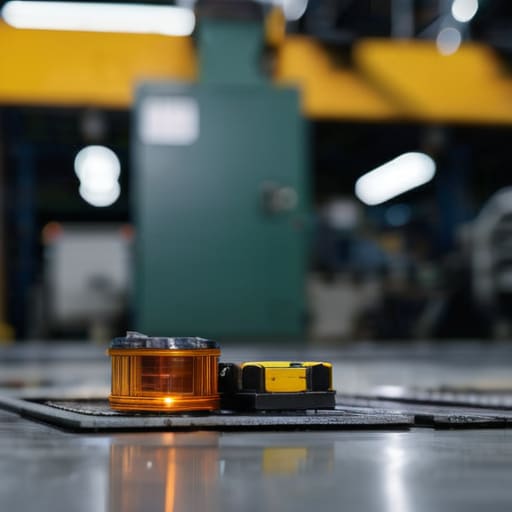
When a supplier hands you a datasheet, they are giving you the “ideal state”—a theoretical vacuum where machines never break, workers never call in sick, and raw materials arrive exactly when promised. This is the textbook manufacturing cycle time, and it is almost always a fiction. In my experience, the gap between that theoretical number and the actual production floor is where your margin goes to die. I’ve sat in factory offices where the manager pointed to a shiny, uninterrupted assembly line and swore a two-week cycle was standard, only to find the actual throughput was choked by a single aging injection molding machine that went down twice a week.
To get the truth, you have to look past the sales pitch and perform a mental production bottleneck analysis. You need to ask: where is the pile of semi-finished goods sitting? If they can’t show you the work-in-progress (WIP) buffers, they aren’t managing a cycle; they are managing a crisis. Real lead time isn’t just the time the machine is running; it’s the time the component spends waiting for the next station to become available. If you don’t account for the friction of the floor, you aren’t budgeting for production—you’re budgeting for hope.
The Invisible Friction: Where Your Lead Time Actually Disappears
- Stop treating “material availability” as a binary yes/no. A supplier telling you they have the raw materials in stock is only half the story; you need to know if those materials are sitting in their warehouse or if they are currently being processed by a sub-tier supplier who is three weeks behind on their own commitments.
- Factor in the “Buffer of Optimism.” When a factory gives you a production schedule, they are showing you their best-case scenario under perfect conditions. I always add a 15% contingency for the inevitable machine breakdown or the sudden spike in absenteeism that happens every time a local holiday approaches.
- Audit the QC bottleneck. Most people calculate lead time based on when the last unit rolls off the line, but they forget the three to five days required for quality inspections and the subsequent rework. If your product fails a random sample test on day 20, your “finished” goods are suddenly back at square one.
- Account for the administrative lag. There is a silent period between your PO approval, the supplier’s internal work order creation, and the actual release of funds for raw materials. If you aren’t tracking the delta between “Order Placed” and “Production Start,” you’re losing a week before a single machine has even turned on.
- Build in the logistics “dead zone.” A shipment doesn’t leave the factory the moment it’s packed. You have to account for the time it takes to clear the warehouse floor, coordinate with the freight forwarder, and get the container through the gate. If your supplier says “ready to ship on Friday,” assume it won’t actually move until Tuesday.
The Three Hard Truths of Your Production Timeline
Stop treating a lead time as a fixed date; treat it as a moving target that begins to drift the moment your raw material availability is unconfirmed.
A supplier’s “manufacturing cycle time” is a theoretical ideal that ignores the inevitable friction of machine downtime, labor turnover, and the quality rejections that happen when they rush to meet a deadline.
If your quote doesn’t explicitly link the unit price to a specific minimum order quantity and a verified production window, you aren’t looking at a cost—you’re looking at a negotiation tactic.
The Cost of Optimism
At the end of the day, a lead time is not a single, static number; it is a fragile chain of dependencies. We have seen how the administrative lag in order processing can quietly eat your buffer, and how the theoretical manufacturing cycle time rarely survives contact with the reality of a crowded factory floor or a sudden raw material shortage. If you are still building your production schedules based on the best-case scenario provided in a glossy quote, you aren’t managing a supply chain—you are managing a series of inevitable disappointments. You must account for the friction, the buffer, and the inevitable human error that occurs between the moment the PO is sent and the moment the goods hit the dock.
My advice is to stop treating lead times as a fixed promise and start treating them as a variable to be interrogated. Don’t just ask a supplier when it will arrive; ask them to prove the sequence of events that makes that date possible. When you move from being a passive recipient of timelines to an active investigator of capacity, you stop being a victim of the “unforeseen delay” and start becoming a professional who actually controls their margins. Sourcing isn’t about finding the fastest route; it is about building a roadmap that actually accounts for the potholes.