I remember standing on a humid loading dock in Guangzhou, watching a forklift driver heave a pallet of our “premium” electronics onto a truck as if he were playing a game of Tetris with live grenades. The supplier had sent me a glossy PDF claiming their new double-walled corrugated design was the gold standard, but as I watched the bottom layer of boxes buckle under the weight of the stack, I realized they were selling me a fairy tale. Most people treat the question of how packaging protects in transit as a checkbox exercise for the logistics team, but if you’re treating it as a mere line item to be minimized, you aren’t actually cutting costs—you are simply pre-funding your future claims.
In this article, I’m stripping away the marketing fluff to talk about what actually happens between the factory floor and your receiving dock. I won’t give you a lecture on theoretical physics; instead, I’m going to show you how to audit your packaging specs based on real-world failure points. We will look at why a “standard” box often fails the vibration test and how to ensure your protective layers are actually doing their job before you’re left staring at a mountain of expensive, unmarketable scrap.
Table of Contents
Testing the Structural Integrity of Corrugated Boxes
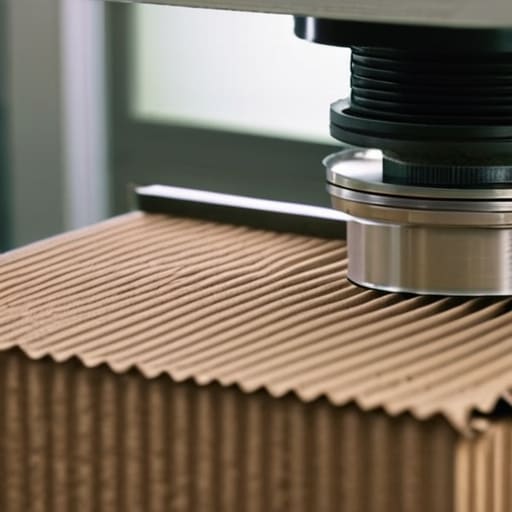
When I’m reviewing a supplier’s technical data sheet, I don’t just look for a pretty number; I look for how they’ve actually validated the compression strength of packaging materials. Anyone can print a spec sheet, but if they can’t show me the results of a standardized Edge Crush Test (ECT), they’re just guessing. You need to know exactly how much weight that box can stack in a humid container before the bottom layer turns into a pancake. If the supplier can’t provide verifiable data on how their flute profile handles vertical load, you aren’t buying protection—you’re buying a gamble.
Beyond the static stack, you have to account for the chaos of a moving vessel. This is where the structural integrity of corrugated boxes is truly tested by the reality of the journey. I’ve seen “high-quality” shipments fail because the vendor ignored how constant micro-movements affect the cardboard’s internal bond. You should be asking about their testing for vibration and impact, because a box that looks fine on a warehouse floor might lose its shape entirely when subjected to three weeks of rhythmic, low-frequency oscillation on a container ship.
Why Shock Absorption in Shipping Isnt Optional

I’ve sat in enough receiving bays to know that a box can pass a compression test in a clean lab and still fail miserably the moment it hits a pothole on a secondary road. Most people think of packaging as a static shell, but in reality, it’s a dynamic system that has to manage energy. If your specification doesn’t account for shock absorption in shipping, you aren’t buying protection; you’re just buying a very expensive way to transport broken components. When a pallet is dropped or a truck hits a sudden bump, that kinetic energy has to go somewhere. If the packaging doesn’t dissipate it, the product absorbs it.
I have seen too many procurement teams treat vibration damping techniques as an optional luxury for high-end electronics, only to realize too late that even low-margin hardware can be shaken to death by a poorly secured load. It isn’t just about the big drops, either. It is the constant, microscopic rattling during a three-week ocean transit that slowly fatigues internal connections. If you aren’t budgeting for the right internal cushioning, you are essentially pre-funding your own quality claims.
Five Ways to Stop Treating Packaging Like a Line Item and Start Treating It Like Insurance
- Stop quoting unit prices without asking for the burst strength specs. A box that looks identical to your current one on a spreadsheet might be using a lower-grade liner that will collapse the moment you stack a third pallet on top of it in a humid container.
- Audit your dunnage, not just your primary box. I’ve seen too many “cost-saving” initiatives replace custom foam inserts with generic bubble wrap, only to find that the vibration during a cross-ocean transit has rattled the components right out of their temporary nests.
- Test for the “stacking reality,” not the “warehouse ideal.” Your supplier will tell you their packaging can handle X amount of pressure, but they’re testing it in a climate-controlled lab. You need to know how that corrugated holds up when it’s sitting on a sun-baked tarmac in 90% humidity.
- Demand a real-world drop test report, not a certificate of compliance. A certificate is just a piece of paper; a video of a technician dropping your actual SKU configuration from 36 inches onto a concrete floor is evidence. If they won’t do it, they’re hiding something.
- Factor the cost of “rework” into your landed cost calculations. If you save $0.05 per unit by using thinner cardboard but end up spending $2.00 per unit in labor to inspect and repackage damaged goods at your DC, you haven’t made a saving—you’ve just created a very expensive problem.
The Real Price of a 'Good Enough' Packaging Quote
Stop treating packaging as a commodity line item; if your supplier is quoting a price that doesn’t account for the specific stack strength required for your transit route, they aren’t giving you a deal, they’re giving you a liability.
A successful transit isn’t measured by the box arriving intact, but by the product inside meeting its original spec—always audit your packaging requirements against the actual vibration and shock profiles of your specific shipping lanes, not just the generic industry averages.
If your landed cost calculation doesn’t include a contingency buffer for potential rework caused by poor dunnage or insufficient burst strength, your margins are a fantasy; I’ve seen “savings” on corrugated disappear in a single afternoon of quality inspections.
The Bottom Line on Transit Protection
At the end of the day, packaging isn’t a line item to be squeezed; it is your primary insurance policy against the chaos of global logistics. We have looked at why structural integrity in your corrugated boxes matters and why shock absorption is the difference between a sale and a return. If you ignore the physics of the journey—the vibrations, the drops, and the stacking pressures—you are essentially gambling with your margin. You can find a supplier who promises a lower unit price on a box, but unless they can provide the burst strength data and the edge crush test results to back it up, you aren’t actually buying a container; you are buying a future headache that will arrive at your warehouse in pieces.
Stop looking at packaging as a cost center and start seeing it as a component of your quality control. My advice? Stop chasing the lowest quote and start asking for the evidence of performance. When you invest in the right dunnage and the right grade of cardboard, you aren’t just protecting a product; you are protecting your reputation and your bottom line. The goal isn’t just to get the shipment to the destination; it is to ensure that what arrives is exactly what you ordered, ready for the customer, without the need for a single minute of unplanned rework.