Most “complete guide to warehousing” articles I read look like they were written by someone who has never actually stepped foot on a loading dock or smelled a diesel exhaust leak. They promise you “seamless optimization” and “cutting-edge automation” as if a shiny new WMS will magically fix a fundamentally broken layout or a staff that hasn’t been trained to spot a crushed carton. I’ve spent enough years watching inventory vanish into the black hole of a poorly managed overflow facility to know that efficiency isn’t bought; it’s enforced through discipline and visibility.
I’m not here to sell you on expensive software suites or theoretical logistics models that fall apart the moment a shipment arrives three days late. Instead, I’m going to give you the ground-level reality of managing space, labor, and accuracy without the marketing fluff. We are going to look at the actual levers of cost—from the hidden friction of poor slotting to the way untracked shrinkage quietly eats your margin—so you can build a warehouse that actually supports your supply chain rather than strangling it.
Table of Contents
Why Your Warehouse Layout Design Is Killing Your Margin
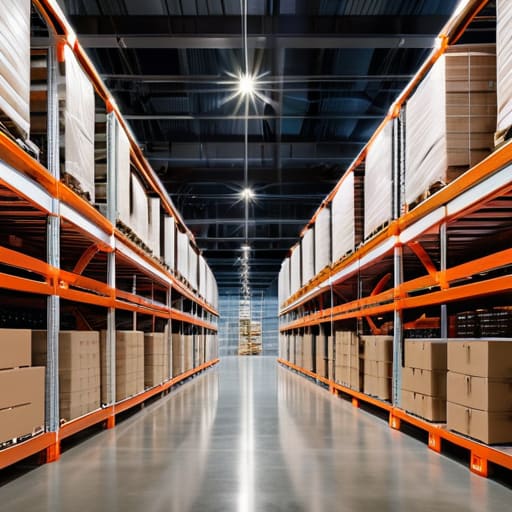
I’ve seen it a dozen times: a company scales their order volume, but their floor plan remains stuck in the era when they were a startup operating out of a garage. They think they have a labor problem, but they actually have a geometry problem. If your high-velocity SKUs are tucked away in the back corner behind slow-moving dead stock, you aren’t just wasting space; you are paying your team to walk miles of unnecessary distance every single shift. Efficient warehouse layout design isn’t about cramming more pallets into a room; it’s about minimizing the friction between receiving and dispatch.
When your picking and packing processes are choked by a chaotic flow, your margin evaporates in the form of “micro-inefficiencies.” Every time a picker has to double back because a single aisle is blocked or a location is poorly mapped, that is a direct hit to your bottom line. You can implement the most expensive warehouse management systems in the world, but if the physical pathing is nonsensical, the software is just documenting your decline. A warehouse should function like a high-speed assembly line, not a maze.
The Truth About Fulfillment Center Operations and Hidden Labor Costs
When you look at a quote for fulfillment center operations, you’re usually looking at a sanitized version of reality. Most providers pitch you on their throughput capacity, but they rarely volunteer the truth about how much of that capacity is eaten by inefficiency. I’ve sat in too many quarterly reviews watching “optimized” picking and packing processes fall apart because the labor model didn’t account for seasonal surges or the reality of human fatigue. If your provider isn’t being transparent about their turnover rates or how they handle error correction, they aren’t giving you a cost; they are giving you a best-case scenario.
The real margin killers are the micro-inefficiencies that never show up on a high-level spreadsheet. You might have a state-of-the-art warehouse management system, but if your staff is spending thirty percent of their shift walking unnecessary miles because of poor slotting, that software is just a digital witness to your waste. I’ve seen companies swear by their technology while their actual labor spend climbs steadily. True logistics and supply chain optimization isn’t about buying the most expensive tools; it’s about ensuring the labor cost per unit doesn’t balloon the moment your order volume deviates from the mean.
Five Ways Your Warehouse is Quietly Bleeding Cash
- Stop treating inventory accuracy like a suggestion; if your cycle counts don’t match your digital records, you aren’t managing stock, you’re managing a series of expensive guesses that will eventually lead to a cancelled order.
- Audit your “pick path” efficiency before you hire more hands; adding labor to a poorly designed floor layout is just paying people to walk more miles for the same amount of output.
- Demand transparency on your third-party logistics (3PL) fee schedules, specifically looking for the “miscellaneous” line items—if they can’t explain the surcharge for pallet wrapping or inbound receiving, they’re just padding their margin on your dime.
- Treat your packaging standards as a cost-control tool rather than an afterthought; using oversized boxes or substandard dunnage doesn’t just increase your dimensional weight freight costs, it invites the exact type of transit damage that leads to the rework I never budget for.
- Verify that your warehouse management system (WMS) actually talks to your procurement software; if your warehouse is seeing stockouts that your sourcing team hasn’t flagged yet, your data silos are creating a lead time crisis you won’t see coming until it’s too late.
The Hard Lessons: What Your Warehouse Strategy Won't Tell You
Stop treating warehouse space as a fixed cost and start seeing it as a variable risk; if your layout forces your pickers to travel extra meters for every single order, you aren’t saving on rent, you’re bleeding margin through labor inefficiency.
Beware the “low rate” trap in fulfillment quotes—if a provider isn’t being transparent about secondary handling fees, seasonal surcharges, or the cost of correcting their own picking errors, your landed cost is a lie.
Inventory accuracy is the only metric that actually matters when the pressure is on; a warehouse that looks organized but lacks real-time data integrity is just a very expensive way to lose stock and fail your customers.
The Bottom Line on Your Warehouse Strategy
At the end of the day, a warehouse isn’t just a place where boxes sit and wait; it is a living, breathing component of your supply chain that can either protect your margin or bleed it dry. We have looked at how a poorly conceived layout creates unnecessary motion waste and how those “competitive” fulfillment quotes often hide a mountain of labor inefficiencies and handling surcharges. If you aren’t auditing your floor space utilization and scrutinizing your per-pick costs with the same rigor you apply to your raw material sourcing, you aren’t managing a warehouse—you are merely subsidizing inefficiency. Remember, every minute a picker spends walking an extra ten feet because of a bad slotting strategy is a direct hit to your landed cost that no discount from a freight forwarder will ever recover.
My advice? Stop looking for the cheapest way to store your inventory and start looking for the most predictable way to move it. Reliability is the only metric that survives a crisis, and a warehouse built on optimized flows and transparent cost structures will serve you far better than one built on optimistic spreadsheets. Don’t wait for a peak season surge or a sudden supply chain disruption to realize your operations are brittle. Build your warehousing strategy on evidence, not promises, and you might just find that the most expensive option on paper was actually your most profitable decision.