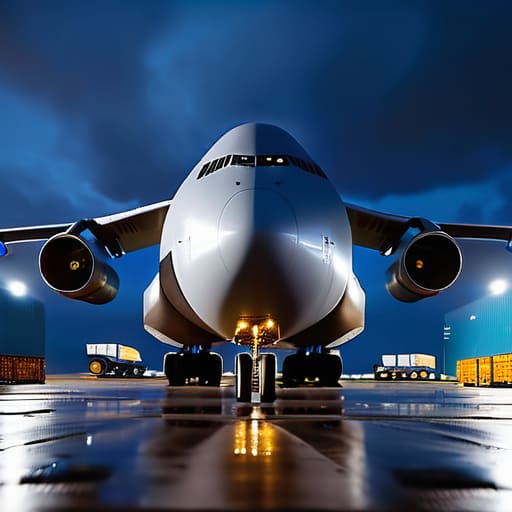
I once sat in a humid warehouse in Shenzhen, watching a supplier promise a “guaranteed” flight departure while their floor manager couldn’t even find the correct pallet labels. Most people think a complete guide to air freight is about comparing carrier speeds or finding the cheapest weight-to-volume ratio, but they are looking at the wrong column of the spreadsheet. If you are basing your entire logistics strategy on a glossy brochure or a quote that conveniently ignores fuel surcharges and terminal handling fees, you aren’t actually planning; you are just making an expensive bet on someone else’s competence.
I’m not here to give you a textbook definition of volumetric weight or a list of industry acronyms you can find on Wikipedia. Instead, I’m going to show you how to spot the red flags in a quote before you sign off on it and how to calculate a landed cost that actually reflects reality. This is my personal, battle-tested framework for navigating the chaos of air logistics—the kind of knowledge you only get from years of watching shipments fail in predictable, preventable ways.
Table of Contents
The Volumetric Weight Trap When Light Cargo Costs a Fortune

If you’ve ever looked at a quote for a shipment of lightweight components and wondered why the bill looks more like a heavy machinery invoice, you haven’t been cheated—you’ve just fallen into the volumetric weight trap. In the air cargo shipping process, carriers aren’t just selling you space; they are selling you a specific amount of volume. Because planes have limited belly capacity, the industry uses a volumetric weight calculation to ensure they aren’t flying “expensive air.” They take your dimensions, multiply them, and divide by a standard factor to find a theoretical weight. If that number is higher than your actual scale weight, you pay the higher amount.
I’ve seen junior buyers get blindsided by this when transitioning from ocean freight, where you’re mostly thinking about TEUs and container utilization. In air freight, a poorly packed box of plastic housings is a financial disaster. You might think you’re saving money on a lightweight product, but if your packaging is inefficient, you are essentially paying to fly empty space. Always audit your pallet dimensions against your actual product density before you sign off on that freight booking.
Air Freight vs Ocean Freight the Real Cost of Speed

When I sit down with a junior buyer who is panicking because a production delay has pushed their launch date back, they almost always reach for the air freight option like it’s a magic wand. They see the speed and think they’ve solved the problem. But you have to look past the immediate fix and weigh the air freight vs ocean freight reality through the lens of your total margin. Air freight isn’t just “faster shipping”; it is a high-stakes financial decision that fundamentally alters your working capital.
If you are moving high-value, low-density components, the math might actually favor the air. However, for bulkier goods, the air freight transit times you’re paying a premium for often won’t compensate for the massive hit to your landed cost. I’ve seen entire quarterly profits evaporated because a team rushed a shipment by air to meet an arbitrary deadline, forgetting that the cost per kilo is a different beast entirely compared to a sea container. Before you sign that waybill, ask yourself if you are paying for speed, or if you are simply paying to subsidize a planning error.
The Hidden Variables: 5 Things Your Forwarder Won't Volunteer
- Stop looking at the base rate in isolation. A quote that ignores fuel surcharges, security fees, and terminal handling charges isn’t a quote—it’s a teaser. If they aren’t giving you the all-in cost, they are planning to surprise you when the invoice hits my desk.
- Validate the “Ready to Ship” date with more than just an email. I’ve seen too many procurement plans fall apart because a supplier promised goods were packed and ready, but the actual production line was still running. If the cargo isn’t physically on the floor and crated, that lead time is a fiction.
- Check your packaging dimensions against the aircraft type, not just the weight. You might think you’ve optimized your pallet density, but if your crates are slightly too tall for a standard narrow-body freighter, you’re going to pay a premium for a wide-body slot you didn’t budget for.
- Demand proof of transit, not just a tracking number. A tracking number tells me where the box was three hours ago; I want to know the scheduled flight numbers and the connection points. If a shipment has a tight connection in a hub known for congestion, that “fast” air freight is already starting to slip.
- Build a “rework buffer” into your landed cost. Even with air freight, things happen—customs inspections, documentation errors, or minor transit damage. If your margin relies on a perfect, untouched delivery, you haven’t calculated the cost; you’ve just made an optimistic assumption.
Beyond the Quote: What to Watch Before You Book
Stop treating a freight quote as a final number; if it doesn’t explicitly itemize fuel surcharges, terminal handling fees, and security charges, you aren’t looking at a price, you’re looking at a placeholder.
Verify your volumetric calculations against the actual pallet dimensions before the cargo hits the tarmac, because paying for “air” due to poor packaging is a mistake you can’t recover once the invoice arrives.
Never trade ocean freight for air freight just to fix a production delay without calculating the total landed cost, including the premium you’re paying for speed versus the cost of the inventory holding time you’re trying to save.
Stop Chasing Quotes and Start Auditing Reality
At the end of the day, air freight isn’t just a line item on a spreadsheet; it is a high-stakes calculation of risk versus speed. We have looked at how volumetric weight can turn a light shipment into a budget killer and why the “speed” of air freight is often a hollow promise if your forwarder hasn’t accounted for the hidden friction of terminal fees and fuel surcharges. If you are only looking at the base rate, you aren’t managing your supply chain—you are just hoping for the best. A professional approach requires you to look past the initial quote and demand a breakdown that includes every surcharge, every potential delay, and every volumetric reality. Never mistake a low quote for a low cost.
Sourcing and logistics will always present you with an infinite number of ways to fail, but they also provide the tools to succeed if you refuse to take shortcuts. My advice is simple: treat every air freight quote as a claim that requires evidence. Verify the dimensions, question the surcharges, and build a buffer into your lead times for the inevitable hiccups that occur when cargo moves through the sky. When you stop chasing the cheapest possible number and start building a resilient, evidence-based logistics strategy, you stop being a victim of your supply chain and start being the person who controls it.