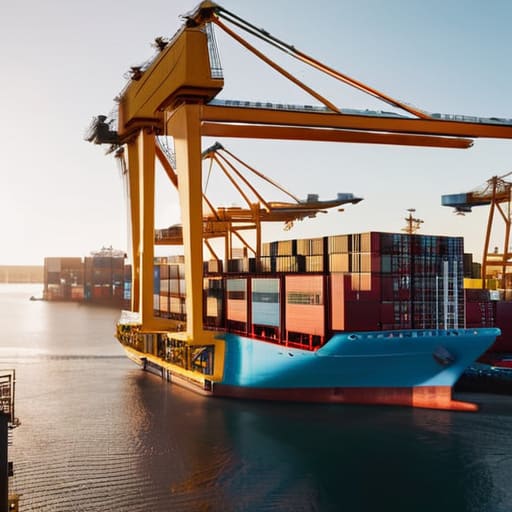
I once sat in a humid warehouse office in Shenzhen, watching a shipment of precision components sit idle because a supplier and my logistics lead were arguing over who actually owned the risk at the port gate. They were both pointing to different clauses in a textbook, completely oblivious to the fact that every hour of delay was bleeding our margin dry. Most people approach a “complete guide to incoterms” as a dry academic exercise, treating it like a vocabulary test you can pass with a little memorization. But in the real world, Incoterms aren’t just three-letter acronyms; they are the invisible lines of liability that determine whether you are in control of your supply chain or just praying that nothing goes wrong.
I’m not here to give you a lecture on the theoretical definitions you could find in any dusty manual. Instead, I’m going to show you how these terms actually function when a container is stuck in customs or a vessel is diverted mid-transit. This is a battle-tested breakdown of what you actually need to know to protect your bottom line, ensuring that when you sign a contract, you aren’t accidentally signing away your right to claim damages.
Table of Contents
- Why International Commercial Terms Explained Are Not a Safety Net
- The Transfer of Risk in Shipping Where Your Profit Actually Lives
- Five Incoterm Traps That Will Eat Your Margin Before the Goods Even Clear Customs
- The Bottom Line: What Your Procurement Team Needs to Remember
- Stop Treating Incoterms Like a Checklist
Why International Commercial Terms Explained Are Not a Safety Net
The biggest mistake I see junior buyers make is treating the Incoterms 2020 rules like a legal shield. They assume that because a term is clearly defined in the contract, they are protected from the chaos of a real-world supply chain. They aren’t. An Incoterm is merely a shorthand for where costs shift and where the transfer of risk in shipping occurs; it is not a guarantee of performance or a remedy for a supplier’s incompetence. If your container is dropped in a port in Singapore, knowing you were under EXW terms won’t magically conjure the insurance payout you forgot to verify.
You have to realize that these terms only dictate the division of responsibility, not the execution of it. I’ve seen countless procurement teams focus so heavily on the shipping cost allocation that they completely neglect to vet their freight forwarder responsibilities. You can pick the most theoretically “safe” term for your balance sheet, but if you haven’t accounted for the actual logistics of moving goods from a factory floor to a terminal, you aren’t managing risk—you are just documenting your own inevitable losses.
The Transfer of Risk in Shipping Where Your Profit Actually Lives
Most people treat the transfer of risk in shipping like a footnote in a contract, but in my experience, that’s exactly where the margin goes to die. You might think you’ve secured a great deal because the unit price is low, but if you haven’t scrutinized exactly when the liability shifts from the seller to you, you are essentially gambling with your quarterly earnings. It isn’t just about who pays the freight; it is about who owns the disaster when a container is dropped in a port or a seal is tampered with mid-transit.
I have sat in boardrooms where “we thought the supplier was responsible” was the only explanation for a $50,000 loss. If you are operating under the incoterms 2020 rules, you need to know precisely where that handoff occurs. Is it at the factory gate, or only once the goods have cleared the vessel’s rail? If you don’t align your insurance coverage with these specific handover points, you aren’t managing a supply chain—you’re just hoping for the best, and hope is not a scalable procurement strategy.
Five Incoterm Traps That Will Eat Your Margin Before the Goods Even Clear Customs
- Stop treating EXW (Ex Works) like a cost-saving win; if you aren’t prepared to manage the entire logistics chain from the factory floor in a foreign country, you aren’t buying a low price, you’re buying a massive headache and a liability gap you can’t close.
- Never accept a quote that uses an Incoterm without specifying the exact named place; “FOB Shanghai” is a start, but “FOB Shanghai Port, Terminal 4” is a contract, and the difference is where your responsibility for damage begins.
- Beware the “convenience” of DDP (Delivered Duty Paid) when dealing with new suppliers; it sounds easy until you realize you have zero visibility into how much they are actually padding the customs duties and local handling fees to cover their own lack of expertise.
- If you are using CIF (Cost, Insurance, and Freight), look closely at the insurance certificate—if the coverage is the bare minimum required by the term, you are essentially self-insuring the most volatile parts of the journey.
- Always cross-reference your Incoterm with your actual payment terms; there is no point in having a clean FCA (Free Carrier) arrangement if your Letter of Credit requires documentation that only an FOB shipment can provide.
The Bottom Line: What Your Procurement Team Needs to Remember
Stop treating Incoterms as a mere shipping instruction; treat them as a financial boundary. A “cheap” term like EXW might look good on a unit price comparison, but once you factor in the cost of arranging local pickup and the risk of goods being damaged before they even hit the port, that supposed saving usually evaporates.
The transfer of risk is where your margin lives or dies. You must know exactly at which coordinate on a map the supplier’s responsibility ends and yours begins, because when a container goes overboard, “I thought they had it covered” is not a valid defense for your CFO.
Never negotiate a price without clarifying the Incoterm attached to it. If a supplier quotes a low price but doesn’t specify if it’s FOB or CIF, they aren’t being helpful—they are being vague, and in my experience, vagueness is just a way to hide the costs you’ll be paying later.
Stop Treating Incoterms Like a Checklist
At the end of the day, an Incoterm is not a magic shield that protects your shipment; it is merely a mathematical way to divide up responsibility and cost. If you think selecting ‘FOB’ or ‘DDP’ means you can stop worrying about what happens once the container leaves the pier, you are asking for a margin-killing disaster. You must remember that these terms dictate exactly where your financial liability begins and where your supplier’s excuses end. Don’t just pick the term that looks easiest on a spreadsheet. Look at who controls the freight, who holds the insurance, and—most importantly—who is left holding the bill when a vessel is delayed or a crate arrives crushed. A well-chosen Incoterm is a tool for control, not a way to outsource your oversight.
My advice? Stop looking for the “best” term and start looking for the one that matches your actual capability to manage the risk. If you don’t have the logistics infrastructure to handle a complex shipment, don’t pretend you do just to save a few cents on the unit price. Real procurement expertise isn’t about finding the cheapest way to move goods; it’s about building a predictable supply chain that survives the inevitable chaos of global shipping. Go back to your contracts, audit your current shipping terms against your actual risks, and remember: the most expensive shipment you will ever buy is the one you didn’t realize you were responsible for.