
I once sat in a humid, windowless factory office in Shenzhen, watching a technician struggle to assemble a prototype that looked perfect on a CAD screen but was a total nightmare in reality. The design team had chased aesthetic perfection, completely ignoring how a human hand—or a robotic arm—actually interacts with a part. Most people treat a “complete guide to design for manufacture” as a theoretical exercise in geometry, but if you aren’t accounting for tool access, material tolerances, and how a part actually sits in a jig, you aren’t designing; you’re just dreaming.
I’m not here to give you a textbook lecture or a list of platitudes that sound good in a boardroom. I’m going to give you the version of a complete guide to design for manufacture that I learned the hard way—the one that focuses on preventing the expensive mistakes that show up in your landed cost three months after the first shipment leaves the port. We are going to talk about how to design for the reality of the shop floor, ensuring your product is actually buildable, scalable, and, most importantly, profitable once the inevitable rework is factored in.
Table of Contents
- Material Selection for Manufacturing Beyond the Surface Level Quote
- Precision Engineering Tolerances Where Your Budget Goes to Die
- The DFM Reality Check: 5 Ways to Stop Designing for a Spreadsheet and Start Designing for a Factory Floor
- The Reality Check: What Your DFM Strategy Should Actually Deliver
- The Bottom Line: Design is Your Best Insurance Policy
Material Selection for Manufacturing Beyond the Surface Level Quote
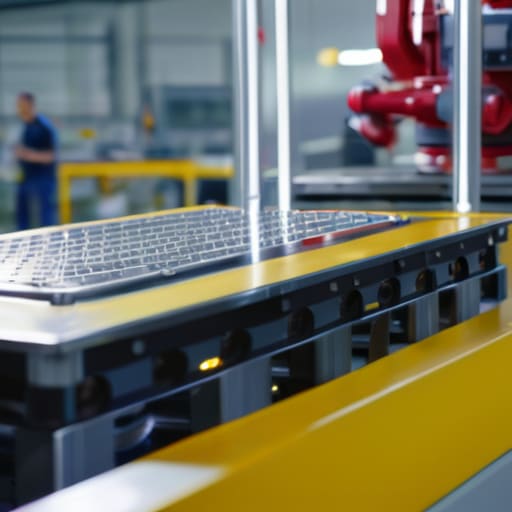
When a supplier sends you a quote for a specific grade of aluminum or a particular polymer, don’t just look at the decimal point. I’ve sat in enough factory offices to know that “equivalent material” is often code for “the cheapest thing we have in the warehouse this week.” True material selection for manufacturing isn’t just about meeting a spec sheet; it’s about understanding how that material behaves under the stress of a high-speed production line. If you choose a resin that is slightly too viscous, you aren’t just buying plastic; you are buying a 15% increase in scrap rates and a headache for your quality control team.
You have to look at how the material choice impacts your prototyping and manufacturing workflow. A material might look perfect in a 3D-printed sample, but if it doesn’t play nice with the injection molding or CNC tolerances required for mass production, your “cost savings” will vanish the moment the first batch fails inspection. I always tell my juniors: if the material choice doesn’t account for the realities of the shop floor, you aren’t designing a product—you’re designing a supply chain crisis.
Precision Engineering Tolerances Where Your Budget Goes to Die
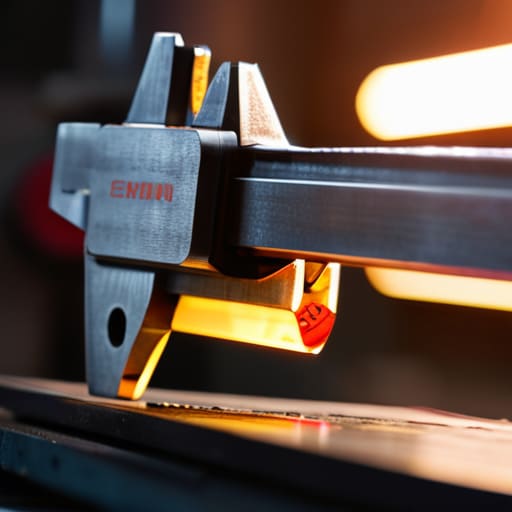
I have sat in enough factory offices to know that a drawing with too many decimal places is rarely a sign of quality; it is usually a sign of a designer who hasn’t spoken to a machinist in a decade. When you demand precision engineering tolerances that push the absolute limit of a machine’s capability, you aren’t just asking for accuracy—you are asking for a massive spike in your scrap rate. I’ve seen projects where a tolerance was tightened by a mere 0.05mm, only to watch the unit price jump by 30% because the supplier had to move from standard milling to a specialized, high-precision process just to meet the spec.
The real danger lies in the gap between your CAD model and the reality of the shop floor. If your tolerances are too tight, you aren’t just increasing costs; you are actively minimizing manufacturing defects by doing the exact opposite. You are forcing the supplier to fight physics, and they will eventually pass that struggle onto your invoice. Before you finalize your specs, ask yourself if that tight tolerance is actually functional, or if it’s just a vanity metric that will end up bloating your landed cost.
The DFM Reality Check: 5 Ways to Stop Designing for a Spreadsheet and Start Designing for a Factory Floor
- Standardize your components before you finalize the CAD. Every time you specify a custom fastener or a unique screw head just because it looks “cleaner” in the render, you are handing your supplier a reason to hike the unit price and extend the lead time. If it isn’t off-the-shelf, it’s a liability.
- Stop treating assembly as an afterthought. I have seen countless designs that look perfect on a screen but require a technician to perform a high-wire act just to seat a single gasket. If your assembly process requires specialized jigs or excessive manual labor, that “low” manufacturing cost is going to evaporate the moment the first batch hits the line.
- Design for the tool, not the dream. Whether it’s injection molding or CNC machining, you need to know the limits of the machines you’re actually using. If your design requires a tool path that’s borderline impossible or a mold complexity that doubles the tooling amortization, you aren’t being “innovative”—you’re just making your procurement manager’s life miserable.
- Build in “error-proofing” (Poka-Yoke) from day one. A good design should make it physically impossible for a tired operator on a Tuesday night to install a part backward. If a component can be fitted incorrectly, it eventually will be, and by then, you’ll be paying for the rework, the scrap, and the expedited freight to fix the mistake.
- Validate your tolerances against real-world stack-ups. Don’t just give a supplier a list of tight tolerances because you can; tell them what the part actually needs to do. When you demand precision that isn’t functionally necessary, you aren’t buying quality—you’re just buying a much higher scrap rate and a supplier who will hide the truth from you until the shipment arrives.
The Reality Check: What Your DFM Strategy Should Actually Deliver
Stop chasing the lowest unit price in isolation; if your design demands tolerances that force a supplier to scrap 15% of their run, that “saving” vanishes before the goods even hit the port.
Treat material specifications as a legal requirement, not a suggestion—if you don’t define the exact grade and source, you aren’t buying a component, you’re buying a supplier’s best guess.
Build “buffer” into your lead times based on manufacturing complexity, because a design that looks easy on a CAD screen often becomes a logistical nightmare when the factory realizes they can’t source the sub-components at scale.
The Bottom Line: Design is Your Best Insurance Policy
At the end of the day, Design for Manufacture isn’t just a technical checklist; it is your primary defense against the chaos of the supply chain. We have looked at how material selection can quietly inflate your landed costs and how tightening a tolerance by a fraction of a millimeter can turn a standard production run into a total manufacturing nightmare. If you ignore these variables during the design phase, you aren’t actually saving money—you are simply deferring a much larger, much more expensive bill that will arrive the moment your first shipment hits the port. Remember, a design that looks perfect on a CAD screen is worthless if it cannot be replicated consistently on a factory floor halfway across the world.
My advice to you is to stop treating your engineers and your suppliers as separate entities. The most successful products I have ever sourced weren’t the ones with the most complex features, but the ones where the design was built on a foundation of manufacturability and reality. Don’t wait for a failed quality audit or a frantic call from a freight forwarder to realize your design was flawed. Build the friction into your process now, so you don’t have to deal with the fire later. Design with the end in mind, because the factory floor doesn’t care about your intentions—it only cares about what can actually be made.