
I remember standing on a humid factory floor in Guangzhou ten years ago, watching a production manager smile warmly while assuring me that their “new” quality control process was foolproof. Three months later, I was sitting in a glass-walled boardroom, staring at a spreadsheet of projected losses that made my stomach turn, because that “foolproof” process had just triggered a massive safety failure. Most people think a complete guide to recalls is about checking boxes on a regulatory compliance list or drafting a polite press release to soothe angry customers. They are wrong. A recall isn’t a PR crisis to be managed; it is the expensive, inevitable bill for every shortcut, unverified supplier, and “trust me” handshake you accepted when things were going well.
I am not here to give you a theoretical lecture on administrative procedures. Instead, I am going to give you the hard-won reality of what happens when the supply chain breaks. This is a complete guide to recalls built on nineteen years of seeing exactly where the cracks form before the shipment even leaves the port. We will look at how to trace a defect back to the actual source, how to manage the logistics of a reversal without losing your mind, and most importantly, how to build a sourcing strategy that ensures you never have to write this guide in the first place.
Table of Contents
Why Regulatory Compliance Standards Are Your Only Real Insurance

I’ve sat in enough emergency meetings to know that when a product fails, everyone starts looking for someone to blame. But blame doesn’t fix a shipment of defective components sitting in a warehouse. The only thing that actually protects your margin—and your reputation—is how tightly you’ve baked regulatory compliance standards into your sourcing requirements before the first PO is even cut. Most people treat compliance like a checkbox for the legal department; I treat it as the only structural barrier between a minor quality deviation and a total brand collapse.
If you don’t have granular supply chain visibility, you aren’t actually managing a supply chain; you’re just hoping for the best. Real risk mitigation in manufacturing isn’t about having a polished crisis communication strategy ready to go when the news breaks; it’s about having the audit trails and material certifications that prove you did your due diligence six months ago. When the regulators come knocking, they don’t care about your apologies. They care about your data, and if your data is a mess of unverified supplier claims, you’ve already lost.
The Fatal Flaw in Your Current Risk Mitigation in Manufacturing
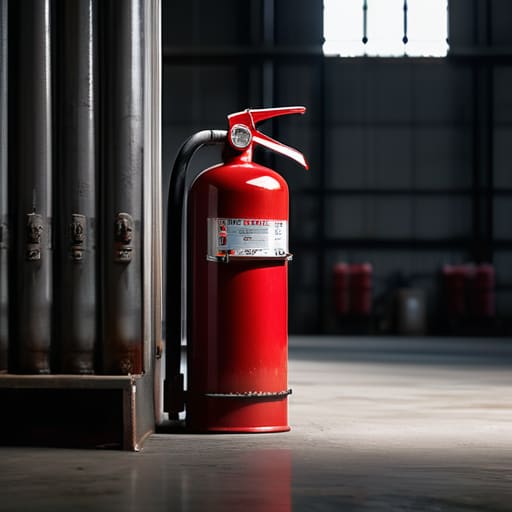
Most companies treat risk mitigation in manufacturing like a fire extinguisher: they check that it’s hanging on the wall once a year, but they never actually check if there’s any pressure in the canister. You likely have a folder on your server labeled “Compliance” filled with signed certificates and glossy factory profiles, but that isn’t a strategy; it’s a paper trail. I’ve seen too many procurement teams mistake a supplier’s willingness to sign a Code of Conduct for actual supply chain visibility. A signed document doesn’t tell you if the sub-tier component manufacturer changed their raw material source last Tuesday to save four cents per unit.
The fatal flaw is that your current approach is reactive, built around responding to a crisis rather than preventing the drift that causes one. You are looking for a robust product recall management process to save you when things go wrong, but by then, the damage to your brand is already baked into the math. Real mitigation isn’t found in your crisis communication strategies; it’s found in the uncomfortable audits and the granular data that proves your supplier is actually doing what their manual claims. If you aren’t looking for the cracks in the foundation, you’re just waiting for the house to lean.
Five Ways to Stop a Recall Before It Hits Your Balance Sheet
- Audit the floor, not the folder. A supplier’s ISO certification is just a piece of paper in a frame; I’ve seen plenty of “certified” factories where the actual operators haven’t seen a calibration log in six months. If you aren’t verifying that their real-world processes match their documented manuals, you aren’t managing risk—you’re just documenting your own eventual failure.
- Traceability is your only lifeline. When a component fails, you don’t need a vague “we’ll look into it” from your vendor; you need to know exactly which batch, which machine, and which shift produced that specific unit. If your supplier can’t provide a granular lot-trace within four hours, they aren’t ready to be in your supply chain.
- Stop treating “Lead Time” as a fixed number. Suppliers love to quote a 30-day lead time to win the bid, but they rarely account for the raw material volatility or the holiday shutdowns that actually drive the timeline. Build your recall contingency based on their worst documented delivery window, not the optimistic one they put in the spreadsheet to make the unit price look attractive.
- Demand evidence of “Corrective Action,” not just “Correction.” When a quality slip happens, a supplier will tell you they “fixed it.” That’s a correction. I want to see the Root Cause Analysis (RCA) that proves they changed the process so it can’t happen again. If they can’t show me the systemic change, they’re just waiting for the next batch to fail.
- Calculate the “True Cost of Failure” before you sign the PO. A $2.00 unit price looks great until you add the cost of a mandatory recall, the freight for returns, the customs duties on replacement stock, and the inevitable rework. If your margins don’t account for a 2% defect rate and the logistical nightmare that follows, you aren’t sourcing—you’re gambling.
The Real Price of Playing it Safe (or Not)
Stop treating compliance as a checkbox for the legal department; it is actually your most effective tool for preventing the kind of catastrophic failure that turns a profitable quarter into a bankruptcy filing.
A recall isn’t a sudden disaster—it is the final, visible symptom of a supply chain breakdown that you likely saw coming months ago in a skipped audit or a supplier’s “optimistic” lead time.
When calculating your risk, don’t just look at the cost of the defective unit; calculate the cost of the rework, the freight for the returns, and the permanent loss of trust from a customer who only needs to be disappointed once.
The Bill Always Comes Due
At the end of the day, a recall isn’t some freak act of God or a sudden stroke of bad luck; it is the final, visible symptom of a failure that started months ago in a factory audit you rushed or a certificate you didn’t verify. We have talked about why compliance is your only real insurance and why your current risk mitigation is likely built on nothing more than optimistic assumptions. If you haven’t mapped your entire supply chain, accounted for the true landed cost of quality, or demanded evidence instead of mere promises, you aren’t managing risk—you are simply waiting for the invoice to arrive.
My advice is simple, though rarely easy: stop looking for the cheapest way to get a product to market and start looking for the most reliable way to keep it there. Sourcing is not a game of chasing the lowest unit price; it is the disciplined practice of verifying reality against what is written on a spec sheet. Build your systems so that when a problem inevitably arises, you have the data to catch it before it reaches a customer’s hands. You can either pay for rigorous quality control now, or you can pay for a massive, brand-destroying recall later. Choose your payment method wisely.