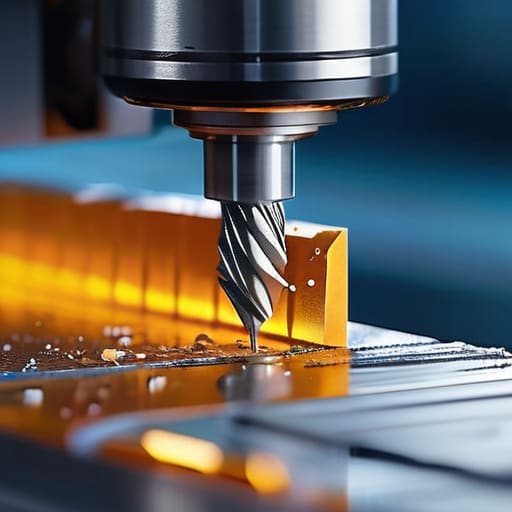
Most “complete guides to CNC machining” you find online are written by people who have never had to explain a 40% cost overrun to a CFO or deal with a container of scrap metal sitting in a port. They talk about tolerances and tool paths as if the math is the only thing that matters, completely ignoring the human variables that actually dictate your margin. I’ve stood on factory floors in the middle of a humid afternoon, watching a supplier promise a “seamless” production run while their actual maintenance logs told a much more expensive story. If your guide doesn’t account for the gap between a theoretical CAD file and the reality of a machine shop’s capacity, it isn’t a guide—it’s a brochure.
I’m not here to teach you the physics of cutting metal; I’m here to show you how to actually source and manage it. This isn’t a textbook; it’s a roadmap built from nineteen years of seeing where the cracks appear in a supply chain. I will walk you through what a real audit looks like, how to spot a quote that is mathematically impossible to fulfill, and how to calculate a landed cost that won’t leave you bleeding money when the first batch arrives.
Table of Contents
- Why Computer Numerical Control Basics Hide Massive Margin Risks
- Subtractive Manufacturing Processes and the Hidden Cost of Error
- Five Ways to Spot a CNC Quote That’s About to Cost You a Fortune
- The CNC Procurement Checklist: What to Look for Before the PO is Issued
- Beyond the Spreadsheet: Making CNC Work for You
Why Computer Numerical Control Basics Hide Massive Margin Risks

When you look at a quote for CNC machining, it is easy to get lost in the technical jargon of g-code programming fundamentals or the distinction between cnc milling vs turning. Most procurement teams treat these as mere technical specifications, but I see them as variables in a risk equation. The problem is that a supplier might understand the computer numerical control basics well enough to give you a price, but they might not understand the tolerance stack-up required for your specific assembly. If they are quoting based on a “standard” process without accounting for your actual precision engineering standards, they aren’t giving you a price; they are giving you a placeholder for a future quality claim.
The real margin killers hide in the gap between the machine’s capability and the operator’s reality. You might see a competitive rate for a complex part, but if that part requires specialized material selection for machining that the shop hasn’t actually stocked, you are looking at a lead time slip before the first chip is even cut. A low quote on a complex geometry often masks a lack of tooling investment. If they haven’t budgeted for the specific end mills or the high-grade coolant required for your alloy, you won’t find out until the first batch arrives at your dock with surface finishes that look like they were sanded with a brick.
Subtractive Manufacturing Processes and the Hidden Cost of Error

When you look at a quote for subtractive manufacturing processes, you aren’t just paying for the removal of material; you are paying for the supplier’s ability to manage the physics of that removal. Whether it is CNC milling vs turning, the fundamental risk remains the same: the margin for error is often thinner than the tolerances you’ve specified. I have seen too many procurement teams treat a technical drawing like a suggestion rather than a law. If your supplier is quoting a price that seems too good to be true for a complex geometry, they likely aren’t accounting for the tool wear or the scrap rate required to hit those precision engineering standards.
The real cost of error isn’t just the ruined part; it is the cascading delay in your assembly line. In my experience, a slight deviation in material selection for machining can lead to unexpected thermal expansion or tool deflection, turning a high-yield run into a pile of expensive swarf. You have to ask the supplier how they validate their setups. If they can’t explain how they mitigate tool deflection or manage heat, they aren’t offering you a price—they are offering you a gamble with your production schedule.
Five Ways to Spot a CNC Quote That’s About to Cost You a Fortune
- Stop looking at the unit price in isolation; if a supplier doesn’t lead with their minimum order quantity (MOQ) and a realistic lead time, they aren’t giving you a quote, they’re giving you a sales pitch.
- Demand a breakdown of material sourcing; a supplier claiming a low price might be using “equivalent” alloys that fail your stress tests, turning a cheap part into an expensive liability during QA.
- Verify their machine capacity against your tolerance requirements—if they promise micron-level precision on aging, poorly maintained equipment, they are lying to you to get the PO.
- Always ask about their scrap rate and how they handle non-conforming material; a supplier that hides their error rate is just waiting to pass those costs onto you via delayed shipments and rushed air freight.
- Look past the digital files and ask for a tool list; if they can’t tell you exactly what tooling they intend to use for your specific geometry, they haven’t actually run the numbers, they’ve just guessed.
The CNC Procurement Checklist: What to Look for Before the PO is Issued
Stop treating a quote as a final price; if the supplier hasn’t explicitly stated the material grade, the tolerance levels, and the lead time alongside that unit cost, they aren’t giving you a quote—they’re giving you a placeholder for a future argument.
Verify the machine list against your specific tolerances; a shop might have five-axis capability on paper, but if their maintenance logs show a history of spindle drift, those high-precision parts are going to arrive as expensive scrap.
Build a buffer for the “unseen” costs of subtractive manufacturing, specifically the inspection and rework cycles, because a part that meets the CAD model but fails your assembly’s fitment is just a very expensive paperweight.
Beyond the Spreadsheet: Making CNC Work for You
At the end of the day, mastering CNC machining isn’t about memorizing every axis of movement or every tool path variation; it’s about recognizing that every technical decision carries a financial consequence. We have looked at how the nuances of subtractive processes and the deceptive simplicity of control systems can quickly spiral into margin-eating disasters if you aren’t watching the details. You cannot manage what you do not measure, and in this industry, that means looking past the initial quote to understand the true cost of precision. If you aren’t accounting for material waste, tool wear, and the high price of a single out-of-tolerance part, you aren’t actually managing a procurement strategy—you are just placing bets against your own bottom line.
My advice is simple: stop looking for the cheapest way to make a part and start looking for the most reliable way to make it right the first time. A supplier who can prove their capability through data and consistent lead times is worth ten times more than the one offering a “too good to be true” unit price without a single shred of evidence. Sourcing is an exercise in risk management, not just price negotiation. Build your supply chain on verified competence rather than optimistic promises, and you will find that the most expensive parts are rarely the ones with the highest sticker price, but the ones that arrive late, broken, or wrong.