
I once stood in a humid warehouse outside of Ho Chi Minh City, watching a shipment of high-end electronics being unboxed, only to be met with the unmistakable, sickly-sweet scent of mildew. It wasn’t just a bad smell; it was the smell of a massive financial write-off. Most people think they can solve the problem by simply throwing a few more silica gel packets into a box, but that’s a dangerous delusion. They don’t realize that understanding how moisture damages shipments isn’t about buying more desiccants; it’s about understanding the physics of the container and the failures in the packing process that happened weeks before the vessel even left the dock.
I’m not here to sell you on expensive, “miracle” moisture-control gadgets that your suppliers will likely skip anyway. Instead, I’m going to show you how to look for the actual structural weaknesses in your logistics chain. We’ll talk about why your current packaging specs are probably failing you, how to spot a factory that’s cutting corners on climate control, and how to calculate the true cost of humidity before it turns your landed cost into a total loss.
Table of Contents
- The Container Rain Phenomenon Why Humidity Control Is Non Negotiable
- Packaging Moisture Barriers the Difference Between Protection and Illusion
- Five Ways to Stop Paying for Moisture Damage After the Fact
- The Bottom Line: Why Your "Savings" Are Usually Just Unfunded Liabilities
- The Bottom Line on Moisture
The Container Rain Phenomenon Why Humidity Control Is Non Negotiable
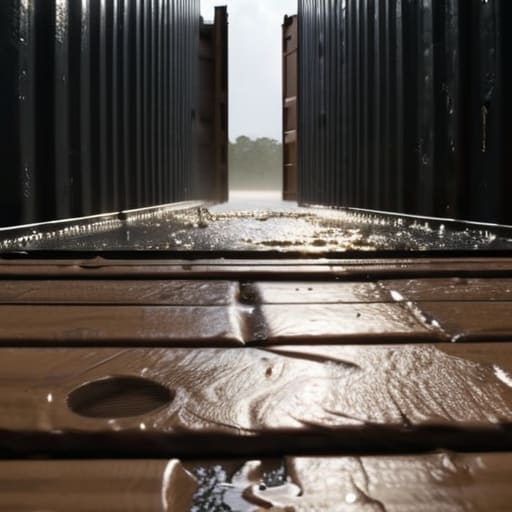
I’ve stood in the back of a container after a long transit through the tropics, and let me tell you, it’s a scene most procurement managers aren’t prepared for. You open the doors and instead of seeing your neat pallets, you’re looking at a miniature monsoon. This is the container rain phenomenon in action. It happens when the temperature fluctuates wildly during the voyage, causing moisture to condense on the ceiling and literally rain down on your goods. It isn’t just a nuisance; it’s a systematic failure of your environmental controls.
If you are shipping anything porous or metal-based, you cannot treat humidity as an afterthought. I’ve seen perfectly good production runs ruined because a supplier thought standard cardboard was enough, ignoring the need for proper packaging moisture barriers. Whether it’s the slow creep of corrosion from shipping moisture on machined parts or the sudden appearance of black mold on textiles, the damage is often irreversible by the time the customs broker calls you. If you haven’t budgeted for desiccant poles or specialized liners, you haven’t actually calculated your true landed cost.
Packaging Moisture Barriers the Difference Between Protection and Illusion

I’ve sat in enough warehouse receiving bays to know that a “moisture-proof” bag is often just a polite suggestion. I once saw a supplier boast about their high-grade vacuum sealing, only to find the entire batch of precision components had succumbed to corrosion from shipping moisture because the seal failed at the first temperature swing in the mid-Atlantic. They had prioritized the visual appearance of the packaging over the actual physics of the journey. If you aren’t verifying the micron thickness and the actual seal integrity of your packaging moisture barriers, you aren’t buying protection—you’re just buying a false sense of security.
Don’t mistake a single desiccant packet for a comprehensive strategy. Real cargo sweat prevention requires looking at the entire ecosystem: the pallet wrap, the interstitial spaces in the cartons, and the way the goods interact with the container walls. I’ve seen too many procurement teams treat humidity control as an afterthought, a line item to be minimized during negotiations. But when you’re staring at a shipment of moldy textiles or rusted hardware, that “saving” on inferior polybags disappears instantly. You need to demand proof of performance, not just a spec sheet that looks good on paper.
Five Ways to Stop Paying for Moisture Damage After the Fact
- Stop trusting “moisture-proof” labels without seeing the spec sheet. If a supplier tells you their polybags are moisture-proof but won’t give you the micron thickness or the breathability rating, they aren’t protecting your goods—they’re just giving you something to blame when the shipment arrives damp.
- Audit the loading area, not just the factory floor. I’ve seen pristine production lines where the loading dock is basically a sieve for humidity; if they are loading containers in the middle of a monsoon season without a covered bay, your “dry” goods are already compromised before the doors even latch.
- Treat desiccant as a calculated requirement, not an afterthought. Don’t let a factory tell you “we’ll throw some silica gel in there” as a courtesy; you need to calculate the volume of the container against the expected humidity of the transit route and mandate a specific weight of desiccant in your PO.
- Look for the “sweat” during your pre-shipment inspections. If you see condensation on the inside of a sample container or even just a dampness on the pallet wrap, do not let that shipment leave the yard; that is a preview of the disaster waiting for you at the destination port.
- Factor the cost of “rework” into your initial landed cost calculations. If you’re choosing a cheaper packaging option to save $0.05 per unit, but it increases your risk of a 10% damage rate requiring local sorting and cleaning, you haven’t found a saving—you’ve just deferred a massive, unbudgeted expense.
The Bottom Line: Why Your "Savings" Are Usually Just Unfunded Liabilities
Stop treating unit price as the final number; if you haven’t factored in the cost of desiccant, moisture-barrier bags, and the potential for a 15% scrap rate due to humidity, your “cheap” shipment is actually a loss leader.
A supplier’s promise of “waterproof packaging” is a claim, not a fact—demand to see the spec sheet for the micron thickness of the polybags and the specific type of silica gel they use before you sign the PO.
Humidity damage isn’t a “freak occurrence” to be blamed on the weather; it is a predictable failure of the supply chain that you can see coming the moment you approve a budget that cuts corners on environmental controls.
The Bottom Line on Moisture
At the end of the day, preventing moisture damage isn’t about buying the most expensive desiccants on the market; it’s about understanding the physics of your specific supply chain. You have to account for the “container rain” that occurs during temperature swings, the difference between a true moisture barrier and a piece of plastic that just looks the part, and the reality that cheap packaging is often just a deferred cost. If you ignore the humidity levels or skip the audit of your supplier’s packing protocols, you aren’t actually saving money on your unit price. You are simply pre-authorizing a massive insurance claim and a mountain of rework that will eat your entire margin before the goods even hit your warehouse floor.
My advice is to stop treating moisture protection as an optional line item and start treating it as a fundamental component of your quality control. A supplier who pushes back on the cost of proper desiccant or better film is a supplier who is already telling you how they intend to cut corners. Don’t wait for a shipment of ruined, moldy inventory to arrive at your dock before you decide to take this seriously. Build your specifications around evidence and proven barriers, because in this business, the most expensive shipment is always the one that arrives damaged.