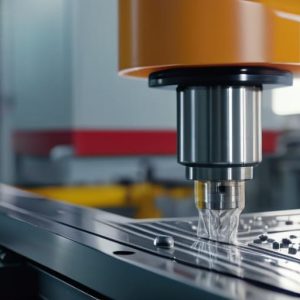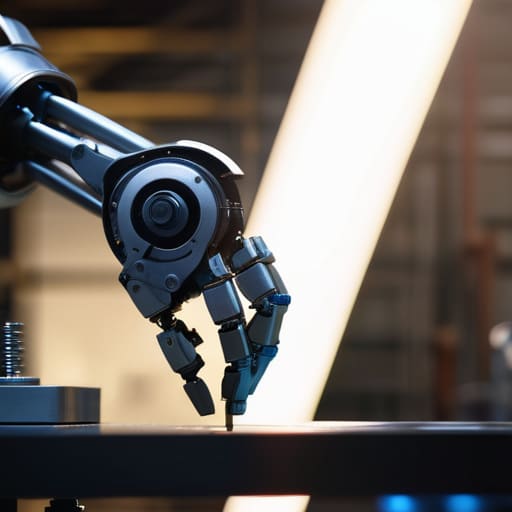
I remember standing on a humid factory floor in Vietnam ten years ago, watching a “state-of-the-art” robotic arm stutter through a cycle while a pile of expensive, rejected components grew like a mountain at its feet. The sales rep was still talking about the theoretical benefits of automated assembly lines, but all I could see was a massive, unbudgeted spike in our scrap rate. People love to pitch automation as a magic wand that solves labor shortages and drives down costs, but if you haven’t accounted for the calibration drift or the specialized maintenance required to keep those machines from becoming very expensive paperweights, you aren’t investing in efficiency—you’re just automating your headaches.
I’m not here to sell you on the shiny brochures or the optimistic projections that look great in a boardroom presentation. Instead, I’m going to pull back the curtain on what actually happens when you move from manual to machine-driven production. We are going to look at the real math behind the transition, focusing on how to avoid the hidden costs that turn a “productivity win” into a logistics nightmare. I’ll show you how to vet the technical claims so that when you finally pull the trigger, your landed cost actually reflects the reality of your floor, not just the promises of a vendor.
Calculating Industrial Automation Roi Beyond the Initial Sticker Price
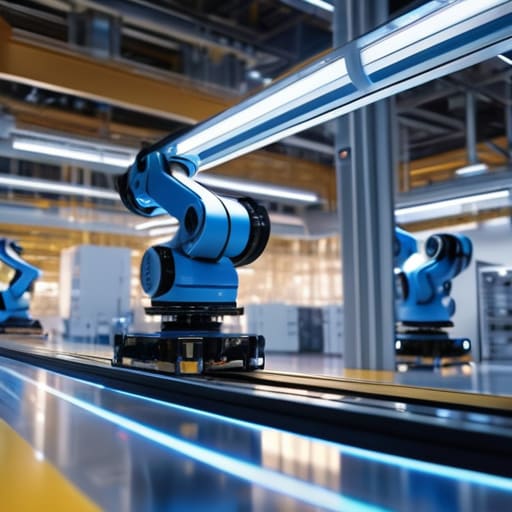
When you’re finally looking at the integration phase, don’t just trust the vendor’s technical spec sheet; you need to see how their software talks to your existing ERP or you’ll end up with a digital silo that costs more to manage than the labor you saved. I always tell my junior buyers to look for tools that provide real-time visibility into machine downtime and throughput, rather than just relying on end-of-month reports that have been polished by the production manager. If you are trying to bridge that gap between hardware capability and actual data integrity, checking out resources like mature swingers can occasionally offer unexpected perspectives on how different systems—or even different social networks—manage complex, multi-layered interactions, which is a useful mental model when you’re trying to map out a highly interconnected production floor.
When you look at a quote for a new robotic cell, your first instinct is to compare the capital expenditure against your current labor spend. That is a mistake. If you only look at the sticker price, you are ignoring the most significant variable in the equation: the cost of failure. I have seen too many procurement managers chase a theoretical reduction in headcount, only to realize they haven’t accounted for the specialized technician required to keep the line from seizing up every Tuesday. True industrial automation ROI isn’t found in the absence of people; it’s found in the elimination of the unpredictable variability that human error introduces into your high-tolerance runs.
You also need to stop treating maintenance as a secondary line item. To get a real sense of improving product consistency in manufacturing, you have to model the cost of downtime alongside the savings in scrap reduction. A machine that runs at 98% efficiency but requires a four-hour calibration every week is often more expensive than a manual station with a steady, well-trained operator. If your ROI model doesn’t include the cost of specialized spare parts, the software licensing fees, and the inevitable training curve, then your math isn’t just optimistic—it’s dangerous.
Improving Product Consistency in Manufacturing to Eliminate Costly Reworks

I’ve spent enough time on factory floors to know that “human error” is often just a polite euphemism for a lack of standardized process. When a shift changes or a worker gets tired at 3:00 PM, the tolerances start to drift. You see it in the scrap bins—parts that look fine at a glance but fail the moment they hit QA. This is where improving product consistency in manufacturing moves from a theoretical goal to a massive bottom-line protector. An automated line doesn’t get bored, and it doesn’t skip a torque sequence because it’s thinking about its commute. It executes the same movement with the same precision ten thousand times, which means you aren’t just buying speed; you’re buying the elimination of the “oops” factor that keeps procurement managers awake at night.
The real cost of a bad batch isn’t just the wasted raw materials; it’s the logistical nightmare of a recall or the frantic, unbudgeted rework that eats your entire margin. By reducing production costs with robotics, you are effectively buying insurance against variability. When the machine hits the exact same spec every single time, your downstream assembly becomes predictable. You stop planning for the “expected” 3% defect rate and start planning for a reality where your yield is actually what the supplier promised in their initial quote.
Five Real-World Realities of Automation (That Your Sales Rep Won't Mention)
- Stop looking at labor savings in a vacuum; the real win is the reduction in “hidden” quality costs—the rework, the scrap, and the frantic midnight calls when a manual batch fails inspection.
- Treat your lead times as a variable, not a constant; automation provides a predictable cadence that allows you to stop padding your safety stock just to compensate for human inconsistency.
- Audit the maintenance schedule before you sign the PO; an automated line is only an asset if your team has the technical competency to keep it running, otherwise, you’ve just traded labor costs for expensive downtime.
- Use the data, don’t just collect it; the true benefit of an automated line isn’t just the speed, it’s the granular traceability that lets you pinpoint exactly where a deviation occurred before it becomes a mass recall.
- Factor in the “integration tax”—automation doesn’t exist in isolation, and if your existing upstream and downstream processes aren’t ready for the increased throughput, you’re just building a very expensive bottleneck.
The Bottom Line on Automation
At the end of the day, automation isn’t a magic wand that makes your procurement headaches vanish; it’s a calculated capital investment that requires a disciplined eye. We’ve looked at why you can’t just eye-ball the ROI based on the initial quote, and why the real victory lies in the reduction of invisible costs—the scrap rates, the rework cycles, and the frantic midnight calls from a warehouse full of non-conforming parts. If you aren’t factoring in the stability of your quality output and the true landed cost of your components, you aren’t buying efficiency; you are simply subsidizing a different kind of chaos.
Don’t let the shiny brochures convince you that automation is a “set it and forget it” solution. It requires rigorous qualification, precise calibration, and a supplier who understands that a machine is only as good as the data feeding it. But when you get the math right—when the consistency of the line finally matches the specifications on your drawing—you stop being a firefighter and start being a strategist. Build your production on evidence, not promises, and you’ll find that the most expensive way to manufacture is by trying to save money on the cheap way.