
I remember standing on a humid factory floor in Vietnam ten years ago, watching a production line grind to a halt because a single specialized component supplier had gone bust. The air was thick with the smell of burnt oil and the palpable panic of a floor manager who realized our entire quarterly output was now a collection of useless scrap. That was my first real lesson in how single sourcing creates risk; it isn’t some abstract theoretical concept you discuss in a boardroom, it is a physical, expensive bottleneck that hits you exactly when you have the least amount of leverage.
I’m not here to give you a textbook lecture on supply chain resilience or some high-level strategic framework. I want to talk about the reality of the trenches: why that “reliable” sole supplier is actually a ticking time bomb, and how to spot the cracks in your procurement strategy before the shipment fails. I’ll show you how to look past the polished sales pitches and build a sourcing model that actually survives contact with the real world.
Table of Contents
The Hidden Cost of Vendor Lock in Consequences

When you realize you’ve fallen into the trap of vendor lock-in consequences, it’s rarely a sudden crash. Instead, it’s a slow, quiet erosion of your leverage. You start by noticing that the “special” pricing you negotiated three years ago is suddenly being quietly rolled back. Then, you realize that when you ask for a slight modification to a spec or a tighter lead time, the answer is a heavy, non-committal silence. Because they know you have no immediate alternative, they no longer have to compete for your business; they simply have to tolerate it.
This is where the real cost of single sourcing manifests: the loss of your ability to drive improvement. Without active supplier diversification strategies, you aren’t just managing a partner; you’re managing a monopoly. I’ve seen companies realize too late that they haven’t been building a partnership, but rather a dependency. When a supplier realizes they are your only lifeline, your supply chain resilience effectively drops to zero. You aren’t just buying a component anymore; you are subsidizing their lack of urgency, and you’ll pay for that lack of competition every time a shipment is delayed without a single word of apology.
Unmasking Supply Chain Vulnerability Before the Crisis Hits
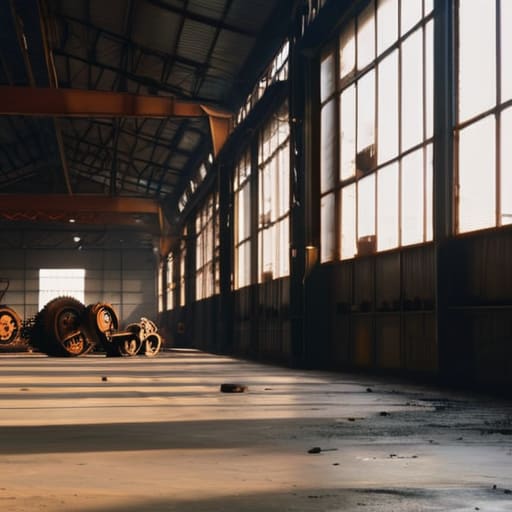
You don’t find out you have a single point of failure when the production line stops; you find it out when the factory floor goes silent and your “reliable” partner stops answering emails. To truly understand your supply chain vulnerability, you have to stop looking at your spreadsheets and start looking at your dependencies. I’ve spent enough time in factory inspection rooms to know that a supplier’s “capacity” is often just a number on a polished PDF. If you haven’t audited their sub-tier suppliers or verified their raw material buffers, you aren’t managing a supply chain—you’re just hoping for the best.
The real work lies in mitigating procurement risks long before a crisis forces your hand. This means moving beyond the comfort of a single relationship and actually implementing supplier diversification strategies that make sense for your specific product complexity. It isn’t about splitting every order 50/50; it’s about knowing exactly which secondary source can scale up when your primary vendor hits a snag. If you wait until the shipment is late to test your backup, you’ve already lost.
Five Ways Your Single-Source Strategy is Quietly Eroding Your Margin
- Stop treating a low unit price as a victory. If you aren’t qualifying a second source simultaneously, that price isn’t a saving—it’s a high-interest loan you’re taking out against your own production schedule.
- Demand more than a “yes” during your audits. A supplier who can’t show you their sub-tier material sources is a single point of failure waiting to happen; if their supplier goes down, you go down, and you won’t even see it coming until the shipment is late.
- Build “buffer” into your lead times, but don’t use it as a crutch. If your supplier’s quoted lead time is 30 days, assume 45, and if you haven’t vetted a backup who can jump in at 60, you’ve already lost control of your inventory.
- Watch the quality trends, not just the final inspection. Single sourcing makes you complacent, which is when you stop noticing the slight drift in tolerances that eventually leads to a massive, expensive batch of rework that eats your entire quarterly margin.
- Diversify your geography, not just your names. Having two suppliers who both source their raw components from the same industrial zone in the same province isn’t “dual sourcing”—it’s just the same risk with two different letterheads.
Three Hard Truths to Carry Into Your Next Sourcing Meeting
A low unit price is a claim, not a fact; if you haven’t stress-tested that supplier’s capacity against their actual historical lead times, you’re just gambling with your production schedule.
Diversification isn’t an “extra” expense—it is the insurance premium you pay to ensure that one factory’s local crisis doesn’t become your company’s total operational shutdown.
Stop looking at the invoice in isolation and start looking at the landed cost; a single-source “saving” evaporates the moment you factor in the cost of expedited freight and the rework required when a sole supplier misses a spec.
The Cost of Playing it Safe
At the end of the day, single sourcing isn’t a procurement strategy; it’s a gamble where the house always wins when things go sideways. We’ve looked at how vendor lock-in erodes your leverage and how vulnerability often hides in plain sight, masquerading as “efficiency.” If you aren’t actively qualifying secondary sources or building a buffer into your lead times, you aren’t managing a supply chain—you are merely waiting for a disruption to prove you wrong. Remember, a supplier’s promise of stability is worth nothing if you haven’t verified their capacity to scale or their ability to survive a local crisis. Reliability is earned through redundancy, not through a single, optimistic contract.
I know it’s tempting to chase that perfect, streamlined workflow where everything fits into one neat box. It looks great on a spreadsheet, and it makes your quarterly reports look incredibly clean. But I have spent too many nights on factory floors and too many mornings dealing with empty containers to believe in perfection. Real procurement is messy, and real resilience requires the courage to spend a little more now to avoid paying ten times as much later in emergency air freight and production downtime. Stop looking for the cheapest way to buy, and start looking for the most certain way to deliver.