
I once watched a junior buyer celebrate a “massive win” because they’d secured a low-cost courier quote for a high-volume component order, thinking they were being clever with the budget. Three weeks later, I was sitting in a boardroom explaining why our production line had stalled because those “express” parcels were sitting in a sorting hub, crushed under a mountain of mismatched shipments that were never meant to be handled like that. Most people think the choice is just about speed versus scale, but they fail to grasp how courier shipments differ from freight when it comes to the actual structural integrity of your supply chain. If you treat a pallet of delicate goods like a stack of envelopes, you aren’t saving money; you are simply pre-ordering a crisis.
In this post, I’m stripping away the glossy sales pitches from the logistics providers. I won’t give you a textbook definition; instead, I’m going to show you the real-world math of how these two methods impact your landed cost and your sanity. We will look at why a courier’s “door-to-door” promise often masks a lack of accountability, and why freight, despite its perceived complexity, is often the only way to actually protect your margins.
Table of Contents
The Courier Model: Speed at a Premium
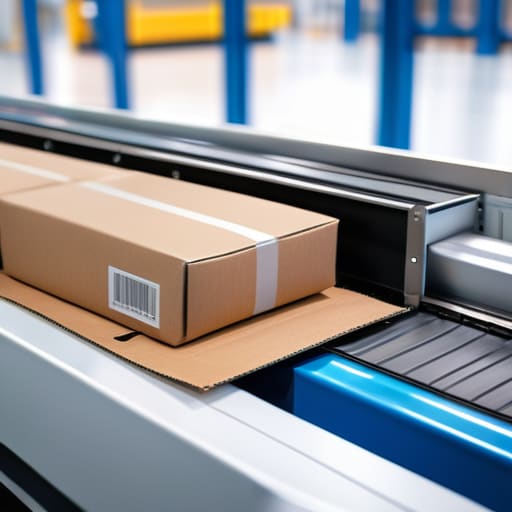
Courier services are specialized logistics solutions designed for the rapid, door-to-door transport of small, individual parcels through highly integrated networks. The core mechanism relies on a “hub-and-spoke” system where high-frequency sorting and dedicated vehicle fleets ensure that how courier shipments differ from freight is most visible in their sheer velocity and end-to-end accountability. Their primary selling point is the ability to move a single unit or a small box across borders with minimal handling and maximum predictability in terms of transit time.
In my experience, the allure of the courier is the illusion of control. When a production line is down and you need a single critical component by tomorrow morning, you call a courier because you aren’t paying for a pallet space; you are paying for a guarantee. However, I’ve seen too many junior buyers treat courier rates as a standard line item. If you start using express parcel services to move anything larger than a shoebox, you aren’t being efficient—you are essentially subsidizing the carrier’s fuel costs with your own margin.
The Freight Model: Moving Volume by Design
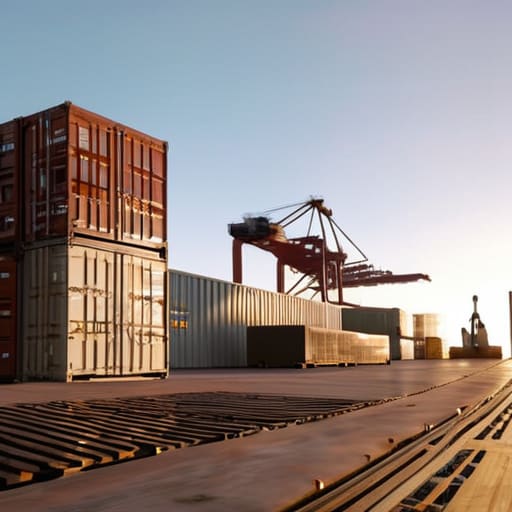
Freight logistics involves the bulk movement of goods, typically via sea, air, or rail, utilizing standardized units like pallets or full containers to maximize transport efficiency. Unlike smaller shipments, the mechanism here is centered on consolidation and scale, where the objective is to drive down the cost per unit by filling as much cubic capacity as possible. The main selling point of freight is its ability to move massive quantities of inventory at a fraction of the per-unit cost seen in smaller, fragmented shipping methods.
I have spent enough time reviewing landed cost spreadsheets to know that freight is where the real math happens. While a courier quote is straightforward, a freight quote is often just the beginning of a conversation regarding surcharges, port fees, and drayage. It is the backbone of any serious manufacturing operation, but it requires a level of planning that most people underestimate. If you don’t account for the lead time required to clear a container through customs, that “cheap” freight rate becomes an expensive lesson in stockouts and empty warehouse shelves.
Comparison of Courier Shipments vs. Freight
| Feature | Courier Shipments | Freight |
|---|---|---|
| Typical Weight | Small parcels/documents (<70kg) | Large/heavy bulk (>150kg) |
| Primary Unit | Individual packages/envelopes | Pallets, crates, or containers |
| Speed | High (express/next-day) | Moderate to slow (scheduled) |
| Cost Structure | Per package/weight | Per weight, volume, or distance |
| Tracking Detail | High (door-to-door, real-time) | Moderate (milestone-based) |
| Best For | E-commerce & personal items | Manufacturing & wholesale B2B |
| Complexity | Low (standardized) | High (requires specialized handling) |
Parcel Delivery vs Ltl Shipping Where the Math Breaks Down
If you’re looking at your spreadsheet and seeing a lower per-unit cost on a courier quote, stop. You aren’t looking at the math; you’re looking at a mirage. In the debate between parcel and LTL (Less Than Truckload), the math breaks down because most people calculate based on the movement of a single box rather than the efficiency of the entire shipment. If you don’t account for how volume scales against weight, you aren’t sourcing; you’re just guessing.
Parcel delivery is built for speed and individual accountability, but it scales poorly. As your shipment grows, the “convenience” of a courier becomes a predatory expense because you are paying a massive premium for the handling of every single unit. LTL, on the other hand, is designed for the reality of pallets. While the administrative setup is heavier, the cost per cubic meter drops significantly once you move past the threshold where a single driver can no longer carry your margin in a van.
For anyone moving anything more substantial than a few kilograms, LTL is the clear winner. Parcel is a tactical tool for samples; LTL is the strategic choice for inventory.
Last Mile Delivery vs Bulk Transport the Hidden Rework Costs
You can look at a quote all day, but if you aren’t accounting for what happens when the goods actually hit your receiving dock, you aren’t calculating cost—you’re just guessing. The distinction between last-mile courier service and bulk freight isn’t just about the vehicle; it’s about the unseen labor required to make that delivery usable.
When you use a courier, you’re paying for convenience and individual handling, but you’re also inheriting a massive amount of sorting and unpacking overhead. Every small parcel is a new task for your warehouse team to scan, log, and place. Conversely, bulk freight arrives in consolidated, palletized units that are designed for efficiency, but if the carrier fails to provide a lift-gate or the paperwork is botched, your “bulk saving” evaporates instantly into expensive labor hours spent fixing a disorganized mess.
If your goal is minimizing the chaos on your warehouse floor, bulk freight wins on sheer structural efficiency, provided you actually vet the carrier’s equipment capabilities first. Don’t let a courier’s “easy” delivery mask the true cost of the mountain of cardboard it leaves in its wake.
The Bottom Line: Don't Buy the Quote, Buy the Evidence
Stop treating a unit price as a fact; it’s just a claim. If you aren’t factoring in the inevitable rework, duty, and the cost of a pallet getting stuck in a sorting hub, your “savings” are nothing more than a mathematical error.
Scale dictates your strategy, not your preference. Moving volume via courier isn’t “faster” if the logistical nightmare of small parcel handling ends up inflating your landed cost more than a controlled LTL shipment ever would.
Visibility is your only defense against lead time slip. Whether you choose bulk transport or last-mile delivery, if you haven’t audited the provider’s ability to actually execute the movement, you aren’t managing a supply chain—you’re just hoping for the best.
The Bottom Line on Speed vs. Scale
At the end of the day, choosing between courier and freight isn’t a matter of preference; it is a calculation of risk and total landed cost. If you treat a high-volume shipment like a collection of small parcels, you aren’t saving time—you are simply inviting chaos into your warehouse receiving dock. I have seen too many procurement plans fall apart because someone prioritized a fast courier quote over the structural stability and cost-efficiency of a proper LTL or FTL freight solution. Remember that a courier is built for speed and individual tracking, while freight is built for economies of scale and predictable bulk movement. If you mix those two philosophies up, your margin will pay the price long before the goods even clear customs.
Don’t let the simplicity of a “click and ship” interface fool you into thinking logistics is easy. Every shipment is a series of claims made by providers, and your job is to demand the evidence that those claims hold up under pressure. Stop looking for the cheapest way to move a box and start looking for the most resilient way to move your inventory. When you stop chasing the lowest immediate quote and start planning for the reality of the entire supply chain, you stop being a reactive buyer and start being a strategic manager. Build your logistics around the math, not the optimism, and you’ll find that the “expensive” freight option is often the only one that actually keeps your business running.