
I once stood in a humid, sweltering facility outside of Shenzhen, staring at a pristine, laminated ISO document hanging on a bright white wall, while just ten feet away, an operator was using a rusted manual caliper to check a tolerance that required a digital micrometer. It was a perfect, sickening example of why most procurement professionals fail: they treat documentation as a substitute for observation. If you want to actually learn how to read a quality manual against reality, you have to stop treating that binder like a holy text and start treating it like a list of claims that requires immediate, physical verification.
I am not here to give you a theoretical lecture on compliance frameworks or academic auditing standards. Instead, I’m going to show you how to spot the gap between what a factory says they do and what they actually do when the production manager isn’t looking. We will walk through the specific, messy red flags that indicate a manual is just a stack of promises, ensuring you stop gambling with your margins and start sourcing from suppliers who can actually prove their competence.
Table of Contents
The Gap Analysis Between Documentation and Execution
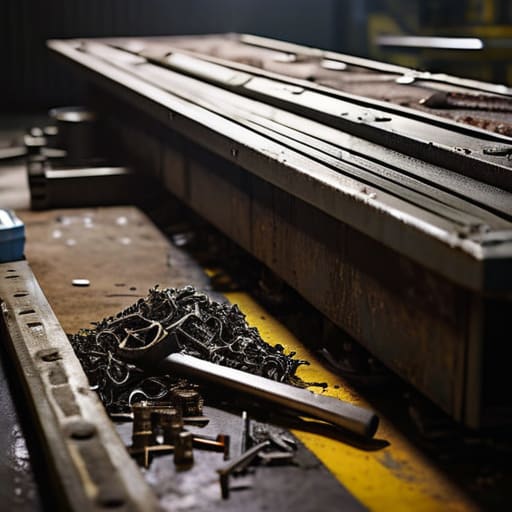
When I walk onto a factory floor, I’m not looking at the framed certificates in the lobby; I’m looking at the bins near the assembly line. A quality manual might claim a rigorous inspection process at every stage, but if you see three hours of uninspected sub-assemblies piling up in a corner, that manual is fiction. Performing a true gap analysis between documentation and execution requires you to ignore the polished prose and focus on the friction. I look for the moments where the operator’s hands move faster than the written procedure allows, or where the “standardized” tool is actually a piece of scrap metal taped to a workbench.
This is where most people fail during ISO 9001 compliance auditing. They treat it like a checklist of “yes” or “no” questions, but the real intelligence is in the auditing process observations. If the manual says every batch undergoes a thermal stress test, but the technician can’t show you the last three logs—or worse, the logs look too perfect, with identical decimal points across a month of data—you’ve found your problem. You aren’t just looking for errors; you are looking for the disconnect between what is written and what is actually done.
Why Iso 9001 Compliance Auditing Often Misses the Truth

I’ve sat through enough ISO 9001 compliance auditing sessions to know exactly how the dance works. The auditor arrives, the manager presents a pristine binder, and for two hours, everything looks mathematically perfect. But ISO certification is often a measure of how well a company can curate a paper trail, not how well they manage a production line. You can have a flawlessly documented quality management system that exists entirely in a vacuum, disconnected from the actual chaos of the factory floor.
The problem is that these audits often focus on the existence of a process rather than its quality management system effectiveness in a crisis. An auditor checks if there is a form for non-conforming material; they rarely stay long enough to see if the operator actually stops the line when the machine starts spitting out scrap. If you rely solely on the certificate hanging in the lobby, you are ignoring the operational reality vs documented procedures gap. True insight comes from auditing process observations—watching the way a technician handles a tool or how a supervisor reacts to a deviation—because that is where the real risks are hiding.
Five Ways to Spot the Difference Between a Policy and a Process
- Check the “Control of Non-Conforming Product” section against the scrap bins. If their manual says they have a rigorous quarantine process for defective parts, but you see a pile of rejected components sitting next to the assembly line without any red tags or isolation, their manual is just fiction.
- Look for the “Training and Competency” clause and then ask to see the operator’s log. A manual might claim every technician is certified for specific machinery, but if the person running the CNC machine can’t explain the basic tolerances required for your part, that documentation isn’t worth the paper it’s printed on.
- Verify their “Corrective Action” process by asking for the last three non-conformance reports. If they tell you they haven’t had a single deviation in six months, they aren’t perfect—they’re lying or hiding things. A real quality system shows the scars of mistakes and the evidence of how they fixed them.
- Match their “Calibration” schedule to the actual tools on the floor. If the manual states all measuring equipment is calibrated annually, but you see a micrometer with a calibration sticker that expired three months ago, you’ve just found the exact moment their quality control collapsed.
- Test the “Document Control” by asking an operator to find the latest revision of a work instruction. If the manual says they use a centralized digital system, but the worker is using a photocopied, handwritten note taped to a workbench, you are looking at a high-risk supplier.
Three Hard Truths for Your Next Supplier Audit
Stop treating a quality manual as a checklist of achievements; treat it as a list of hypotheses that you must prove on the factory floor. If the manual says they perform a 100% visual inspection but the line workers are moving too fast to even look at the product, that manual is nothing more than expensive wallpaper.
Look for the “shadow processes”—the unofficial ways workers actually get things done when the formal procedure is too slow or too complicated. A supplier who admits their formal process is clunky but shows you their functional, real-world workaround is infinitely more reliable than one who insists their paperwork is perfect while their lead times are slipping.
Audit the competence, not just the documentation. It doesn’t matter if the ISO certificate is framed and current if the person running the injection molding machine doesn’t know how to spot a defect in the cooling cycle. You aren’t auditing a set of papers; you are auditing the ability of a human being to prevent your margin from evaporating in a pile of scrap.
Moving Beyond the Paper Trail
At the end of the day, a quality manual is neither a guarantee of excellence nor a shield against failure; it is merely a statement of intent. You cannot audit your way to reliability by simply checking boxes on a spreadsheet or verifying that a signature exists on a training log. To truly understand your supply chain, you have to look past the sanitized documentation and find where the actual work happens. If the manual says every batch is tested, but the lab technicians are busy managing three other lines and the testing equipment hasn’t been calibrated since last year, then that manual is nothing more than expensive fiction.
Sourcing is an exercise in managing reality, not managing paperwork. My advice is to stop treating the documentation as the destination and start treating it as the starting line. The real intelligence lies in the friction between what is written and what is done on the factory floor. When you learn to spot those discrepancies early, you aren’t just being difficult; you are protecting your margins and your reputation. Build a culture where evidence outweighs promises, and you will find that the most reliable suppliers aren’t the ones with the thickest binders, but the ones who have nothing to hide when you walk through the door.