
I once sat in a humid, windowless inspection room in Shenzhen, watching a technician struggle to fit a component that had been “guaranteed” to meet our specs. The supplier had promised a competitive unit price by promising they could hit our tightest tolerances, but as I looked at the pile of rejected parts, I realized they hadn’t actually accounted for the scrap rate. They weren’t giving us a discount; they were just gambling with our margin. Most people think a complete guide to tolerances and cost is about memorizing decimal points and engineering tables, but in the real world, it’s about understanding that every micron you demand comes with a hidden tax that most procurement teams fail to budget for.
I’m not here to give you a theoretical lecture from a textbook. I’m going to give you the version of this guide that I wish someone had handed me nineteen years ago—the one that connects the math on the blueprint to the actual reality of the factory floor. We are going to strip away the optimistic sales pitches and look at how precision affects your yield, your tooling, and your ultimate landed cost. By the end of this, you’ll know exactly when to tighten your specs and, more importantly, exactly when to loosen them to save your budget without sacrificing your quality.
Table of Contents
Dimensional Tolerance vs Manufacturing Expense the Real Margin Killer
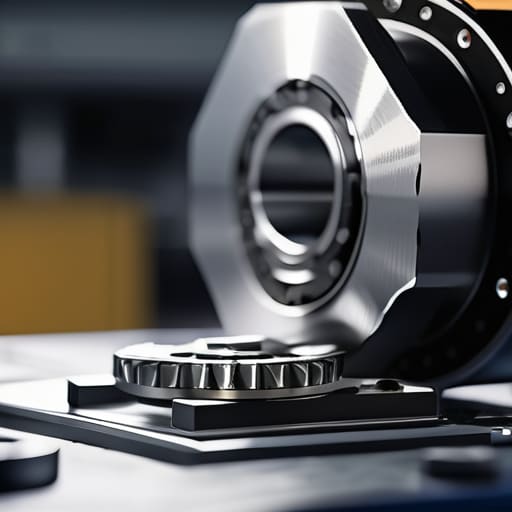
I’ve sat in enough procurement meetings to know that “tight tolerances” is often used as a shield by engineers who haven’t looked at a quote in a decade. They hand over a drawing with decimal places that suggest we are building aerospace components when we are actually just making plastic housings. This is the core of the dimensional tolerance vs manufacturing expense struggle: every extra digit after the decimal point isn’t just a technical requirement; it is a direct tax on your margin. When you demand precision that exceeds the capability of standard tooling, you aren’t just buying a better part—you are paying for specialized setups, slower feed rates, and a massive spike in the scrap rate.
If you don’t perform a proper tolerance stack-up analysis during the design phase, you are essentially gambling with your landed cost. I have seen countless projects where a designer tightened a single dimension to “be safe,” only to realize later that they had triggered a requirement for five-axis machining instead of three. You have to distinguish between what is functionally necessary and what is merely “precise” for the sake of a clean drawing. Precision is a tool, but over-specification is a budget killer.
Tight Tolerance Machining Costs and the Myth of Cheap Parts

When a supplier hands you a quote that looks suspiciously low for a high-precision component, don’t celebrate—start looking for the catch. In my experience, tight tolerance machining costs don’t scale linearly; they scale exponentially. You might think moving from a ±0.1mm tolerance to a ±0.02mm tolerance is just a minor adjustment, but you are actually moving from a standard production run into a specialized regime that requires higher-grade tooling, slower feed rates, and significantly more frequent inspections.
The danger lies in the “optimistic quote.” I’ve seen plenty of procurement teams get burned by suppliers who bid on the tight spec to win the contract, only to realize mid-production that they lack the necessary machinery or skilled operators to hit those numbers. What follows is a predictable cycle of high scrap rates and “emergency” requests for specification relaxations just to keep the line moving. If you haven’t performed a proper tolerance stack-up analysis to see if those tight specs are actually necessary for the assembly, you aren’t buying precision—you are simply subsidizing a factory’s inevitable struggle to meet an unrealistic requirement.
Five Ways to Stop Paying for Precision You Don't Actually Need
- Stop treating “standard” tolerances as a suggestion; if your drawing says +/- 0.01 but your assembly only requires +/- 0.05, you are effectively paying a “precision tax” for a margin that serves no functional purpose.
- Demand a scrap rate projection alongside your quote, because a supplier offering a tight tolerance at a suspiciously low price is likely just hiding the fact that they expect to throw 15% of the batch in the bin.
- Always verify if a tolerance is “critical to function” or just “inherited from a legacy drawing,” because I have seen countless procurement teams chase a micron-level spec simply because an engineer from 1994 wrote it down and nobody ever bothered to check if it mattered.
- Check your geometric dimensioning and tolerancing (GD&T) against the actual inspection capability of the factory; there is no point in quoting a tolerance that requires a CMM (Coordinate Measuring Machine) if the supplier only has calipers and a prayer.
- Factor the “rework buffer” into your landed cost calculation, because when you push tolerances to the edge of a supplier’s capability, you aren’t just buying parts—you’re buying the inevitable delay when half the shipment arrives needing manual adjustment.
The Bottom Line: Stop Paying for Precision You Don't Need
A tight tolerance is a liability, not a specification; if your design doesn’t strictly require it for function, you are simply paying a premium to subsidize a factory’s scrap rate.
Always demand the scrap rate and the actual yield alongside a quote, because a low unit price on a high-precision part is often just a mathematical illusion designed to hide inevitable rework.
True cost isn’t found on the proforma invoice; it’s found in the gap between the promised tolerance and the actual part, where duty, freight, and the cost of your own quality control team collide.
The Bottom Line on Tolerances
At the end of the day, managing tolerances isn’t an academic exercise in engineering; it is a high-stakes exercise in risk management. We have seen how tightening a specification by a fraction of a millimeter can exponentially increase your scrap rate, balloon your unit price, and turn a predictable production run into a logistical nightmare. You cannot simply hand a drawing to a supplier and hope for the best. You have to understand that every decimal point you add to a tolerance is a hidden tax you are choosing to pay. If you don’t account for the interplay between precision, material yield, and the actual capability of your factory, you aren’t designing a product—you are designing a budget deficit.
My advice is to stop looking for the “perfect” specification and start looking for the right one. The goal isn’t to achieve impossible precision; it is to achieve functional reliability at a cost that actually makes sense for your business. Before you sign off on that next batch of components, ask your supplier to prove they can hit your numbers without a massive markup, and always, always build in a buffer for the reality of manufacturing. Precision is a tool, not a trophy. Use it to build something that works, rather than something that just looks good on a CAD drawing while draining your margins dry.