
I once stood on a humid factory floor in Vietnam, watching a production manager shrug as he pointed to a stack of “approved” drawings that were missing half the critical tolerances we needed. We had sent what we thought was a complete guide to technical files, but in reality, it was just a collection of hopeful intentions that left the floor operators guessing. When you leave room for interpretation, you aren’t just being “flexible”—you are essentially signing a blank check for the scrap pile and the inevitable shipment delay.
I’m not here to give you a theoretical checklist that looks pretty in a boardroom but falls apart under a microscope. Instead, I’m going to show you what a real, battle-tested technical file looks like when it’s actually used to hold a supplier accountable. We will strip away the fluff and focus on the specific, granular data points—from material grades to exact tolerance specs—that ensure your product arrives looking like your prototype, not a cost-cutting approximation.
Table of Contents
- Why Regulatory Requirements for Technical Files Are Not Negotiable
- The Product Design History File Where Real Quality Begins
- Five Ways Your Technical File Becomes a Liability Instead of an Asset
- The Three Realities of a Functional Technical File
- The Technical File is Your Insurance Policy, Not a Paperwork Exercise
Why Regulatory Requirements for Technical Files Are Not Negotiable

I’ve sat in enough boardroom meetings watching people scramble after a failed audit to know that “we’ll fix the paperwork later” is the most expensive sentence in procurement. People treat regulatory requirements for technical files like a final exam they can cram for at the last minute, but in reality, they are the foundation of your entire production run. If your documentation doesn’t meet the specific standards for your industry, you aren’t just looking at a paperwork delay; you are looking at a total stop in your supply chain.
When I’m reviewing a supplier’s quality management system documentation, I’m not just checking boxes to satisfy a checklist. I am looking for proof that they actually understand the constraints of their own process. You cannot negotiate with a regulator, and you certainly cannot negotiate with a customs official who decides your shipment lacks the necessary proof of compliance. Compliance isn’t a suggestion; it is your license to operate. If you treat these requirements as optional, you aren’t being “agile”—you are simply building a house on sand and waiting for the tide to come in.
The Product Design History File Where Real Quality Begins
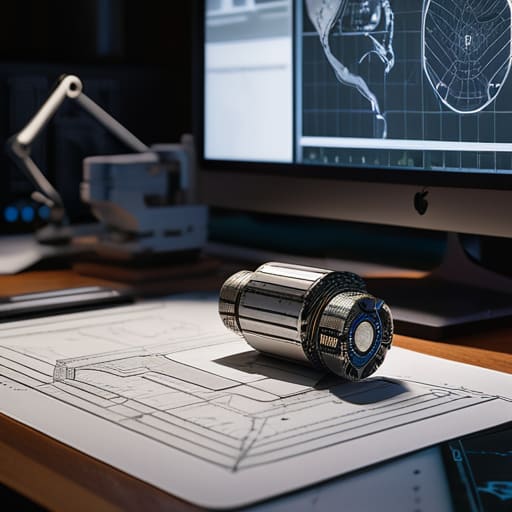
Most people treat the product design history file like a dusty archive—something you only dig out when an auditor knocks or a part fails in the field. That is a mistake. In my experience, if you aren’t actively managing your technical file lifecycle from the first prototype, you aren’t actually managing a product; you’re just managing a series of expensive accidents. A design history file isn’t just a folder of CAD drawings; it is the chronological record of every “why” behind a design decision. It captures why you switched from one polymer to another after the first batch cracked, or why a specific tolerance was tightened to prevent assembly line friction.
When I walk a factory floor, I don’t just look at the finished goods; I look for the paper trail that connects the intent to the execution. If your quality management system documentation doesn’t bridge that gap, you have no defense when a supplier decides to substitute a cheaper, unapproved component. You need a trail that proves the design was validated, not just drawn. Without that historical context, you aren’t building a scalable product; you’re just hoping for the best, and hope is not a procurement strategy.
Five Ways Your Technical File Becomes a Liability Instead of an Asset
- Stop treating tolerances like suggestions. If your drawing says +/- 0.05mm but your technical file doesn’t explicitly state the measurement method or the calibrated tool required to verify it, you aren’t providing a specification—you’re providing an invitation for the factory to ship you a batch of expensive scrap.
- Demand the material certifications, not just a promise. A supplier will tell you they are using “Grade 304 Stainless” because it’s easy, but if your technical file doesn’t mandate the submission of the actual mill test reports (MTRs) before production starts, you’re just gambling that their inventory matches your requirements.
- Document the “why” behind your changes. I’ve seen too many projects stall because a design tweak was made in an email thread that nobody archived. If a tolerance was widened to save costs or a material was swapped due to availability, that decision must be stamped into the file; otherwise, your quality audit will flag it as an uncontrolled deviation.
- Include a “Golden Sample” reference protocol. A technical file is a living document, and it needs to explicitly state how the physical master sample relates to the digital specs. If the factory has a sample on the bench that doesn’t perfectly align with the latest revision in your file, the production line is already heading toward a failure.
- Audit your assembly instructions for “tribal knowledge.” If your technical file relies on a senior engineer’s intuition to explain how two components interface, you haven’t finished the file. Write it so clearly that a technician who has never seen your product can follow the sequence without needing to call you at 3:00 AM to ask about a clearance gap.
The Three Realities of a Functional Technical File
A technical file isn’t a trophy for your compliance folder; it’s a defensive shield. If your specs are vague or your tolerances are “suggested” rather than mandated, you aren’t giving the factory instructions—you’re giving them permission to guess, and you’ll be the one paying for the scrap pile when they get it wrong.
Stop treating the design history as a graveyard of old ideas. A living, breathing history file tells you exactly why a material was changed or a dimension was tweaked, which is the only way to prevent a factory from “optimizing” a component back to a version that failed three years ago.
Documentation is only as good as its ability to survive an audit or a dispute. If you can’t prove the link between your original requirement and the final production spec, you don’t have a technical file—you have a collection of expensive assumptions that won’t hold up when a shipment arrives sub-standard.
The Technical File is Your Insurance Policy, Not a Paperwork Exercise
At the end of the day, a technical file isn’t just a collection of PDFs to satisfy an auditor or a checkbox for your compliance team. It is the single source of truth that stands between you and a catastrophic production error. When you have documented your design history, tightened your material specs, and aligned your regulatory requirements, you aren’t just organizing data; you are building a defensive perimeter around your product. If your file is thin, your margin for error is even thinner. Remember, when a factory tells you they “understand the requirements” without asking for the updated spec sheet, that is exactly when you need to stop trusting their word and start trusting your documentation.
I have seen too many procurement teams treat technical files as an afterthought, only to realize their mistake when a shipment arrives with the wrong tolerance or a non-compliant material grade. By then, the damage to your landed cost and your reputation is already done. Don’t wait for a quality failure to realize your files are incomplete. Build them with the precision of someone who knows exactly how much a single mistake costs. Treat your documentation with the same rigor you apply to your supplier audits, and you will find that the most expensive way to manage a product is to do it cheaply.