
I once stood on a sweltering factory floor in Vietnam, watching a technician sign off on a batch of components that I knew, deep in my gut, were fundamentally flawed. The quality manual on the wall promised rigorous testing, but the actual operators were just eyeballing the tolerances to hit a daily quota. Most people think a complete guide to quality inspection is just a checklist of technical standards and ISO certifications you can print out and file away. They are wrong. A checklist is just paper; real inspection is the ability to spot the gap between what a supplier promises in a glossy PDF and what is actually happening on the assembly line.
I’m not here to give you a theoretical lecture or a list of academic best practices that fall apart the moment a shipment is delayed. Instead, I am going to give you the hard-won reality of what actually works when your reputation is on the line. This is a guide built on nineteen years of cancelled orders and expensive rework. We are going to look at how to verify claims with evidence, how to spot the red flags that precede a failure, and how to ensure your inspection process actually protects your bottom line rather than just checking a box.
Table of Contents
Why Quality Assurance vs Quality Control Dictates Your Survival

I’ve seen too many procurement teams treat these two terms as interchangeable, and that mistake is usually where the budget starts to bleed. Most people think they are doing “quality work” because they hire a firm to check a finished pallet. That is not quality; that is just catching a fire after the building is already burning. That is Quality Control (QC). It is reactive, it is defensive, and if you rely on it as your primary shield, you have already lost the battle against your margins.
True survival in this industry depends on understanding quality assurance vs quality control. Quality assurance is the architecture—it is the process of building a system where defects are structurally unlikely to occur in the first place. It involves auditing the factory’s training, verifying their raw material sourcing, and ensuring their manufacturing inspection standards are baked into the production line, not just tacked on at the end.
When you focus only on QC, you are essentially playing a game of whack-a-mole with product defect classification. You spend your entire margin on rework and air freight because you were too busy inspecting the failure to prevent it.
Decoding Manufacturing Inspection Standards Before the First Shipment
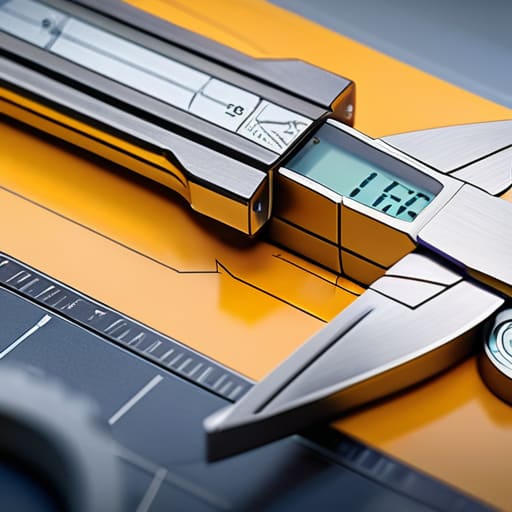
When a supplier hands you a spec sheet, they aren’t giving you a guarantee; they are giving you a target. Most people make the mistake of treating manufacturing inspection standards as a checkbox exercise, but if you don’t define your own parameters upfront, you are essentially letting the factory grade their own homework. You need to move past vague promises of “high quality” and demand specific, measurable criteria. I’ve seen too many projects stall because the buyer assumed “Grade A” meant one thing, while the factory floor interpreted it as something much cheaper.
This is where your sampling plans and statistical methods become your only real defense. You cannot inspect every single unit in a massive production run—that’s a fantasy that kills your margins—but you also can’t just pick three boxes off the top of a pallet and call it a day. You need a rigorous approach to product defect classification, clearly distinguishing between a critical failure that renders the item useless and a minor cosmetic flaw that might be acceptable. If you haven’t codified exactly what constitutes a fail before the machines start running, you aren’t managing a supply chain; you’re just gambling with your inventory.
Five Hard Truths About Inspection That Your Supplier Won't Volunteer
- Stop treating inspections like a checkbox exercise; if your inspector is only looking for visual defects and ignoring the functional stress tests, they aren’t inspecting, they’re just sightseeing.
- Demand a “Golden Sample” that is physically signed and dated, because when the shipment arrives and looks nothing like the prototype, you need more than a vague memory to win the dispute.
- Never schedule an inspection for the final day of a production window; if the goods aren’t actually finished and the machines are still running, your inspector is just watching a factory work, not verifying a completed batch.
- Look past the formal quality manual on the factory wall and ask to see the calibration logs for the actual tools being used on the line—paperwork is easy to forge, but a miscalibrated micrometer is a mathematical certainty for rework.
- Build your inspection criteria around the “failure mode” rather than just the “spec”; I don’t care if the color is 2% off if the component’s structural integrity is what actually causes the assembly line to grind to a halt.
The Hard Truths of Quality Management
Stop treating quality as a checkbox at the end of a production run; if your inspection protocol doesn’t address the process during manufacturing, you aren’t inspecting—you’re just documenting a failure.
A supplier’s technical specifications are merely claims, and until you verify them against actual floor performance and operator adherence, those specs are nothing more than optimistic paperwork.
Never budget based on the unit price alone; your real cost includes the inevitable rework, freight delays, and duty discrepancies that occur when a “passed” inspection turns out to be a hollow victory.
The Bottom Line on Quality
At the end of the day, a quality inspection isn’t just a box to tick on a procurement checklist; it is your only real defense against the gap between what a supplier promises and what they actually deliver. We have covered why you need to distinguish between the systemic oversight of QA and the granular scrutiny of QC, and why you cannot afford to walk into a factory without knowing exactly which standards you are measuring against. If you ignore these layers, you aren’t just risking a bad batch; you are voluntarily accepting the risk of inflated landed costs, emergency air freight, and the kind of reputation damage that takes years to repair. Remember, a quote is just a piece of paper, but a verified inspection report is the only thing that actually protects your margin.
I have spent two decades watching “guaranteed” timelines crumble and “perfect” samples turn into scrap metal because someone decided to skip the due diligence. My advice is simple: stop treating inspection as an optional expense and start treating it as your primary insurance policy. You will never regret spending the extra few hundred dollars on a thorough, third-party inspection, but you will certainly regret the cost of a container full of non-compliant goods sitting on a dock halfway across the world. Build your supply chain on evidence, not optimism, and you might actually sleep through the night when your shipments are in transit.