
I once sat in a humid, cramped factory office in Ningbo, watching a supplier proudly present a “complete guide to injection moulding” that looked more like a glossy marketing brochure than a technical manual. They promised me flawless tolerances and impossible lead times, all while the machines in the next room were clearly running substandard resin. That was the day I realized that most guides in this industry are just expensive fairy tales designed to make procurement managers feel safe right before a shipment arrives full of warped, unusable scrap. If you are looking for a textbook definition of polymer science, you are in the wrong place; I am here to talk about the reality of what happens when the mold meets the machine.
In this guide, I am stripping away the sales fluff to give you a hard-earned roadmap for actual production. We aren’t going to dwell on theoretical physics; instead, I’ll show you how to spot a supplier who is hiding their scrap rate, how to calculate a landed cost that won’t bankrupt your project, and why your unit price is often a lie until you factor in the tooling lifecycle. This is about making sure that when your parts finally arrive, they actually fit the assembly line.
Table of Contents
- Why Thermoplastic Material Selection Dictates Your Long Term Yield
- The Hidden Mechanics of Injection Moulding Process Steps
- Five Ways Your Injection Moulding Project Will Bleed Cash (And How to Stop It)
- The Procurement Reality Check: What to Carry Away from This Guide
- The Bottom Line on Injection Moulding
Why Thermoplastic Material Selection Dictates Your Long Term Yield
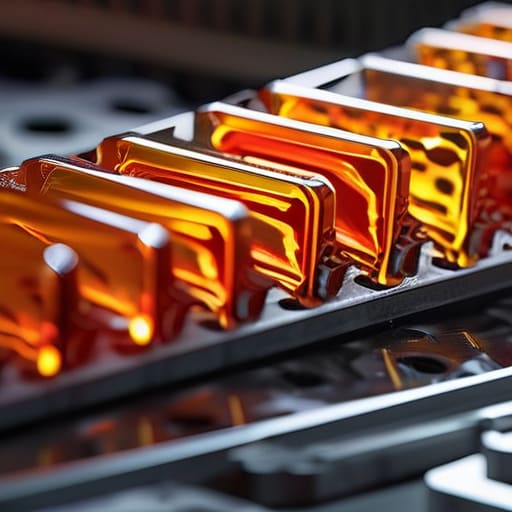
I’ve seen too many procurement teams treat thermoplastic material selection like a checkbox on a spreadsheet, picking the lowest-cost resin based solely on a spec sheet. That is a rookie mistake. A material might look perfect on paper, but if its melt flow index isn’t compatible with your specific mould design principles, you aren’t buying a component; you’re buying a mountain of scrap. I once managed a project where a slight shift to a cheaper polymer grade caused a massive spike in shrinkage rates. We didn’t realize it until the first batch arrived, and suddenly, our “savings” were being swallowed whole by rework and rejected parts.
The reality is that your choice of resin dictates your entire production rhythm. If you select a material with a high viscosity without accounting for the increased pressure required, you are essentially inviting injection moulding defects and solutions to become your daily reality. You’ll see sink marks, short shots, or warping that no amount of machine tweaking can fix. True efficiency comes from understanding how the material behaves under heat and pressure; if you don’t respect the chemistry, you’ll never achieve the cycle time optimization required to make your margins work.
The Hidden Mechanics of Injection Moulding Process Steps
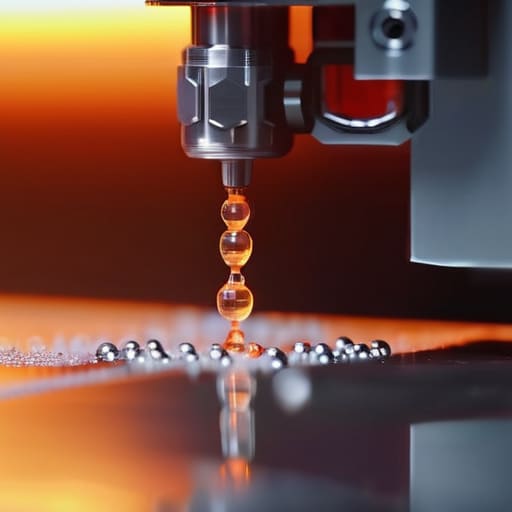
When you look at a process flow chart, it looks clinical—a series of neat, logical stages. But when I’m standing on a factory floor, I see the friction. The injection moulding process steps aren’t just a sequence; they are a battle against physics and time. It starts with the plastic melting, but if the heater bands aren’t calibrated to the specific viscosity of your resin, you’re already setting the stage for disaster. I’ve seen “perfect” batches turn into scrap heaps because the transition from melting to injection was rushed to meet an unrealistic production quota.
The real tension lies in the cooling phase. This is where most people lose their margin. Everyone talks about cycle time optimization as if it’s just a way to squeeze out more units, but if you push it too hard, you aren’t just saving seconds—you are inviting structural instability. If the part isn’t cooled uniformly, the internal stresses will cause it to warp long after it has left the mould. I don’t care how good your initial quote looks; if the supplier hasn’t accounted for the cooling requirements of your specific geometry, you aren’t buying parts—you’re buying future rework.
Five Ways Your Injection Moulding Project Will Bleed Cash (And How to Stop It)
- Stop treating the mould tool as a one-time expense; if your supplier won’t give you a detailed breakdown of the steel grade and the expected cycle life, they are hiding the fact that your tool will be out of commission by the third month of production.
- Demand a validated scrap rate before you sign the PO; if a quote assumes 0% waste, they aren’t being efficient, they are being dishonest, and that “missing” 3% of your volume will eventually show up as a frantic, high-cost emergency reorder.
- Verify the cooling system design in the mould drawings rather than just trusting the lead time; uneven cooling is the primary driver of warpage, and no amount of post-production rework can fix a part that was structurally compromised the moment it hit the bin.
- Never accept a unit price that doesn’t come with a hard-coded MOQ and a realistic lead time buffer; a supplier who promises a 30-day turnaround without accounting for raw material volatility is setting you up for a stock-out that will cost ten times your initial “savings.”
- Audit the secondary operations—painting, assembly, or ultrasonic welding—as if they were part of the moulding process itself; I have seen countless “low-cost” moulding projects fail because the supplier outsourced the finishing to a shop that didn’t even have a basic quality manual.
The Procurement Reality Check: What to Carry Away from This Guide
Stop treating a unit price as a fact; treat it as a hypothesis that remains unproven until the first container clears customs and the scrap rates are tallied.
Material selection isn’t just a technical specification for your engineers—it is a financial hedge against long-term yield loss and unpredictable rework costs.
If your supplier cannot explain the relationship between their cycle times and your lead time, they aren’t managing a process; they are just hoping for the best, and hope is not a scalable manufacturing strategy.
The Bottom Line on Injection Moulding
At the end of the day, successful injection moulding isn’t about finding the person who can give you the lowest quote on a spreadsheet; it’s about understanding the physics and the logistics that happen after you hit ‘send’ on a purchase order. We’ve looked at how material selection determines your yield and how the specific mechanics of the process can either stabilize your production or turn it into a series of expensive fires to put out. If you aren’t accounting for the interdependence of material properties and process parameters, you aren’t actually managing a supply chain—you’re just hoping for the best. And in my nineteen years of doing this, hope has never once met a quality specification or a delivery deadline.
Moving forward, stop treating your supplier as a black box that magically spits out finished parts. Treat them as a technical partner that requires rigorous validation and constant scrutiny. The goal isn’t just to get a part that looks right in a sample photo; it is to build a repeatable, scalable process that survives the reality of high-volume manufacturing. It takes more work upfront to audit the process and stress-test the lead times, but that is the only way to ensure that your landed cost remains a reality rather than a theoretical dream. Build it right the first time, or prepare to pay for it twice.