
I once sat in a humid, windowless factory office in Guangdong, staring at a batch of components that looked perfect on paper but felt like plastic junk the moment I picked them up. The supplier had promised “gold standard” manufacturing, but the quality manual on the wall was a decorative piece of art that had nothing to do with the chaotic assembly line humming outside the door. Most people think learning how to start sourcing a product is about finding the lowest number on a spreadsheet, but that is exactly how you end up with a warehouse full of expensive scrap. A low quote isn’t a victory; it’s just an unverified claim waiting to fail you when your customers actually start asking questions.
I’m not here to give you a polished, theoretical roadmap that works in a textbook but dies in a shipping container. Instead, I’m going to show you how to look past the glossy Alibaba profiles and the “guaranteed” lead times to see what is actually happening on the factory floor. We are going to talk about auditing for reality, calculating a true landed cost that includes the inevitable rework, and qualifying suppliers before you are desperate enough to sign a contract with a liar.
Table of Contents
Finding Reliable Manufacturers Before the First Deposit
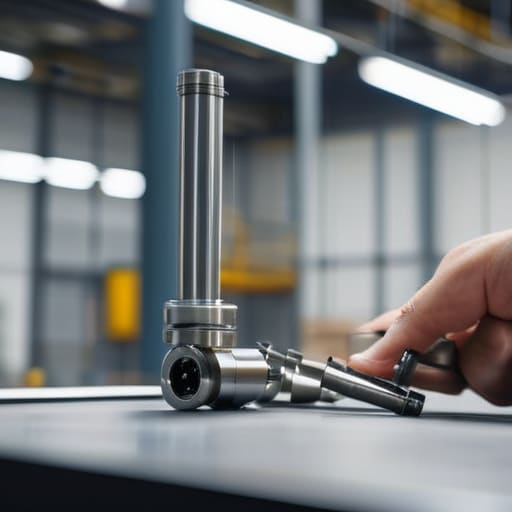
When you start looking for partners, most people make the mistake of treating a search like a shopping trip. They look for the lowest number on a spreadsheet and call it a day. But finding reliable manufacturers isn’t about finding someone who can say “yes” to your price; it’s about finding someone who can prove they have the capacity to say “yes” to your specifications. I’ve spent enough time on factory floors to know that a glossy company profile is just paper. You need to look past the marketing and dig into their actual quality control standards. Ask for their recent inspection reports or their ISO certifications, and then—this is the part most people skip—ask to see how they handle a non-conforming batch. If they claim they never have defects, they are lying to you.
Before you even think about sending a deposit, you need to move from theoretical quotes to a rigorous sample testing process. A single “golden sample” is a trap; it’s often produced under perfect conditions by the owner’s best technician. You need to see how the second, third, and tenth units look. If you haven’t stress-tested the product and the supplier’s communication during the prototyping phase, you aren’t sourcing—you’re gambling.
The Sample Testing Process Exposing the Hidden Defects

When that first sample arrives in a padded envelope, don’t just check if it looks pretty. Most people treat a sample as a “proof of concept,” but in my experience, it is actually your first real stress test. I have seen too many junior buyers fall in love with a prototype that works perfectly in a controlled environment, only to realize later that the factory can’t replicate that precision at scale. You need to treat the sample testing process as a forensic investigation. If you are importing goods from overseas, you aren’t just buying a product; you are buying a factory’s ability to follow a specific set of instructions every single time.
Don’t just look at the finish; pull it apart. If there is a component that moves, move it fifty times. If it’s a textile, rub it until it pills. I make it a rule to test the sample until it fails, because if you don’t find the breaking point now, your customers will find it in their living rooms three months after launch. A sample isn’t a promise of quality; it is the only piece of evidence you have to hold them to when the mass production run begins.
The Five Red Flags You’ll Ignore Until It’s Too Late
- Stop treating lead times like suggestions. If a supplier gives you a single, optimistic number without a breakdown of production cycles and raw material availability, they aren’t giving you a timeline; they’re giving you a prayer. Always ask for the lead time alongside the MOQ, and if they can’t explain the buffer, assume the shipment will be late.
- Demand a Total Landed Cost calculation, not just a unit price. A quote that looks like a bargain on a spreadsheet will evaporate the moment you add duty, freight, insurance, and the inevitable 5% contingency for the rework you’ll have to do when the quality isn’t what they promised.
- Verify the factory’s actual capability versus their marketing brochure. I’ve spent too many hours on factory floors seeing “state-of-the-art” machinery gathering dust while operators use manual workarounds that bypass the very quality controls listed in the company’s manual. If they can’t show you the specific line that will run your order, they aren’t ready for you.
- Audit the “Paper Trail” before the “Physical Trail.” A supplier might have a beautiful factory, but if their sub-tier supplier management is non-existent, you are inheriting their risks. Ask where they source their raw materials; if they can’t trace the origin, you can’t trace your liability when a batch fails.
- Watch for the “Yes” Trap. In my nineteen years, the most dangerous supplier isn’t the one who says “no” to a difficult specification—it’s the one who says “yes” to everything without asking a single follow-up question. A supplier who doesn’t challenge your specs is a supplier who doesn’t understand them, and that’s where the defects start.
The Real Cost of Getting It Right
Stop treating a unit price as a fact; it’s a promise that usually fails to account for duty, freight volatility, and the inevitable cost of rework.
A factory’s capacity isn’t what they say in the PowerPoint; it’s what the floor capacity and the current backlog prove through a physical audit.
Lead times are moving targets, not fixed dates—always build a buffer into your planning to account for the predictable ways a supplier’s schedule slips.
The Reality of the First Order
If you’ve followed this process, you’ve already done more than most people in this industry. You haven’t just looked at a glossy website; you’ve vetted the factory’s actual capacity, scrutinized the samples until they practically fell apart, and looked past the seductive lure of a low unit price. Remember that sourcing isn’t a transaction; it is a constant exercise in verification. You have learned that a supplier’s promise is merely a starting point, and your job is to bridge the gap between what they say they can do and what they can actually prove through audits and trial runs. Don’t let the momentum of a “good deal” make you skip the final due diligence—evidence is the only currency that matters when the shipment is sitting on a dock halfway across the world.
Sourcing is rarely as clean or as fast as the brochures suggest, and that is perfectly fine. The goal isn’t to find a perfect supplier—they don’t exist—but to find one whose failures are predictable and whose transparency is consistent. You will face delays, and you will likely face a quality deviation that keeps you up at night, but if you have built your foundation on rigorous qualification rather than optimistic assumptions, you will be prepared to fix it. Stop looking for the easiest path and start looking for the most transparent one. That is how you build a supply chain that actually supports a business instead of one that constantly threatens to break it.