
I once stood on a humid factory floor in Guangdong, watching an inspector tick boxes on a clipboard while a production manager swept a pile of defective components under a heavy steel workbench. He wasn’t failing the audit; he was performing for it. Most people think learning how to plan inspections is about downloading a template or hiring a third-party agency to check the math, but that’s exactly how you end up with a container full of expensive scrap. If you only plan for the “happy path” where everything goes according to the spec sheet, you aren’t actually inspecting anything—you’re just paying for a false sense of security.
I’m not here to give you a theoretical lecture on quality management systems. Instead, I’m going to show you how to build an inspection plan that actually works when the supplier starts sweating. We are going to move past the checklists and focus on identifying the specific failure points that happen when production hits a bottleneck. I’ll share the exact framework I use to hunt for the gaps between what a factory promises and what they can actually prove, ensuring your next shipment is backed by evidence, not optimism.
Table of Contents
Building a Manufacturing Inspection Checklist That Actually Matters
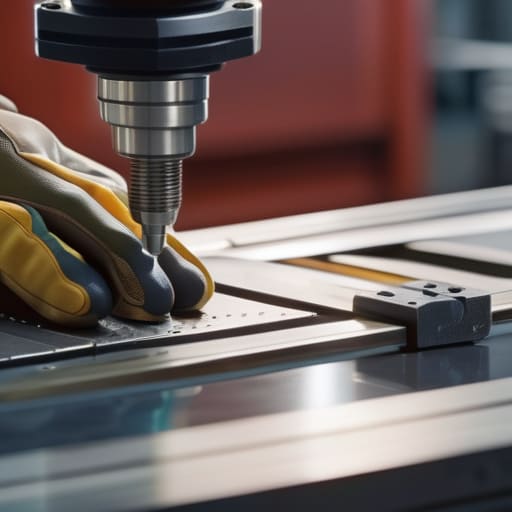
Most people approach a manufacturing inspection checklist as a box-ticking exercise—a generic list of “is it the right color?” and “is the packaging intact?” If that’s your strategy, you aren’t inspecting; you’re just performing a very expensive ritual of confirmation bias. A real checklist needs to be built around the specific failure points of your product, not a template you downloaded from a procurement forum. I’ve spent enough time on factory floors to know that if you don’t explicitly mandate checks for the high-risk components—the ones that usually fail after three months of field use—you are essentially paying an inspector to watch a factory pretend to be perfect.
Your checklist should be a living document that integrates directly into your broader supply chain risk management strategy. Instead of asking “Does the unit work?”, ask “Does the unit meet the specific tolerance levels we agreed upon in the technical spec?” You need to bridge the gap between what the salesperson promised in the initial quote and what the operator is actually doing on the line. When you build your product quality assurance steps, focus on the friction points: the raw material substitutions, the calibration of the machines, and the specific ways a supplier might try to hide a sub-par batch.
Why Your Quality Control Workflow Fails Without Real Data

Most people treat their quality control workflow like a checkbox exercise—a way to say “we did our due diligence” before the invoice gets paid. They collect reports that look beautiful in a PDF but contain nothing but vague adjectives like satisfactory or acceptable. If your inspection report doesn’t include actual measurement data, defect counts by category, and photographic evidence of the specific failure points, you aren’t managing quality; you’re just documenting your own eventual disappointment.
Real supply chain risk management isn’t about knowing that a shipment arrived; it’s about knowing exactly how many units are likely to fail once they hit your warehouse floor. When you rely on gut feelings or “trusting the vendor,” you lose the ability to spot the subtle drift in production standards that happens long before a total batch failure. You need hard numbers to identify if a supplier’s output is degrading over time. Without that data, you aren’t actually preventing defects—you are simply waiting for them to arrive.
Five Ways to Stop Paying for Performative Inspections
- Stop inspecting the finished product in isolation; you need to inspect the process that created it. If you only show up when the boxes are taped shut, you aren’t conducting an inspection—you’re just witnessing a funeral for your quality standards. Plan your visits to catch the production mid-stream so you can see if the operators are actually following the spec or just improvising to meet a deadline.
- Build your inspection window around the “danger zones” of the production cycle, not the convenience of the factory manager. I’ve learned that the most critical failures happen during the transition from raw material to first-stage assembly. If your plan doesn’t account for checking the incoming components before they are buried in a finished assembly, you are essentially gambling on the supplier’s word.
- Mandate that your inspection report includes the “why” behind every failure, not just the “what.” A report that says “3% defect rate” is useless to me. I need to know if that 3% was a machine calibration error, a training gap, or a deliberate shortcut taken to shave off ten minutes of labor. If you don’t plan to capture the root cause, you’re just documenting your own future headaches.
- Verify the calibration logs as part of your standard inspection plan, because a measurement is only as good as the tool that took it. I have seen countless “passed” inspections where the calipers were out of spec or the testers hadn’t been calibrated since the previous fiscal year. If you don’t make tool verification a line item in your inspection plan, you’re just collecting expensive opinions.
- Align your inspection timing with your actual buffer capacity, not your optimistic shipping schedule. If your lead time is 30 days and you schedule the inspection for day 28, you have zero room to breathe when the defects inevitably show up. Plan your inspections early enough that a “fail” results in a corrective action, rather than a frantic, expensive air-freight scramble to cover the gap.
The Hard Truths to Carry Forward
Stop treating your inspection checklist like a generic compliance document; if it doesn’t target the specific technical failure points of your unique component, you aren’t inspecting, you’re just performing a very expensive walkthrough.
A supplier’s “on-time” promise is a hypothesis, not a fact—use your inspection data to track the delta between their promised lead times and actual production milestones so you can see the slip coming months before the shipment is due.
Never mistake a passed inspection for a successful procurement; real quality is measured by the landed cost, and if your inspection process misses the defects that require rework or cause customs delays, that “cheap” unit price was just an unpaid debt.
Stop Hoping and Start Verifying
At the end of the day, planning an inspection isn’t about checking a box to satisfy a compliance auditor; it is about building a defensive perimeter around your margin. You have the checklist, you have the data workflow, and you know exactly where the supplier’s promises tend to fray at the edges. If you go into a factory walkthrough with nothing more than a vague sense of “quality control,” you are essentially handing the supplier permission to hide the truth in plain sight. Remember: a well-planned inspection is designed to find the friction between the quality manual on the wall and the actual output on the assembly line. Use your data to target the specific failure points, or you are simply paying for a very expensive, very polite tour of a factory that is pretending to work.
I have spent two decades watching people try to “speed up” the process by cutting corners on the planning phase, only to spend ten times that amount on air freight and rework six months later. Sourcing is not a game of luck, and it certainly isn’t a game of optimism. It is a discipline of evidence-based skepticism. When you stop treating inspections as a formality and start treating them as the ultimate proof of a claim, you stop being a victim of the supply chain and start being the person who controls it. Go into your next production cycle expecting the slip, planning for the error, and demanding the proof.