
I once sat in a humid factory in Guangdong, watching a production manager hand me a “perfect” sample that looked identical to the golden prototype we’d approved six months prior. He was smiling, the machines were humming, and the paperwork was pristine, but I knew the truth: a sample is just a promise, not a guarantee of what the mass production run will actually look like. Most people think understanding how first article inspection works is just about checking a box on a quality control sheet, but if you aren’t verifying that the actual production setup—the specific tooling, the specific operators, and the specific material batch—matches your requirements, you aren’t inspecting anything. You’re just gambling on a batch of expensive scrap.
In this post, I’m stripping away the textbook definitions to tell you how this process actually functions when the stakes are real. I won’t give you a sanitized manual; instead, I’ll show you how to use the FAI to catch the lies suppliers tell before the container is sealed. We are going to look at the gap between a “perfect” sample and a runnable process, ensuring you know exactly what to demand before you sign off on a production run that could otherwise sink your margins.
Table of Contents
Beyond the Pretty Prototype Mastering Dimensional Verification Techniques
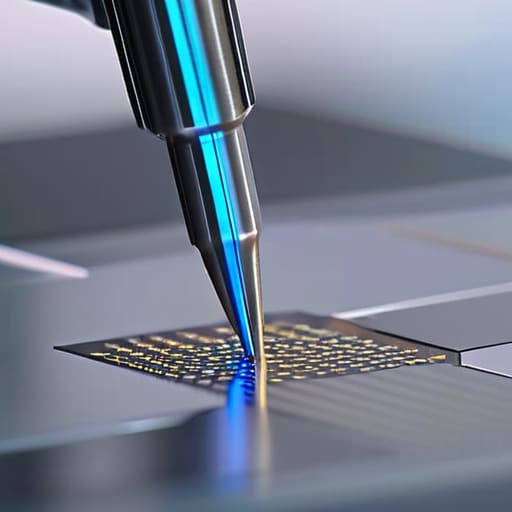
When you’re looking at a prototype, you’re looking at a piece of art; when you’re looking at a production part, you’re looking at a repeatable process. The mistake I see most often is treating the First Article Inspection (FAI) as a mere formality to check if the part “looks right.” If your supplier isn’t using calibrated precision measurement tools to verify every single dimension on your print, they aren’t performing an inspection—they’re just performing an observation. I’ve seen too many projects stall because a supplier used calipers where a CMM was required, leading to a “pass” that turned into a mountain of non-conformance reports three weeks later.
To truly master your manufacturing quality control process, you have to demand more than just a “yes” or “no” on a checklist. You need to see the raw data. Whether you are following a strict AS9102 standard compliance framework or a more streamlined internal protocol, the goal is the same: proving that the setup used for that specific first article is capable of producing the thousandth part with the same fidelity. If they can’t show you the traceable measurements that back up their claim, then you haven’t actually inspected anything.
As9102 Standard Compliance Turning Supplier Claims Into Hard Evidence
If you are working in aerospace or high-stakes defense, you don’t get to rely on a “trust me” email from a vendor. You need the paper trail. This is where AS9102 standard compliance moves from being a bureaucratic headache to your most effective shield. I’ve seen too many procurement teams treat the First Article Inspection (FAI) report as a mere checkbox exercise, but in reality, it is the only way to bridge the gap between a supplier’s capability claim and their actual performance. A properly executed FAI, structured around the three-form requirement, forces the manufacturer to prove they can actually replicate the geometry and tolerances you’ve specified.
Don’t just glance at the summary page and move on. I want to see the raw data behind the inspection documentation requirements. If a supplier hands you a clean, one-page summary without the granular breakdown of every characteristic, they are likely hiding a lack of process control. True compliance means they are documenting the exact measurement path and the specific precision measurement tools used to verify the part. If they can’t show you the math, they haven’t actually performed the inspection—they’ve just performed a courtesy check.
Five Ways to Ensure Your FAI Isn't Just a Paper Exercise
- Stop treating the FAI as a single event; it is a validation of the entire production setup. If you aren’t verifying that the tools, the jigs, and the actual operators on the floor match the conditions that produced the prototype, you aren’t inspecting a process—you’re just admiring a lucky fluke.
- Demand the raw measurement data, not just the “Pass” checkbox. I have seen far too many suppliers hand over a beautifully formatted report where every dimension falls perfectly in the middle of the tolerance band. In my experience, real production has variance; if their FAI looks too perfect to be true, it probably is.
- Verify the tooling, not just the part. A common way lead times slip and quality fails is when a supplier uses a high-end CNC machine for the FAI but plans to sub-contract the actual production run to a cheaper, less capable shop. Ensure the FAI is performed on the actual equipment intended for your long-term volume.
- Cross-reference the material certs against the physical batch. It is easy for a supplier to provide a pristine mill certificate for the sample, but you need to confirm that the material chemistry and heat treatment documented actually align with the specific lot being prepared for your first production run.
- Look for the “hidden” deviations in the setup. When you are reviewing the FAI, don’t just look at the dimensions on the drawing; look at the process stability. If the supplier had to make three minor adjustments to the machine to get that “perfect” sample, those adjustments are the first signs of a process that will drift into scrap once you hit full scale.
The Bottom Line: Don't Buy the Promise, Verify the Process
A First Article Inspection isn’t a checkbox for your quality department; it is your only insurance policy against a production run that turns into a mountain of expensive, unrecoverable scrap.
Stop treating the “golden sample” as the benchmark; if you aren’t verifying the actual production setup and the specific tooling used for the first batch, you aren’t inspecting a process, you’re just admiring a prototype.
Always demand the data, not just the “pass” grade—if a supplier cannot produce the dimensional reports and the traceability to prove their setup matches their claim, assume the lead time is about to slip and the quality is about to fail.
The Cost of Assuming Success
At the end of the day, a First Article Inspection isn’t just a checkbox on a quality manual; it is your primary defense against the high cost of assumption. We have covered why you cannot trust a prototype to represent a production run, the necessity of rigorous dimensional verification, and how standards like AS9102 turn vague supplier promises into verifiable data. If you skip the granular work of checking the actual production setup, you aren’t just saving time—you are essentially signing a blank check for future rework, expedited shipping fees, and potentially cancelled orders. You have to treat every FAI as a stress test for the supplier’s capability, not just a formality to get the paperwork filed.
Sourcing is often viewed as a game of chasing the lowest unit price, but anyone who has sat in a boardroom explaining why a shipment of scrap is sitting in a bonded warehouse knows better. Real procurement expertise lies in the ability to see the failure before it happens. Use your FAI process to build a culture of evidence-based trust rather than blind optimism. When you demand proof during the first article, you aren’t being difficult; you are being professional. It is much better to be the person who caught a deviation in a controlled environment than the one who has to explain a supply chain collapse to the CEO.