
I once stood on a sweltering factory floor in Vietnam, watching a production manager nod enthusiastically to my questions while his eyes darted toward the exit. He wasn’t being rude; he just didn’t understand the technical nuance of the tolerance levels I was demanding. We spent three weeks assuming we were on the same page, only to realize that how language affects supplier communication isn’t just about translation apps or basic English proficiency—it’s about the dangerous illusion of agreement. When a supplier says “yes” because they don’t want to lose face or because they’ve misinterpreted a technical term, they aren’t communicating; they are setting a trap that you won’t spring until the container arrives at your warehouse full of non-conforming scrap.
I’m not here to give you a lecture on linguistics or suggest you hire a fleet of translators. I’m going to show you how to spot the silent failures that happen when meaning gets lost in the gap between a spec sheet and a conversation. We will look at the specific red flags that indicate a supplier is nodding along without understanding, and I’ll share the practical, blunt methods I use to verify that what is being said is actually what is being done.
Table of Contents
Mitigating Linguistic Ambiguity in Supply Chains Before It Costs You

You don’t fix a language gap by buying everyone a Rosetta Stone subscription; you fix it by stripping away the room for interpretation. I’ve seen too many “urgent” emails where a supplier uses a word like approximate to mask the fact that they’ve missed a critical tolerance specification. To stop this, you have to focus on standardizing supplier specifications through visual aids and technical diagrams rather than relying on descriptive prose. If a part needs to be 50mm, don’t just write “50mm” in a sentence—put it on a CAD drawing with a clear dimension line. A picture doesn’t need a translator, and it certainly doesn’t have an accent.
The real work happens in the pre-qualification stage. When you are auditing a new factory, stop asking “Do you understand our requirements?” Everyone says yes. Instead, ask them to explain the most complex part of your technical documentation back to you in their own words. If they struggle to grasp the nuance of your quality standards during a calm meeting, they will certainly fail when a production line goes down and everyone is panicking. Mitigating linguistic ambiguity in supply chains is about building a system of redundant checks where the data speaks louder than the dialogue.
Translation Errors in Manufacturing Orders Are Not Just Mistakes They Are L
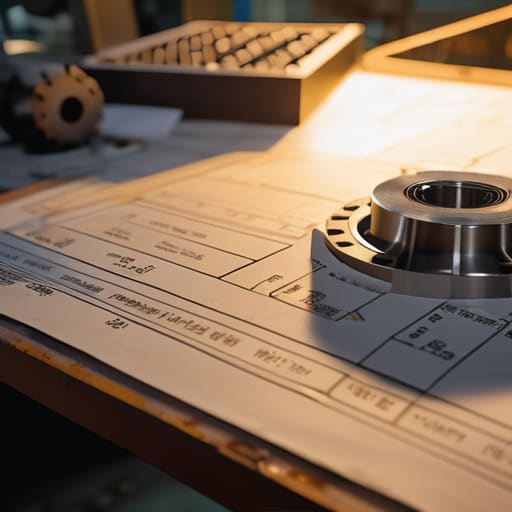
I once sat in a humid office in Vietnam, staring at a spec sheet that looked perfect on paper, only to realize the factory had interpreted “reinforced” as a suggestion rather than a requirement. That wasn’t a misunderstanding; it was a financial catastrophe. When we talk about translation errors in manufacturing orders, we aren’t just talking about a misplaced comma or a typo. We are talking about the difference between a component that fits a high-precision assembly and a container of expensive, non-compliant scrap. A single mistranslated metric or a misunderstood tolerance level doesn’t just slow down production—it creates a liability that sits on your balance sheet until the moment of inspection.
If you rely on a supplier’s “best effort” to interpret your English-language blueprints, you are essentially gambling with your margin. True technical documentation clarity requires more than just a Google Translate pass; it requires a rigorous process of standardizing supplier specifications so that there is zero room for creative interpretation. You have to move past the assumption that “they understood” and start demanding proof that the technical intent has survived the journey from your desk to their shop floor.
Five Ways to Stop Language Gaps from Bleeding Your Margin Dry
- Stop relying on “handshake” verbal agreements via WhatsApp. If it isn’t in a written technical specification—ideally with annotated diagrams and measurements in the metric system—it doesn’t exist. I’ve seen $50,000 worth of components turned into expensive paperweights because someone “thought” the tolerance was 0.5mm when the drawing clearly stated 0.05mm.
- Demand a “read-back” protocol for critical changes. When you issue a Change Order, don’t just ask, “Do you understand?” Everyone says yes to avoid looking incompetent. Instead, ask them to explain the change back to you in their own words. If they can’t articulate how the modification affects the production flow, they haven’t actually processed the instruction.
- Build a standardized glossary for your specific product line. Every factory has its own shorthand, and “standard” terms often mean different things in different provinces. Create a single source of truth—a cheat sheet of your most critical technical terms—and make it an attachment to every RFQ. It’s a small upfront cost that prevents massive downstream rework.
- Audit the “middlemen” of communication. If you are working through a sourcing agent, realize they are often translating your nuance into a simplified version that the factory floor actually understands. You need to know if your “urgent but not critical” priority is being translated as “drop everything and work overtime,” because that’s how quality slips.
- Treat non-native English speakers on the production line as your most important data source. During factory visits, don’t just talk to the Sales Manager in the air-conditioned office; walk the floor. If the operators can’t explain the quality check they are performing in a way that aligns with your manual, your documentation is failing, regardless of how good the translation software is.
The Cost of Silence: What to Watch For
If a supplier’s responses to technical queries are consistently vague or “agreeable” without providing specific data, they aren’t being polite—they are likely masking a lack of understanding that will manifest as a quality failure later.
Never treat a translated specification sheet as a finished document; if the technical terminology looks “off” or feels like a Google Translate job, treat it as a red flag that your requirements are being misinterpreted at the machine level.
Stop measuring communication success by how quickly a supplier replies and start measuring it by the accuracy of their technical confirmations; a fast “yes” to a complex requirement is often more dangerous than a slow, detailed clarification.
The Cost of Silence
At the end of the day, a language barrier isn’t just a minor inconvenience or a cultural quirk; it is a structural risk in your supply chain. We have seen how a misunderstood technical specification or a poorly translated quality standard can turn a profitable production run into a mountain of non-conforming goods. Whether it is the ambiguity of a production schedule or the catastrophic failure of a misinterpreted tolerance level, these gaps are where your margins go to die. You cannot manage what you cannot clearly define, and you certainly cannot audit what you cannot accurately communicate. If you are relying on “close enough” when discussing critical specs, you aren’t sourcing—you are gambling with your inventory.
My advice? Stop treating communication as a soft skill and start treating it as a core procurement metric. Invest in the technical clarity, the visual aids, and the rigorous confirmation loops that ensure what you see in your office is exactly what is happening on the factory floor. It takes more work upfront, and it might even slow down your initial onboarding, but it is the only way to build a chain that actually holds. Precision is the only thing that scales. Build your relationships on verifiable understanding, not on the optimistic assumption that everyone is on the same page. That is how you stop being surprised by the shipment that never arrives.