
I remember standing on a humid factory floor in Guangdong, holding a “perfect” prototype in one hand and a stack of rejected shipment reports in the other. The sample looked flawless—the stitching was straight, the finish was smooth, and the sales team was already planning the launch. But as I ran my thumb along a seam, I felt the slight, inconsistent tension that told me their production line wasn’t actually capable of replicating this level of precision at scale. Most people think knowing how to evaluate a sample is just about checking if the product looks pretty; they treat it like a beauty pageant rather than a stress test.
In this guide, I’m not going to give you a checklist of superficial aesthetics that you can find in a generic PDF online. Instead, I’m going to show you how to look for the cracks in the supplier’s story before they become expensive holes in your balance sheet. We are going to talk about destructive testing, material consistency, and the subtle red flags that indicate a factory is giving you their “golden sample” while planning to ship you scrap metal in the bulk order.
Table of Contents
Beyond Aesthetics Mastering the Product Sample Verification Process

When the sample arrives, most people treat it like a gift; I treat it like a witness under cross-examination. It is easy to fall in love with a smooth finish or a pleasing color, but aesthetics are often the first thing a factory sacrifices when they move from a prototype to a mass production run. To truly vet what you are buying, you need to establish a formal product sample verification process that looks past the surface. I don’t care how “nice” it feels in your hand; I want to know if the dimensions hold up under pressure.
This is where you must define your manufacturing tolerance levels before the first container is even booked. If your spec allows for a 0.5mm variance but the sample is wobbling at 1.2mm, you aren’t looking at a “slight deviation”—you are looking at a future shipment of scrap. Once you find a version that actually meets your requirements, sign it, date it, and seal it. This becomes your golden sample comparison method, the only objective truth you have to hold a factory accountable when they try to tell you that “the batch just looks a little different this time.”
The Golden Sample Comparison Method Setting Your Non Negotiables
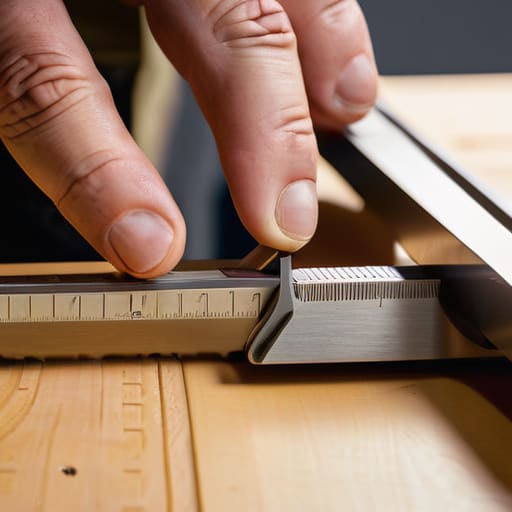
The biggest mistake I see junior buyers make is treating the “golden sample” as a static trophy rather than a living benchmark. You don’t just sign off on a perfect specimen and tuck it in a drawer; you use it as the legal yardstick for every single production run that follows. When you implement a golden sample comparison method, you are essentially creating a physical contract. If the factory tells you a 2mm deviation in a seam is “within standard,” you pull out that master sample and show them exactly why it isn’t.
You need to establish your manufacturing tolerance levels before the first container even hits the water. If you haven’t defined exactly how much variance is acceptable in color, weight, or dimension, you’ve already lost the argument. I’ve sat in many factory offices where a supplier tries to gaslight you into accepting “close enough.” Without a pre-approved, signed-off sample to hold against the mass production, you aren’t negotiating; you’re just guessing. Document the tolerances on the sample itself—mark them, tag them, and make sure they are part of your formal sample approval workflow.
The Five Red Flags Most People Ignore While Staring at a Pretty Prototype
- Stop looking at the sample in isolation. A sample is a performance, and like any good actor, the factory can put on a show. You need to ask for the “production-intent” version, not the one they polished with extra sandpaper and hand-buffed in a clean room just to impress you. If they can’t show you how the machine actually handles the material, you aren’t looking at a product; you’re looking at a lie.
- Stress-test the failure points before you sign the PO. If it’s a mechanical part, don’t just check if it fits; check if it survives a drop, a heat cycle, or a week of being tossed around in a shipping container. I’ve seen too many procurement managers celebrate a perfect fit, only to realize three months later that the tolerances were so tight the product becomes a brick the moment it hits a humid port.
- Audit the “invisible” components. Everyone checks the main chassis or the primary fabric, but the real cost-sink is always the secondary stuff—the glue, the fasteners, the internal wiring, or the packaging. If they used a premium component for the sample but the quote implies a generic substitute, they are planning to swap it out during mass production. Verify the Bill of Materials (BOM) against the sample, or prepare to pay for the rework later.
- Demand a “process sample” alongside the “golden sample.” A golden sample tells you what they can do; a process sample tells you what they will do. Ask them to show you a piece straight off the line during a standard run. If the quality of the line-run piece is significantly lower than the hand-finished sample sitting on your desk, you’ve just identified your future defect rate.
- Check the packaging as if your margin depends on it—because it does. I’ve seen countless “perfect” samples arrive in pristine condition, only for the actual shipment to arrive as a box of expensive scrap because the factory used flimsy single-wall cardboard for the real run to save a few cents. If the sample doesn’t come in the exact packaging intended for the final customer, you haven’t actually evaluated the landed reality of your product.
The Hard Truths of Sample Verification
A sample is a promise, not a guarantee; your job isn’t to admire it, but to stress-test it until you find the point where the quality breaks.
Never sign off on a “Golden Sample” without documenting the exact tolerances, material specs, and finish requirements, because “looks good” is not a technical specification that holds up in a dispute.
Always demand a sample produced on the actual production line, not a hand-crafted prototype from the engineering lab, because what a master craftsman can do by hand is rarely what a factory floor can do at scale.
The Sample is Not the Shipment
At the end of the day, evaluating a sample isn’t about checking if the color looks right under your office lights; it’s about stress-testing a promise. You have to look past the polished finish to see if the tolerances hold up, if the materials feel like they can survive a real supply chain, and if the technical specs actually match the documented reality of the factory. If you haven’t scrutinized the failure points, compared it rigorously against your golden sample, and accounted for the potential for rework, then you haven’t actually evaluated it—you’ve just accepted a gift. Remember, a sample is a snapshot of what a supplier wants you to see, not necessarily what they are capable of producing at scale.
Don’t let the excitement of a new product launch cloud your judgment. It is much easier to reject a flawed prototype today than it is to explain a container full of scrap to your board of directors six months from now. Treat every sample with a healthy dose of professional skepticism, because in this industry, the most expensive mistakes are almost always made during the honeymoon phase. Build your quality standards on evidence, not optimism, and you won’t just be sourcing products—you’ll be securing your reputation.