
I remember sitting in a humid, cramped office in Guangzhou ten years ago, staring at a spreadsheet that promised a seamless delivery window, only to realize the vessel we were counting on had simply vanished from the schedule. It wasn’t a clerical error; it was a blank sailing, and in that moment, my carefully negotiated lead times became nothing more than expensive fiction. Most people treat these cancellations like a minor weather delay, but if you’ve actually managed a budget, you know that understanding how blank sailings disrupt plans is less about logistics and more about managing a sudden, violent shift in your cash flow.
I am not here to give you a textbook definition of maritime scheduling or a lecture on global shipping trends. Instead, I’m going to show you how to build a buffer that actually works and how to spot the warning signs in your carrier’s data before your inventory hits a dead end. We are going to look past the optimistic promises of your freight forwarders and talk about the real-world math of rerouting, storage fees, and the true cost of a broken schedule.
Table of Contents
Why Ocean Freight Scheduling Is Never as Reliable as Promised
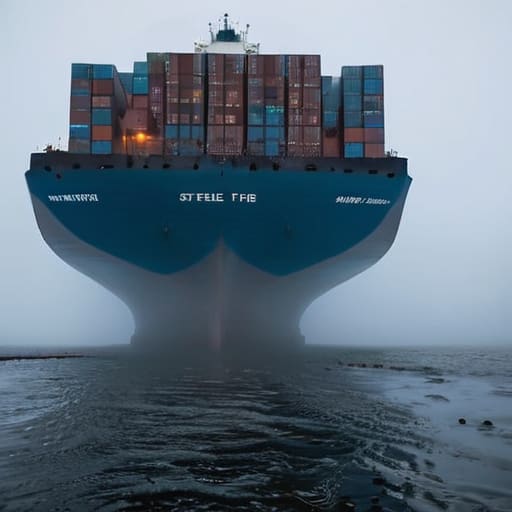
I’ve sat in enough procurement meetings to know that when a carrier presents a “guaranteed” schedule, they are essentially offering you a polite fiction. In theory, ocean freight scheduling is a mathematical certainty based on fixed routes and vessel speeds. In reality, it is a fragile ecosystem of moving parts that breaks the moment a single port decides to slow its crane movements or a storm rolls through the Malacca Strait.
The problem is that carriers prioritize vessel capacity management over your specific delivery window. If a ship is running light, they will simply cancel the sailing—the dreaded blank sailing—to protect their margins, leaving your containers sitting on a dock gathering dust. This isn’t just a minor hiccup; it’s a fundamental failure in shipping line schedule reliability that turns your production calendar into a work of speculative fiction. I’ve learned the hard way that you cannot build a stable manufacturing plan on a foundation of optimistic carrier spreadsheets. You have to plan for the gap between what they promise on the booking note and what actually happens when the vessel hits the water.
The True Cost of Maritime Logistics Disruptions on Your Bottom Line
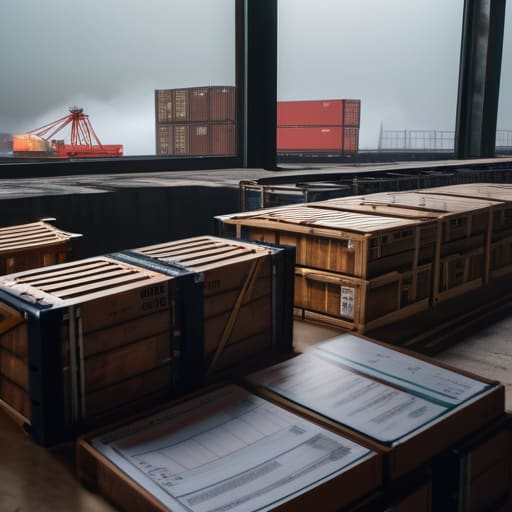
When you sit down to calculate your landed cost, you’re likely looking at the unit price, the duty, and the freight quote you were handed three weeks ago. But a blank sailing isn’t just a line item that gets crossed out; it is a catalyst for a domino effect of unbudgeted expenses. When a carrier pulls a sailing to manage their own vessel capacity management, your inventory doesn’t just sit still—it becomes a liability. You start paying for warehouse space to hold the components that did arrive, while simultaneously paying air freight premiums to rush the parts that didn’t.
This is where supply chain volatility moves from a theoretical concept in a textbook to a direct hit on your quarterly margins. It’s the cost of the emergency production run because your assembly line went dark, or the contractual penalties you owe your own customers because you missed a delivery window. I’ve seen managers try to absorb these maritime logistics disruptions as “unforeseen overhead,” but let’s be clear: if your margin doesn’t account for the reality of shipping line schedule reliability, you aren’t actually making a profit—you’re just gambling with your company’s cash flow.
Five Ways to Stop Playing Defense Against a Blank Sailing
- Stop treating your lead times like a fixed date and start treating them like a range. If your supplier says 30 days, but your shipping window is a single, rigid departure, you’re already behind. I build a “buffer zone” into every procurement cycle that accounts for the fact that a vessel simply might not show up when the carrier says it will.
- Audit your “safety stock” levels against actual transit volatility, not just historical averages. A blank sailing doesn’t just delay a shipment; it creates a vacuum in your warehouse. If your inventory levels only account for standard transit times, you aren’t managing risk—you’re just hoping for the best.
- Diversify your carrier mix so you aren’t beholden to a single alliance. When one shipping line starts pulling sailings to manage capacity, you don’t want your entire quarter’s inventory trapped in their revised schedule. I’ve seen too many managers get paralyzed because they put all their eggs in one maritime basket.
- Demand visibility that goes beyond a simple “vessel departed” notification. You need to know which alliances are seeing the highest frequency of blank sailings on your specific lanes. If you see a pattern of cancellations on the trans-Pacific route, you adjust your order cadence before the first vessel even skips a port.
- Re-calculate your landed cost models to include a “disruption premium.” When a sailing is cancelled, you often face a choice: wait for the next vessel or pay a massive premium for air freight to keep your production line moving. If your margins can’t absorb that sudden pivot, your initial sourcing strategy was flawed from the start.
The Hard Truths for Your Next Procurement Cycle
Stop treating a freight quote as a fixed cost; it is merely a starting point that assumes nothing goes wrong, and in this industry, something always does.
Build your lead times around the reality of vessel reliability rather than the optimism of a sales agent, or you will be the one explaining the stockout to your CEO.
Diversify your logistics strategy to include buffer stock or alternative routing, because a blank sailing is a predictable event that should never be a surprise.
The Reality Check
At the end of the day, a blank sailing is rarely a surprise if you are looking at the right indicators. We have seen how these sudden schedule cancellations ripple through a supply chain, turning a tidy landed cost into a bloated mess of expedited air freight, storage fees, and the inevitable stockouts that keep production managers awake at night. You cannot manage what you refuse to see, and if you are still treating ocean freight schedules as absolute truth rather than a series of educated guesses, you are already behind. You have to account for the volatility, build the buffer into your lead times, and stop pretending that a single, optimistic shipping window is a reliable procurement strategy.
Sourcing and logistics will never be as clean as the spreadsheets make them look, and that is perfectly fine. The goal isn’t to find a perfect, disruption-free world—that world doesn’t exist—but to build a supply chain that is resilient enough to absorb the impact when the carriers inevitably pull the plug. Stop chasing the absolute lowest freight quote and start looking for the transparency and reliability that actually keeps your inventory moving. In this business, evidence beats promises every single time. Build your plans around reality, not the best-case scenario, and you might just find yourself sleeping a little better when the next blank sailing hits the news.