
I once sat in a humid, windowless office in Guangdong, staring at a “Gold Standard” compliance certificate that looked pristine, while just through the open door, I could see a worker bypass a safety sensor to keep the line moving. That is the fundamental lie of the industry: that a polished PDF equals a reliable partner. Most people think learning how to run a factory audit is about checking boxes on a standardized checklist and verifying ISO certifications, but if you’re just looking for paperwork, you aren’t auditing—you’re just performing administrative theater. A clean report won’t save your shipment when the reality on the floor is a chaotic mess of undocumented workarounds and outdated machinery.
In this guide, I’m going to show you how to look past the staged “show rooms” and the polished presentations that suppliers set up specifically for visitors. I won’t give you a theoretical academic lecture; instead, I’m sharing the practical, hard-won methods I’ve used to spot the cracks in a production line before they turn into expensive delays. We are going to talk about how to find the truth in the shadows of the warehouse, because a real audit is about finding the evidence that contradicts the sales pitch.
Table of Contents
Beyond the Brochure a Real Production Facility Evaluation

When you walk into a facility, the first thing the manager will show you is the pristine showroom or the neatly organized front office. Ignore it. That’s the version of the factory they want you to buy. A real production facility evaluation happens where the noise is loudest and the air is thickest. I’ve spent enough time on factory floors to know that if the floor is swept clean but the machines are covered in a fine layer of unmanaged dust, you aren’t looking at discipline; you’re looking at a facade. You need to watch the operators, not the managers. Are they following the written SOPs, or are they using “workarounds” to hit targets? If the actual workflow contradicts the manual on the wall, your quality is already compromised.
Don’t just nod along when they show you their ISO certificates. Paperwork is easy to forge or maintain through sheer luck; true manufacturing quality control is visible in the scrap bins. Look at the rejected parts. If the bin is empty, they aren’t catching errors, which means they are shipping them to you. If the bin is overflowing with the same specific defect, you’ve found a systemic failure that no amount of optimistic emailing will fix.
The Vendor Assessment Framework That Exposes Hidden Risks
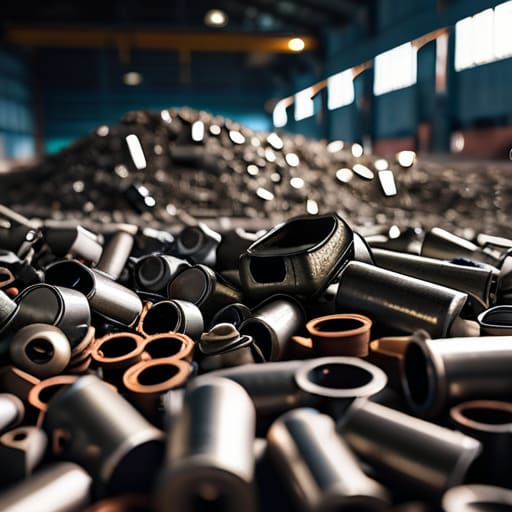
A standard vendor assessment framework shouldn’t just be a checklist of “yes/no” questions that a salesperson can easily manipulate. If you’re just verifying that they have an ISO certificate hanging in the lobby, you aren’t auditing; you’re performing administrative theater. I want to see how they handle a crisis. Ask to see their records for the last three non-conformities. If they claim they haven’t had a single quality issue in twelve months, they are either lying to you or their internal manufacturing quality control is non-existent. I’ve learned the hard way that the most honest data lives in the scrap bin, not the polished presentation deck.
You also need to look at the gap between their stated capacity and their actual floor reality. When I evaluate a facility, I’m looking for the friction points where supply chain compliance starts to fray—usually at the intersection of raw material storage and the assembly line. A robust framework must include a deep dive into their corrective action plan process. I don’t care how fast they can fix a mistake; I care about whether they have a documented, repeatable method to ensure that same mistake never hits a shipping container in the first place.
Five Things Your Auditor Won't Tell You (But Your P&L Will)
- Watch the floor, not the office. A factory manager can present a pristine boardroom and a perfect quality manual, but the truth lives in the scrap bin. If the waste bins are empty or the rejected parts are neatly tucked away in a corner, they aren’t managing quality; they’re hiding the failure rate.
- Test the “muscle memory” of the staff. Don’t just ask if they follow the SOP; pick a random operator on the line and ask them to explain the critical control point for the current batch. If they look at you like you’re speaking a foreign language, your “certified” process is nothing more than ink on paper.
- Verify the sub-tier reality. A factory is only as reliable as its weakest component supplier. Ask to see the incoming inspection logs for their raw materials—not just the certificates of analysis, but the actual evidence that they checked what arrived at their gates. If they can’t prove their inputs are stable, your finished goods won’t be either.
- Check the maintenance logs, not just the machines. A shiny new production line is a liability if the preventative maintenance schedule is a work of fiction. If the machines are running but the lubrication and calibration logs haven’t been touched in six months, you aren’t looking at a production facility; you’re looking at a ticking time bomb of downtime.
- Look for the “shadow shift” indicators. If you see a sudden surge in workers or a frantic pace of movement during your visit, ask about their capacity planning. Many suppliers over-promise during the audit and then attempt to fulfill your order by running unauthorized, unmanaged night shifts that bypass every quality check you just spent three hours verifying.
The Audit Checklist Isn't a Shield
A passed audit is a snapshot, not a guarantee; you aren’t looking for a perfect facility, you’re looking for the specific ways they handle deviations when things inevitably go wrong.
Stop chasing the lowest unit price and start calculating the cost of the rework, the air freight, and the lost sales that follow a supplier who can’t actually prove their capacity.
If the quality manual on the wall looks cleaner than the actual production floor, walk away—the gap between what they promise in the boardroom and what happens on the line is where your margin goes to die.
The Audit is Not a Checkbox
At the end of the day, a factory audit isn’t a bureaucratic hurdle to clear so you can tell your boss the due diligence is done; it is your only real defense against a catastrophic supply chain failure. We’ve looked at how to peel back the layers of a vendor’s claims, from verifying that their quality manuals aren’t just decorative wall art to ensuring their production capacity isn’t a mathematical fantasy. Remember, if you aren’t looking for the friction points—the disorganized raw material stores, the inconsistent operator training, or the aging machinery—then you aren’t actually auditing; you’re just taking a guided tour. A successful audit doesn’t just confirm what a supplier can do; it exposes exactly where they are likely to fail long before the first container is even booked.
Sourcing is an exercise in managed skepticism, and your audit is the most powerful tool in your kit for turning “promises” into “proof.” It can feel tedious to hunt for the cracks in a workflow when a supplier is smiling and promising you the moon, but I promise you, the cost of being wrong is infinitely higher than the cost of being thorough. Don’t let a shiny showroom or a competitive unit price blind you to the reality of the shop floor. Invest the time now to build a foundation of verified capability, because in this business, the only thing more expensive than a rigorous audit is a shipment that arrives late, broken, or not at all.