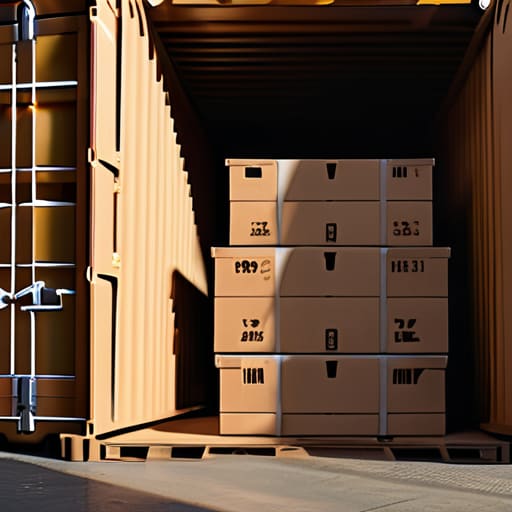
I once stood on a humid loading dock in Ningbo, watching a supplier’s floor manager try to “make it work” by stacking heavy crates of precision components directly on top of light, corrugated cartons. He was smiling, assuring me they could fit the entire PO into a 40-foot HC to save on the ocean freight. I didn’t need a spreadsheet to know that what he was actually doing was a masterclass in how to destroy a margin. Most people think optimizing a shipment is just about playing Tetris with boxes, but they fail to realize that how container loading affects cost isn’t just about the freight bill—it’s about the unplanned rework and the crushed inventory that arrives at your warehouse three weeks later.
I’m not here to give you a theoretical lecture on cubic volume or air freight math. I’m going to show you the real-world math of what happens when your loading plan ignores physics. We will look at why a “full” container can actually be a financial leak, how to audit your supplier’s packing methods before the vessel sails, and how to account for the hidden liabilities of poor stacking. I’ve been burned by optimistic loading plans enough to know where the bodies are buried, and I intend to make sure you don’t join them.
Table of Contents
Maximizing Cubic Meter Capacity Is Not a Suggestion
I’ve sat in enough warehouse offices to know that “we’ll just fit it in” is the most expensive sentence in procurement. When I see a quote for a 40ft High Cube that is only sixty percent utilized by volume, I don’t see a way to save on local handling; I see a massive leak in the P&L. Maximizing cubic meter capacity isn’t some theoretical exercise for the logistics department to play with; it is a fundamental requirement for maintaining a healthy margin. If you aren’t treating every cubic centimeter of that steel box as a paid-for asset, you are essentially paying the carrier to transport air.
The reality is that many teams treat shipping as a secondary thought, but shipping container space optimization is where the battle for the landed cost is won or lost. I’ve seen junior buyers push for smaller, more frequent shipments to keep inventory lean, only to realize they’ve doubled their freight spend because they neglected the math of the container. You can use the most expensive container load planning software in the world, but if your factory doesn’t understand how to palletize for density rather than just ease of unloading, you’re still throwing money overboard.
The High Price of Neglecting Shipping Container Space Optimization
When I look at a quote for a full container load, I don’t just see a flat fee; I see the ghost of every cubic centimeter we’ve wasted. Most people think they are saving money by shipping smaller, more frequent batches to keep inventory lean, but they are actually bleeding cash through sheer inefficiency. If you aren’t treating shipping container space optimization as a core procurement metric, you aren’t managing costs—you’re just subsidizing your freight forwarder’s next vacation. Every time a container leaves the dock with a significant amount of “air” in it, your per-unit landed cost climbs higher than any supplier discount can offset.
It isn’t just about the volume, either. I’ve seen too many junior buyers focus entirely on the dimensions while completely ignoring the impact of weight distribution on shipping. You can have a perfectly packed container that is technically “full,” but if the weight is unevenly distributed or exceeds the structural limits of the floor, you’re going to face surcharges, rejected loads, or worse, damaged goods. True logistics efficiency and freight rates are won or lost in the math of the load plan, not in the optimism of the shipping schedule.
Five Ways Your Loading Plan Dictates Your Bottom Line
- Stop treating weight and volume as separate conversations. I’ve seen too many junior buyers optimize for cubic meters only to hit the weight limit halfway through the load, leaving them paying for a half-empty container that’s legally too heavy to move. You need to balance the density of your goods against the container’s capacity before the first pallet even hits the dock.
- Audit your dunnage costs before you audit your freight rates. If you’re relying on excessive bubble wrap or massive amounts of timber bracing to keep a “cheap” load from shifting, you aren’t saving money; you’re just moving the cost from the freight line to the packaging line. Efficient loading uses smart bracing, not just more plastic.
- Watch the “air” you’re paying for in nested products. If your supplier isn’t nesting components or stacking items in a way that minimizes void space, they are effectively charging you to ship oxygen. I always ask for a packing specification that shows the actual utilization rate—if it’s under 85%, you’re being fleeced by empty space.
- Prioritize load stability to avoid the “rework tax.” A poorly distributed load leads to shifted cargo, which means when that container hits your warehouse, you aren’t just unloading it; you’re spending three days of labor sorting through damaged goods and filing insurance claims. A stable load is a predictable cost; a chaotic one is a liability.
- Standardize your pallet dimensions to match your container’s footprint. Using odd-sized pallets that leave a 10cm gap on either side of the container walls is a rookie mistake that kills your efficiency. If your pallets don’t play nice with the container dimensions, you’re leaving money on the floor of every single shipment.
The Bottom Line on Container Math
Stop treating cubic volume as a secondary metric; if you aren’t optimizing your load plan, you aren’t just losing space, you are effectively paying a premium for air and inflating your landed cost per unit.
A “low” freight quote is a lie if the loading strategy is inefficient; always weigh the cost of extra labor or specialized packaging against the theoretical savings of a smaller container.
Optimization is a risk management tool, not just a math exercise—properly secured, high-density loads reduce the “hidden” costs of transit damage and the inevitable rework that eats your margins when the container finally opens.
The Bottom Line on the Bill
At the end of the day, container optimization isn’t some theoretical exercise for your logistics team to debate in a vacuum; it is a direct lever on your margin. When you ignore how your goods are packed, you aren’t just paying for air—you are paying for the inefficiency of wasted cubic meters, the inevitable cost of damaged goods from poor stacking, and the hidden labor required to fix mistakes at the receiving dock. If your procurement strategy focuses solely on the unit price while ignoring the mathematical reality of the freight bill, you haven’t actually secured a good deal; you’ve just deferred your costs to a much more expensive part of the supply chain.
My advice is to stop treating the shipping container as a black box that simply appears once the order is placed. Start asking your suppliers for detailed packing lists and volumetric data long before the vessel departs. When you bridge the gap between what the factory thinks they are shipping and what actually fits in the steel, you move from being reactive to being truly in control of your landed cost. Sourcing is a game of evidence, and in this case, the evidence is found in the dimensions of your boxes. Don’t let a poorly planned load turn your hard-won margins into a donation to the freight carrier.