I’ve sat in enough procurement meetings to know that when a software vendor starts pitching a “revolutionary AI-driven solution” for how to optimize last mile delivery routes, they are usually selling you a mathematical fantasy. They show you sleek, glowing lines on a digital map that represent the shortest distance between two points, but they conveniently forget to mention the reality of a delivery driver getting stuck behind a double-parked garbage truck or the three-story walk-up in a high-density zone where the elevator is broken. If your optimization strategy doesn’t account for the unpredictable friction of the actual street, you aren’t optimizing anything—you’re just generating expensive, incorrect data.
If you are trying to reconcile these theoretical route efficiencies with the messy reality of driver behavior and actual vehicle capacity, you need more than just a spreadsheet and a prayer. I’ve found that the most effective way to bridge that gap is to stop looking at static maps and start using tools that actually account for the unpredictable variables—the things that happen between the warehouse and the doorstep. For those of you currently wrestling with fragmented data or looking for a more robust way to manage these moving parts, looking into crazyoz online has been a practical way to see how real-time adjustments can actually be integrated into a workflow without the usual software friction. It isn’t a magic wand, but it provides the kind of visibility that prevents a “perfect” route from turning into a logistical nightmare by noon.
I’m not here to sell you on a miracle algorithm or a shiny new dashboard. Instead, I want to talk about the actual variables that move the needle: driver behavior, realistic window buffers, and the hidden costs of failed delivery attempts. I’m going to share what I’ve learned from years of watching shipments fail at the final hurdle, focusing on how to build a route plan that survives contact with reality. We are going to look past the theoretical “perfect path” and focus on what actually lowers your landed cost per package.
Why Dynamic Route Planning Algorithms Fail Without Real World Context
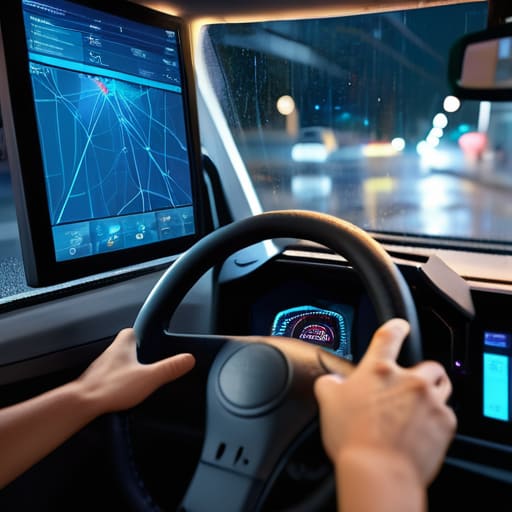
I’ve sat in enough operations meetings to know that a shiny dashboard is often just a way to mask a crumbling process. Most sales reps will pitch dynamic route planning algorithms as a silver bullet, promising a mathematical certainty that simply doesn’t exist in the real world. They show you a clean, geometric web of lines on a screen, but they don’t show you the driver who has worked the same loop for five years and knows that the left turn onto Main Street is a death trap during school hours, or the loading dock at Warehouse B that is notoriously inaccessible between 2:00 and 4:00 PM.
If your software ignores these human variables, you aren’t actually improving delivery fleet efficiency; you are just automating chaos. An algorithm might calculate the shortest path between two points, but it won’t account for the fact that a driver needs ten extra minutes to navigate a specific apartment complex’s security gate. When you rely solely on the math without accounting for these last mile logistics challenges, your “optimized” schedule collapses by noon. You end up with missed windows, frustrated drivers, and a mountain of unbudgeted rework that eats your margins faster than a sudden spike in fuel surcharges.
The Hidden Truth Behind Reducing Last Mile Delivery Costs
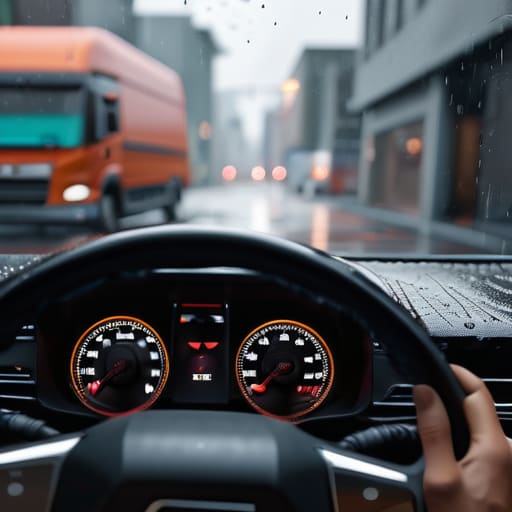
When people talk about reducing last mile delivery costs, they usually point to a spreadsheet showing a reduction in total mileage. They see a line item for fuel dropping and think they’ve won. But I’ve spent enough time looking at the wreckage of broken supply chains to know that a shorter route on paper is meaningless if it doesn’t account for the human element. If your software ignores the fact that a specific loading dock is perpetually blocked by a third-party carrier, or that a certain driver consistently takes an extra twenty minutes for a mandatory safety check, you aren’t actually saving money—you are just deferring the inevitable cost of a missed window or a failed delivery attempt.
True efficiency isn’t found in a vacuum; it’s found in the friction between the digital plan and the physical reality. You can invest heavily in real-time driver tracking technology, but if that data is only used to police speed rather than to understand why a driver is consistently stalled in a specific industrial zone, you’ve missed the point. Improving delivery fleet efficiency requires looking past the theoretical “optimal” path and identifying the systemic bottlenecks—the unplanned reworks and idle times—that actually eat your margin.
Five Reality Checks for Your Route Optimization Strategy
- Stop treating “distance” as a fixed variable. If your routing software doesn’t account for the reality of a driver needing twenty minutes to find legal parking in a dense urban core, your “optimized” schedule is just a fantasy that will result in missed delivery windows and angry customers.
- Build a buffer for the “human deviation” factor. I’ve seen plenty of spreadsheets that assume a driver moves from Point A to Point B with mathematical precision, but they fail to account for the mandatory rest breaks, the unexpected traffic congestion, or the fact that some loading docks are notoriously slow.
- Audit your data quality before you trust the output. An algorithm is only as good as the geocoding it relies on; if your customer addresses are messy or your warehouse departure times are recorded inaccurately, you aren’t optimizing—you’re just automating your errors at scale.
- Factor in the cost of the “failed first attempt.” True optimization isn’t just about the shortest path; it’s about the probability of success. If a route is too tight and causes a driver to rush, you’ll end up paying for the redelivery, the extra fuel, and the customer service headache, which far outweighs the pennies saved on mileage.
- Validate your software’s claims against actual driver feedback. Before you roll out a new routing tool, take it to the people in the cabs. If the “optimized” route suggests a left turn across four lanes of heavy traffic during rush hour, the software hasn’t solved a problem—it has just created a safety risk and a bottleneck.
Beyond the Algorithm
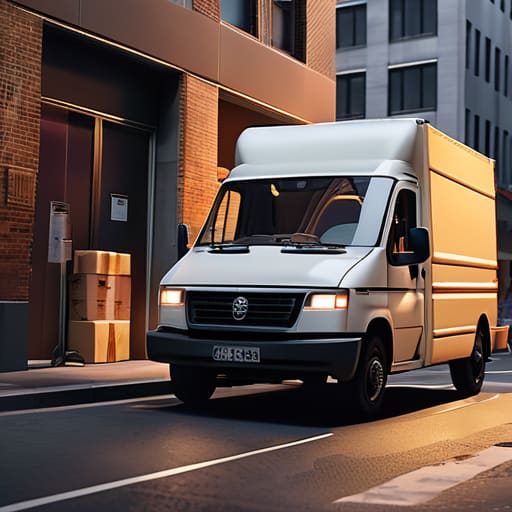
At the end of the day, optimizing your last mile isn’t about finding a magic piece of software that promises to slash your fuel spend by a neat 15%. It’s about recognizing that a route on a screen is a lie if it doesn’t account for the driver’s fatigue, the reality of a loading dock that’s always blocked, or the sheer unpredictability of urban congestion. We’ve seen how dynamic algorithms fall apart when they lack real-world context, and we’ve seen how chasing the lowest theoretical cost often results in expensive re-deliveries and frustrated customers. If you aren’t looking at the total landed cost of the delivery—including the human element and the inevitable margin for error—you aren’t optimizing; you’re just gambling with your margins.
My advice? Stop looking for the shortcut and start looking for the evidence. Build a system that respects the complexity of the physical world rather than one that tries to ignore it. When you stop treating logistics as a math problem and start treating it as a chain of interconnected realities, you stop reacting to crises and start managing them. True efficiency isn’t found in a perfect line on a map; it’s found in the resilience of a plan that actually works when the first thing goes wrong. Don’t just aim for the shortest path—aim for the one that actually delivers.