
I once sat in a humid, windowless inspection room in Shenzhen, watching a technician sweat over a micrometer while a supplier’s rep insisted everything was “fine.” The drawing called for a tolerance so tight it was practically a prayer, and the unit price they’d quoted me was suspiciously low. I knew then that they weren’t actually meeting that spec; they were just getting lucky with the first ten pieces and hoping I wouldn’t notice the exponential climb in scrap rates later. Most people treat technical drawings like a suggestion, but if you don’t understand how tolerances drive cost, you aren’t just buying parts—you are essentially signing a blank check for future rework and shipping delays.
I’m not here to give you a theoretical lecture on engineering principles or recite a textbook. I’ve spent two decades seeing exactly where the math fails when it hits the factory floor. In this post, I’m going to show you how to spot the hidden tax of precision before you issue your PO. We’ll look at why “tight” is often the enemy of “profitable,” and how you can negotiate specs that actually reflect the reality of your supplier’s capability.
Table of Contents
The Trap of Over Engineering in Product Design
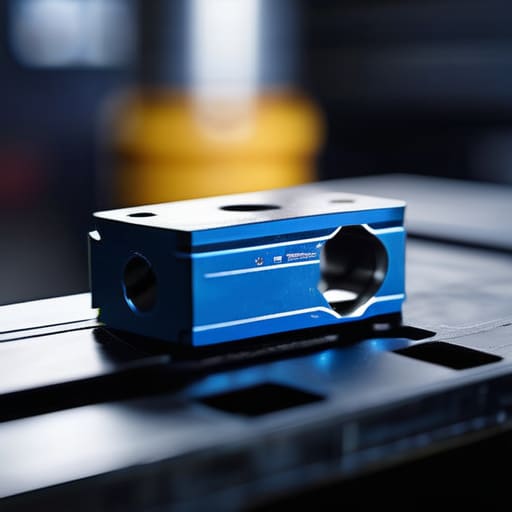
I’ve sat in enough design reviews to know exactly where the trouble starts. It usually begins with a designer who wants every component to fit like a Swiss watch, regardless of whether the end product actually needs that level of perfection. This is the classic pitfall of over-engineering in product design: treating every single dimension as a mission-critical variable. When you demand micron-level precision for a part that will eventually be buried inside a plastic housing, you aren’t designing for quality; you are designing for a massive, unbudgeted spike in your unit price.
The reality is that there is a massive delta between tight vs loose tolerances when it comes to the factory floor. If you hand a supplier a drawing with impossible GD&T requirements, you are essentially forcing them to choose between two bad options: they either spend a fortune on specialized tooling and slow machine cycles, or they try to meet your specs and hand you a mountain of scrap. I have seen entire production runs scrapped because the manufacturing process capability simply couldn’t meet a tolerance that was specified out of vanity rather than necessity. You aren’t buying precision; you’re just buying a higher scrap rate.
Tight vs Loose Tolerances the Real Price of Perfection

I’ve sat in enough factory offices to know that “precision” is often used as a shield for poor design. When a supplier hands you a drawing with absurdly tight tolerances, they aren’t necessarily promising quality; they are often just setting the stage for a massive spike in your unit price. The reality of tight vs loose tolerances is that as you move toward the extreme ends of the spectrum, the cost curve doesn’t just rise—it goes vertical. You aren’t just paying for better machines; you are paying for the specialized labor, the slower cycle times, and the constant, high-stakes monitoring required to keep that part within a microscopic window.
The real danger lies in the relationship between dimensional accuracy and scrap rates. If your specification is right on the edge of a machine’s standard manufacturing process capability, you are essentially gambling. One slight temperature shift in the facility or one worn-out tool, and suddenly that “perfect” part becomes expensive scrap. I have seen countless procurement teams chase a high-spec finish, only to realize later that they’ve traded a manageable manufacturing cost for a supply chain plagued by constant rejections and emergency air freight.
Five Ways to Stop Paying for Precision You Don't Actually Need
- Audit the drawing before the quote hits your desk. If your design team has specified a +/- 0.01mm tolerance on a non-critical housing component, they haven’t designed a product; they’ve designed a way for your supplier to charge you a premium for a level of precision that provides zero functional value.
- Demand a capability study, not just a promise. When a supplier claims they can hit your tight tolerances, don’t take it at face value. Ask for their Cpk data. If they can’t show you the statistical proof that their process is stable enough to hit those numbers consistently, they are just guessing, and you’ll be the one paying for the scrap when the process drifts.
- Factor the “Tolerance Stack-up” into your landed cost. A part might be cheap to make individually, but if those tight tolerances force you into a specialized assembly process or require expensive jigs to ensure everything fits together, your unit price is a lie. You aren’t buying a part; you’re buying a headache.
- Negotiate the “Tolerance-Price Curve” upfront. I always ask my suppliers: “What is the price delta between this tolerance and one that is twice as wide?” Often, loosening a specification by a hair can drop your unit price by 15% without affecting the assembly. If they can’t give you that number, they aren’t being transparent about their margins.
- Watch the scrap rate like a hawk during the first production run. Tight tolerances are the first thing to fail when a factory’s tooling wears down or a new operator takes over a shift. If you see the yield dropping, don’t just accept the “rework” excuse—realize that your over-engineered spec has turned a standard production run into a high-stakes gamble.
The Procurement Reality Check
Stop treating a unit price as a fixed number; if your design demands tolerances that push a factory to its absolute limit, that price is a lie that doesn’t account for the inevitable scrap rate and the “quality adjustments” you’ll be fighting for six months from now.
Before you sign off on a spec, ask your engineers if that extra 0.05mm of precision actually adds value to the end user, or if they are just over-engineering a way for you to pay for a mountain of unbudgeted rework.
A realistic lead time must include a buffer for the very precision you’re demanding—because when you squeeze a supplier’s process too tight, they won’t tell you they’re struggling; they’ll just quietly push your shipment date back three weeks when the yield hits the floor.
The Bottom Line on Precision
At the end of the day, managing tolerances isn’t an engineering exercise; it is a financial one. We have seen how over-engineering creates a phantom sense of quality that actually manifests as a mountain of scrap, inflated unit prices, and a supply chain that is constantly tripping over its own feet. If you don’t align your technical specifications with your actual manufacturing capabilities, you aren’t designing a product—you are designing a logistical nightmare. Remember that every micron of precision you demand from a supplier comes with a price tag that isn’t just on the invoice, but in the increased rejection rates and the inevitable delays that follow when a factory realizes they simply cannot hit your impossible standard.
Stop chasing the ghost of perfection and start chasing the reality of profitability. My advice? Go back to your drawings, look at those tolerances, and ask yourself if that extra decimal point is actually adding value to the customer or if it is just unbudgeted rework in disguise. A successful procurement strategy isn’t about finding the supplier who promises the tightest specs; it is about finding the one who can actually deliver what you need, reliably and within cost. Build for reality, because the market doesn’t care how precise your CAD model was once the shipment arrives late and over budget.