
I once sat in a humid, windowless factory office in Vietnam, watching a supplier’s sales rep confidently pitch a high-speed injection molding setup for a part that clearly required the precision of CNC machining. He was selling a dream of low unit costs, but I could already see the inevitable scrap rate climbing in my head. Most people approach the question of how to choose a manufacturing process by looking at a spreadsheet of theoretical costs, treating it like a math problem rather than a high-stakes gamble. They get blinded by the allure of scale and forget that a process is only as good as the stability of the machine, the skill of the operator, and the reality of the material behavior.
I’m not here to give you a textbook lecture or a glossy brochure of possibilities. Instead, I’m going to show you how to look past the sales pitch to find the actual technical fit for your product. We are going to strip away the optimism and look at the trade-offs that matter: the true lead times, the hidden rework costs, and the specific failure points of each method. By the end of this, you won’t just know the options; you’ll know how to pick the one that won’t leave you staring at a mountain of defective inventory six months from now.
Table of Contents
Design for Manufacturability Where Shortcuts Become Expensive Failures
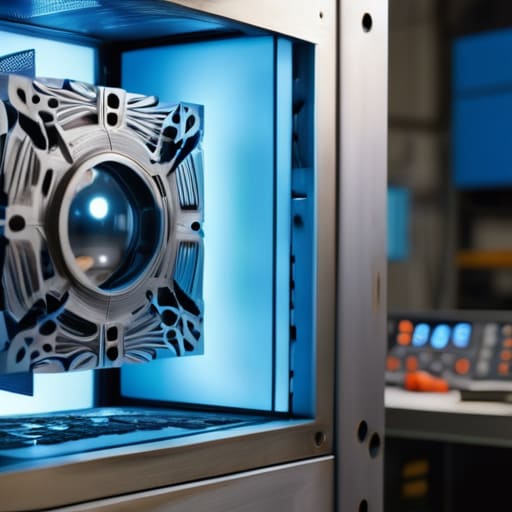
I’ve seen it happen a dozen times: a designer hands over a beautiful, complex CAD file that looks perfect on a high-res monitor but is a total nightmare for a floor operator. They focus on the aesthetic, but they ignore design for manufacturability, leaving the procurement team to bridge the gap between a “vision” and a reality that actually works. When you design something that requires impossible tolerances or exotic material properties and compatibility that no local supplier can actually hit, you aren’t being innovative; you’re just creating a massive bottleneck.
The real danger is that these design flaws don’t show up in the initial quote. A supplier will look at your drawing, see the complexity, and give you a price that assumes everything goes perfectly. But as soon as the first batch hits the machine, the scrap rate climbs. Suddenly, your manufacturing cost analysis is out the window because you’re paying for wasted raw materials and excessive machine time. Whether you are debating machining vs molding, the goal shouldn’t just be making the part—it should be making the part reliably and repeatably without a specialized engineer standing over the machine every hour.
Machining vs Molding the Myth of the Lowest Unit Price
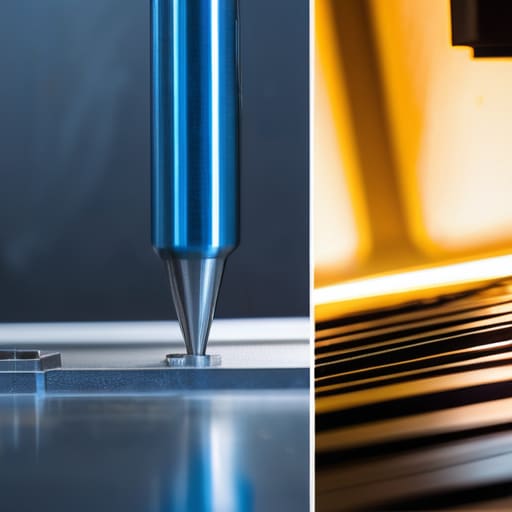
I’ve sat in enough procurement meetings to know exactly how this conversation goes. A designer presents a part, a supplier quotes a low unit price for CNC machining, and everyone nods because the initial numbers look clean. But if you aren’t looking at the production scalability factors, you’re walking into a trap. Machining is fantastic for high-tolerance, low-volume runs where precision is non-negotiable, but the moment you scale, those per-unit costs stay stubbornly flat. You aren’t benefiting from the economies of scale that a molding process offers.
The real trap is the “hidden” switchover. Someone will argue that molding is cheaper, forgetting that the upfront tooling costs can wipe out your entire first year of margins. When I perform a manufacturing cost analysis, I don’t just look at the price of the part; I look at the amortization of that mold against your projected volume. If your forecast is optimistic—and let’s be honest, they usually are—you might find yourself stuck with a massive capital outlay for a process that your actual sales volume can’t support. Don’t mistake a low quote for a low risk.
Five Real-World Filters Before You Sign the Purchase Order
- Stop looking at the unit price in isolation; if the process you’ve chosen requires a 5,000-unit minimum just to make the math work, your “cheap” part is actually an inventory liability that’s eating your cash flow.
- Audit the process capability, not just the machine list; a factory can own a five-axis CNC, but if their quality manual doesn’t match the actual tolerances the operators are hitting on the floor, that machine is just an expensive paperweight.
- Factor in the “hidden” lead time of specialized tooling; choosing a process like injection molding might look efficient on paper, but if you haven’t budgeted the six weeks for mold validation and testing, your production schedule is dead on arrival.
- Evaluate the scrap rate risk inherent to the method; high-precision processes often come with higher rejection rates, and if you haven’t built a buffer into your landed cost to account for that inevitable rework, you aren’t actually calculating your margin.
- Map the process to your actual volume projections, not your best-case scenario; choosing a high-setup-cost process because you hope to scale is a gamble that usually ends with you paying for capacity you aren’t using and a unit price that refuses to drop.
The Real Math of Manufacturing
Stop treating unit price as a fixed reality; it is merely a starting bid that ignores the inevitable costs of tooling, setup, and the high-stakes gamble of your chosen production method.
A process choice isn’t just about how a part is made, it’s a risk management decision—choose the method that offers the most predictable lead times and the least amount of post-production rework.
If your design doesn’t account for the specific constraints of your manufacturing process from day one, you aren’t being “agile,” you are just budgeting for expensive engineering changes halfway through your first production run.
The Reality Check You Can't Afford to Skip
At the end of the day, choosing a manufacturing process isn’t a math problem to be solved; it is a series of risk assessments disguised as technical decisions. We’ve looked at how cutting corners in design creates a debt you’ll pay during production, and why that seductive low unit price in molding often hides a mountain of tooling costs and lead-time volatility. If you aren’t looking at the entire lifecycle—from the first prototype to the moment the finished goods hit your warehouse floor—you aren’t actually choosing a process, you’re just gambling on a best-case scenario. Remember: a process is only as good as its most predictable failure point.
Stop looking for the “perfect” process and start looking for the one that matches your reality. Your suppliers will tell you what you want to hear, and your spreadsheets will tell you what you want to believe, but the physical constraints of the factory floor will always tell you the truth. Build your decisions on evidence, not optimism. When you stop chasing the lowest possible quote and start chasing the most stable supply chain, you stop being a victim of the industry and start becoming a master of it. Plan for the friction, and the profit will follow.