
I once stood on a humid factory floor in Guangdong, watching a production manager promise me that a shipment of precision components was “on track,” while I could see the raw material shortage sitting right there in the empty warehouse bays behind him. It’s the same hollow optimism I see in boardroom presentations every time someone tries to sell the theoretical benefits of local versus international sourcing without actually looking at the risk profile. People love to talk about the massive margin improvements you get from overseas, but they rarely mention the cost of the silence that happens between placing the order and the moment the container fails your inspection at the port.
I’m not here to give you a textbook lecture or a sanitized SWOT analysis. I’m going to tell you what happens when those theoretical benefits collide with reality—the freight spikes, the quality drift, and the hidden rework that turns a “saving” into a massive deficit. We are going to look at this through the lens of total landed cost and actual supply chain resilience, stripping away the vendor promises to find out what your business can actually prove before you sign that contract.
The False Economy of Offshoring and Invisible Logistics Costs
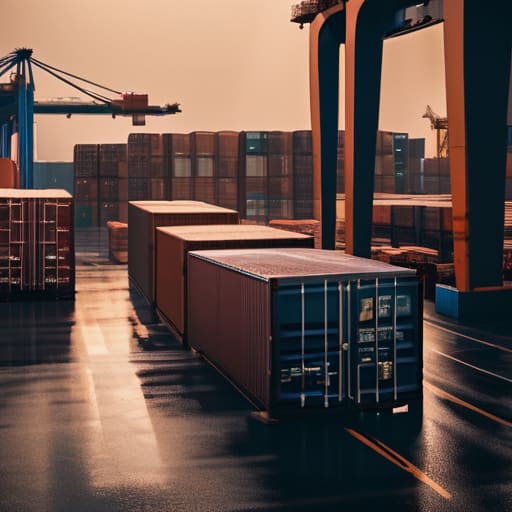
I’ve sat in enough boardroom meetings to know exactly how this goes: someone pulls up a spreadsheet showing a unit price from an overseas supplier that is 30% lower than anything we can find domestically. They call it a “win,” and on paper, it looks like a victory. But I’ve spent enough time on factory floors to know that a low sticker price is often just a way to defer costs. When you factor in the logistics and transportation costs comparison—the sudden freight spikes, the port congestion, and the sheer cost of holding extra safety stock just to buffer against uncertainty—that margin evaporates.
The real danger isn’t just the extra freight; it’s the impact of lead times on inventory. When you source from halfway across the world, you aren’t just buying a product; you are committing to a massive amount of tied-up working capital and a much longer window for things to go wrong. If a shipment is delayed by three weeks due to a seasonal backlog or a minor quality issue, your entire production schedule shifts. You aren’t just paying for the item anymore; you’re paying for the chaos that follows.
Why Lead Time Slippage Decimates Your Inventory Strategy
When a supplier tells you their lead time is six weeks, they are giving you their best-case scenario, not their reality. I’ve spent enough time on factory floors to know that those six weeks don’t account for the sudden raw material shortage, the local holiday that wasn’t on your calendar, or the fact that your order is sitting in a queue behind a much larger client. When that timeline slips by even ten days, it isn’t just a minor delay; it creates a domino effect that ruins your entire production schedule. This is where the true impact of lead times on inventory becomes visible, forcing you to either carry massive amounts of safety stock—which ties up your cash flow—or face the nightmare of stockouts.
Relying on long-distance shipping means you have zero agility once the container leaves the port. If a shipment is delayed at customs or a vessel is diverted, you are essentially watching your inventory strategy evaporate in real-time. This is why I always tell my juniors that buffer stock is a symptom of poor visibility. If you can’t react to a delay within forty-eight hours, you aren’t managing a supply chain; you’re just gambling on a timeline.
Five Ways to Stop Chasing Paper Savings and Start Sourcing Reality
- Audit the floor, not the brochure. Whether you are sourcing locally or overseas, a supplier’s quality manual is just a piece of paper until you see the operator actually following it; if you can’t see the production line in action—via video or in person—you aren’t qualifying a supplier, you’re just taking a leap of faith.
- Demand a “Total Landed Cost” breakdown before you sign anything. If a quote doesn’t include duty, freight, insurance, and a buffer for the inevitable port delays, it isn’t a price, it’s a teaser, and you’ll be the one paying the difference when the invoice hits your desk.
- Treat lead times as a range, not a fixed date. I never look at a single delivery date without asking for the “best-case” and “worst-case” scenarios; if a supplier refuses to give you a buffer, they aren’t being efficient, they’re being dishonest about their capacity.
- Build a “proximity premium” into your local sourcing math. Yes, the unit price might be higher near home, but you have to weigh that against the cost of carrying massive safety stocks just to hedge against the volatility of international shipping lanes.
- Verify the sub-tier suppliers. A factory might be world-class, but if they are sourcing their raw materials from a secondary supplier who operates in a shadow economy, your entire supply chain is built on a foundation of sand.
Choosing Your Battles
At the end of the day, choosing between local and international sourcing isn’t a mathematical equation you can solve on a spreadsheet; it is a calculated risk assessment. If you go international, you aren’t just buying a component; you are buying a massive, complex web of freight volatility, customs delays, and the constant need for rigorous quality oversight. If you stay local, you are paying a premium for agility and visibility. You have to decide which type of headache your business is better equipped to handle: the slow-motion crisis of a container stuck in a port three weeks late, or the tighter margins of a domestic supplier who can actually answer the phone when a production run goes sideways.
My advice? Stop looking for the lowest unit price and start looking for the most reliable total cost of ownership. Whether you are sourcing from a factory down the street or halfway across the globe, your job isn’t to find the cheapest claim—it is to find the evidence that the claim can be kept. Build a supply chain that is designed to survive the inevitable disruptions rather than one that only works when everything goes perfectly. Because in my nineteen years, I’ve learned that the most expensive supplier is always the one who promised you the world and delivered nothing but an empty warehouse.
If you’re currently staring at a spreadsheet of conflicting quotes and feeling like you’re losing your grip on reality, you aren’t alone; the industry has a way of making even seasoned pros feel isolated when a supply chain starts to fracture. I’ve found that sometimes the best way to sanity-check your assumptions isn’t by re-reading the same broken contract, but by talking to people who have actually stood on those factory floors and seen the same red flags you are seeing now. I often drop into the Tsladies chat when I need a quick reality check on whether a supplier’s “unprecedented” delay is actually a standard industry symptom or a sign that they’re about to go dark. It’s a useful way to distinguish between a genuine logistical hiccup and a systemic failure before you’ve already committed your entire quarterly budget.