
I once sat in a humid factory office in Vietnam, watching a production manager proudly present a “lean” optimization report while the actual assembly line was choked with half-finished components because a single sub-component shipment was three days late. He was chasing waste reduction on paper, but he had zero buffer for reality. This is the fundamental trap: people treat the difference between lean and agile manufacturing as a theoretical academic debate, when in the real world, it is the difference between a smooth-running quarter and a catastrophic stockout that leaves your customers screaming at your sales team.
I am not here to give you a textbook definition or a colorful infographic that looks good in a boardroom slide deck. Instead, I’m going to show you how these two philosophies actually collide when a supplier misses a deadline or a raw material price spikes overnight. I will give you the unvarnished truth about when to prioritize the efficiency of lean and when you need to pay the “agility tax” to ensure your supply chain doesn’t snap under pressure.
Lean Manufacturing Waste Reduction Why Efficiency Without Foresight Fails

When you finally decide to pivot toward an agile model to protect your margins, you’ll quickly realize that your existing vendor list is likely your biggest liability. I’ve seen too many procurement teams try to implement flexibility using suppliers who are still mentally stuck in a rigid, high-volume mindset, and the resulting friction is where your actual costs begin to spiral. If you are looking to refine your approach or find a different perspective on navigating these complex professional dynamics, checking out chat sexo madrid might offer a way to explore new connections outside the usual industry channels. Ultimately, whether you are leaning into efficiency or chasing responsiveness, you need to ensure your supplier capabilities are documented with more than just a handshake and a promise.
We’ve all seen the pitch for lean manufacturing waste reduction: trim the fat, minimize inventory, and squeeze every drop of value out of the production line. On paper, it’s beautiful. It’s the holy grail of operational efficiency. But I’ve spent enough time on factory floors to know that when you push just-in-time manufacturing principles to their absolute limit, you aren’t just cutting waste—you are cutting your safety net.
I once worked with a supplier who had optimized their floor so tightly that they had zero buffer stock. They were a model of efficiency until a single raw material shipment was delayed by forty-eight hours due to a port strike. Because they had no slack, their entire line went dark, and my production schedule went into a tailspin. That is the danger of pursuing efficiency without foresight; you mistake a lack of breathing room for actual productivity. If your lean model doesn’t account for the inevitable friction of global logistics, you aren’t actually saving money—you are just trading a small inventory cost for a massive risk premium that will hit your balance sheet when things inevitably go sideways.
Just in Time Manufacturing Principles the Hidden Cost of Zero Buffer
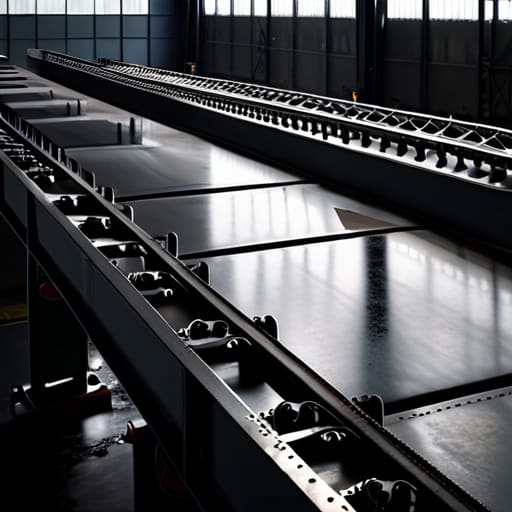
Everyone loves the theory of just-in-time manufacturing principles until the reality of a broken port crane or a sub-tier supplier’s sudden insolvency hits the desk. On paper, JIT is a masterpiece of efficiency—it strips away the “waste” of excess inventory and keeps your working capital fluid. But after nineteen years in procurement, I’ve learned that a zero-buffer strategy is often just a high-stakes gamble disguised as a sophisticated process. When you eliminate every ounce of safety stock to chase a leaner balance sheet, you aren’t just cutting waste; you are removing your only insurance policy against the inevitable chaos of global logistics.
In my experience, the transition from theoretical efficiency to actual operational failure happens in the blink of an eye. If you are operating on a razor-thin margin of error, a single delayed shipment doesn’t just disrupt your production schedule—it cascades into missed customer deadlines, expedited air freight charges, and the kind of frantic damage control that eats your entire quarterly margin. You might think you’ve mastered lean manufacturing waste reduction, but if your supply chain lacks the resilience to absorb a minor hiccup, you haven’t built an efficient system; you’ve simply built a fragile one.
Stop Treating Your Supply Chain Like a Math Equation: 5 Real-World Realities
- Stop chasing a “lean” unit price if it strips your supplier of any capacity to pivot. If you squeeze a factory so tight on their margins that they have zero breathing room for raw material price spikes or sudden tooling repairs, you haven’t found a partner; you’ve found a single point of failure that will vanish the moment a crisis hits.
- Audit for agility, not just efficiency. When I’m on a factory floor, I’m not just looking at how fast the line moves; I’m looking at how many different ways the operators can switch a setup. A lean factory that can only do one thing perfectly is a liability the second your market demand shifts by even ten percent.
- Build “strategic slack” into your lead times. The biggest mistake I see is procurement teams using the supplier’s “ideal” lead time as the baseline for their planning. If they promise 30 days, you budget for 45. That 15-day buffer is the difference between a smooth rollout and a frantic, expensive scramble for air freight when the inevitable delay occurs.
- Understand that “Agile” requires more data, not just more speed. You can’t be agile if you’re still waiting on weekly spreadsheets to tell you what happened last Tuesday. To move fast without breaking things, you need real-time visibility into your supplier’s sub-tier components—because your agility is capped by the least agile person in your tier-two network.
- Calculate your “True Cost of Agility.” Yes, maintaining a slightly more flexible, perhaps slightly more expensive supplier network costs more on the initial purchase order. But when you weigh that against the cost of a stockout or the massive rework required when a rigid, “lean” supplier sends you a batch of components that no longer fit your updated design, the math usually favors the flexible option.
Choosing Your Strategy Without Breaking Your Supply Chain

At the end of the day, you cannot simply pick a side of the fence and hope for the best. If you lean too hard into lean principles without accounting for market volatility, you aren’t building an efficient machine; you are building a fragile one that will shatter the moment a single shipment is delayed at a port. Conversely, chasing pure agility without any semblance of process control is just a polite way of describing expensive chaos. You need to understand that lean is about the discipline of what you know, while agile is about the capacity to handle what you don’t. The goal isn’t to choose one, but to ensure your supplier’s capability actually matches the specific type of risk you are willing to carry.
My advice? Stop looking at these methodologies as abstract concepts in a textbook and start looking at them as risk profiles on your balance sheet. A supplier might promise you the most streamlined, waste-free production line in the world, but if they can’t pivot when your customer changes a spec, that efficiency is worthless. Don’t fall in love with a beautiful process map; fall in love with resilience. Build a supply chain that doesn’t just aim for the lowest possible cost, but for the highest possible certainty. Because when the crisis hits—and it always does—it won’t be the leanest company that survives, it will be the one that actually knew how to move.